Automattic's 'Code for the People' documentary frames the open internet as a fight worth winning
A new documentary backed by Automattic argues that walled gardens and black-box AI are pushing the open web toward a tipping point — and that users, not regulators, need to show up.
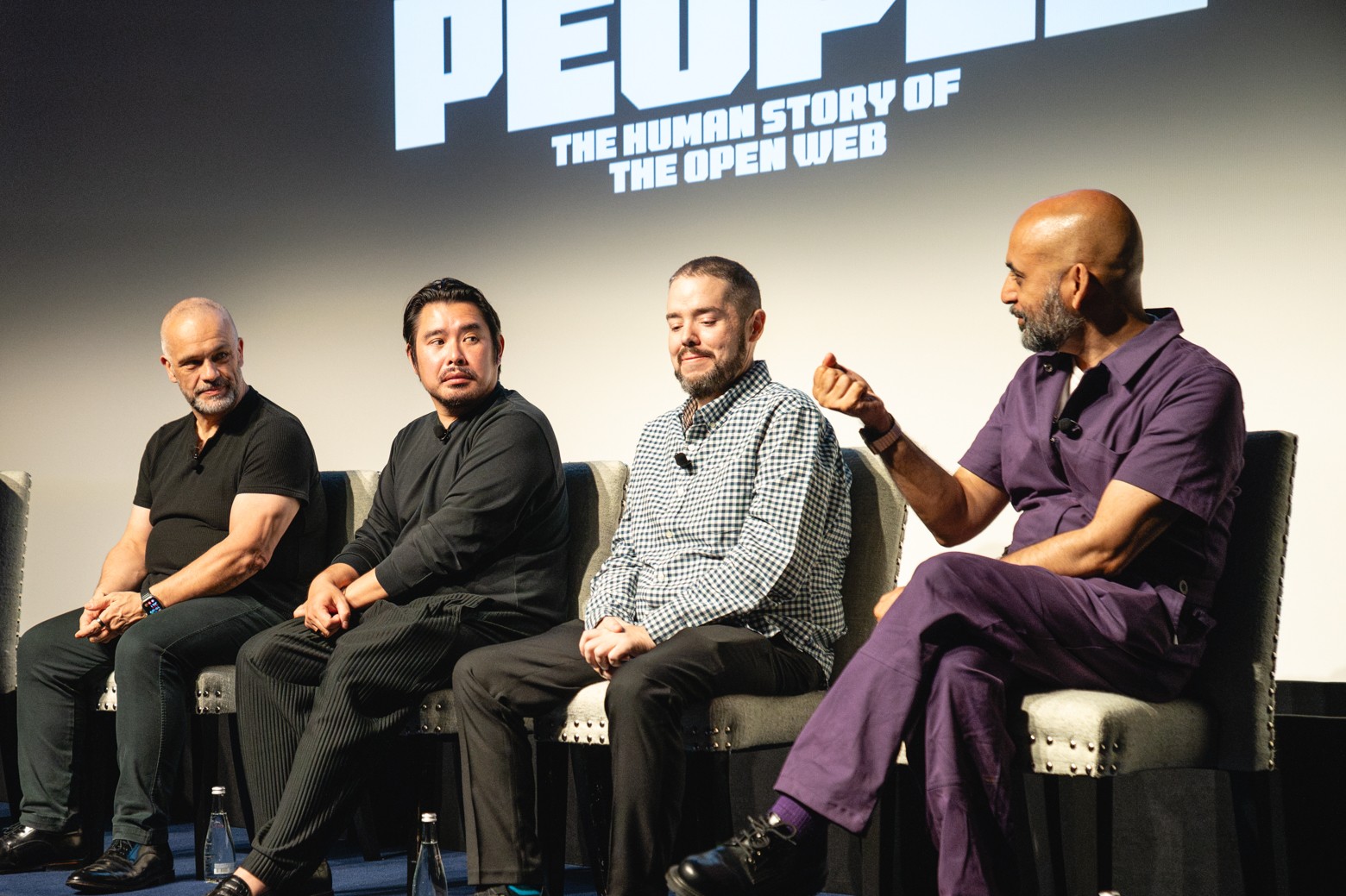
On Tuesday evening in New York, Automattic, the company behind WordPress.com and a constellation of publishing tools, hosted a screening of Code for the People, a feature-length documentary that opens with an unlikely premise: the most consequential political fight of the next decade may not be waged in Washington or Brussels but inside the terms-of-service menus of a handful of consumer apps. The film, covered in detail by Variety on 8 July 2026, is framed as a rallying cry for ordinary users to push back against walled-garden platforms and the opaque artificial-intelligence systems that increasingly sit on top of them.
The pitch, in plain terms, is that the open web is being hollowed out faster than most users notice, and that the only constituency with enough leverage to push back is the public itself — the people who, by clicking, scrolling and uploading, generate the data and attention that everything else is built on. The film lands as Automattic's founder Matt Mullenweg has spent the better part of 2025 and 2026 publicly feuding with hosting providers and AI crawlers that the company accuses of stripping content without compensation. It is also the first major Automattic-branded cultural product positioned explicitly at consumers, not developers.
What the documentary actually argues
The film's central claim, as Variety sets it out, is that the threats to the open internet now come from two directions at once. The first is the familiar consolidation story: a small group of consumer platforms operating walled gardens that control user data, limit interoperability and capture most of the downstream advertising and commerce revenue. The second is newer and less well mapped: the proliferation of "black-box" AI systems that ingest publicly available web content to train models whose outputs are then monetised by a narrow set of well-capitalised firms. Together, the film argues, these two trends are converting the web from a public commons into something closer to a privately policed utility.
The documentary positions the open web as a civic infrastructure — closer to a road network or a public library system than to a media product — and treats the current moment as analogous to earlier fights over municipal broadband, net neutrality or, more distantly, the layout of radio spectrum. Variety's writeup underscores that the film is not pitched at policy specialists; it is built for a general audience and uses the format of a rallying cry rather than a regulatory blueprint.
The Automattic context: motive and posture
The film does not arrive in a vacuum. Automattic has spent the better part of two years publicising what it describes as extractive behaviour by web hosts, AI training operations and large consumer platforms that, in the company's telling, treat independent publishers as raw material. Mullenweg has used the phrase "code for the people" repeatedly in product launches and public remarks, and the documentary effectively extends that messaging into documentary form. The release signals an attempt by Automattic to position itself less as a hosting vendor and more as a movement actor in the open-web debate — a posture with commercial logic, given that Automattic's revenue depends on the long tail of independent sites that the walled-garden story threatens.
That motive cuts both ways. A film funded by a company with a stake in the argument it advances is, by structure, advocacy. Variety's coverage stops short of endorsing the film's framing, but it does treat the screening as a newsworthy event in its own right — a signal that the open-web debate has moved from developer forums and policy whitepapers into a space where consumer-facing media campaigns can plausibly run.
What the film under-treats
For all of its ambition, the documentary leaves several counter-weights underdeveloped. The efficiency gains of the very platforms it criticises — cheaper distribution for small publishers, dramatically lower customer-acquisition costs for independent software developers, instant global reach for creators who would have had no audience twenty years ago — are not fully reckoned with. Nor is the case for AI training as a transformative public good, however imperfectly distributed the gains from it happen to be. A critic-friendly version of the film might have started from those benefits, then asked how they can be preserved without the underlying commons being quietly enclosed.
The regulatory counter-argument is also underdeveloped. The European Union's Digital Markets Act, the United Kingdom's competition regime and ongoing state-level US privacy debates all represent attempts to do institutionally what the film asks users to do politically. Treating consumer mobilisation as the primary lever risks ignoring the parts of the policy environment where user pressure is least effective and professional advocacy most necessary.
What hangs on this
The stakes are concrete even when the film is gauzy. Independent publishing — news organisations, niche software vendors, individual writers and small software-as-a-service businesses — is the economic substrate of the open web, and it is increasingly squeezed between platforms that control distribution and AI operators that control summarisation. If the documentary's premise is right, the next round of consolidation will not look like the last one: it will be quieter, faster, and harder for users to detect, because the consolidation will happen inside model weights and ranking systems rather than inside corporate boardrooms. If the film is wrong, and user-driven pressure is sufficient, the open web survives in something close to its current shape. Either reading makes the next 24 months worth watching closely.
This Monexus piece treats Automattic's documentary as a cultural event signalling where the open-web debate is heading, not as a product endorsement; Variety's reporting on the New York screening is the primary source.
Wire provenance
This editorial synthesis draws on the following public wire/social posts:
- https://ec.europa.eu/digital-single-market/en/digital-markets-act