Devendra Banhart, Gyan Riley, and Noah Georgeson form Hug, a new trio led by 'Cow With Half Moon Parasol'
Three longtime collaborators announce a self-titled debut under a new name, with a fall tour and 'Cow With Half Moon Parasol' as the lead single.
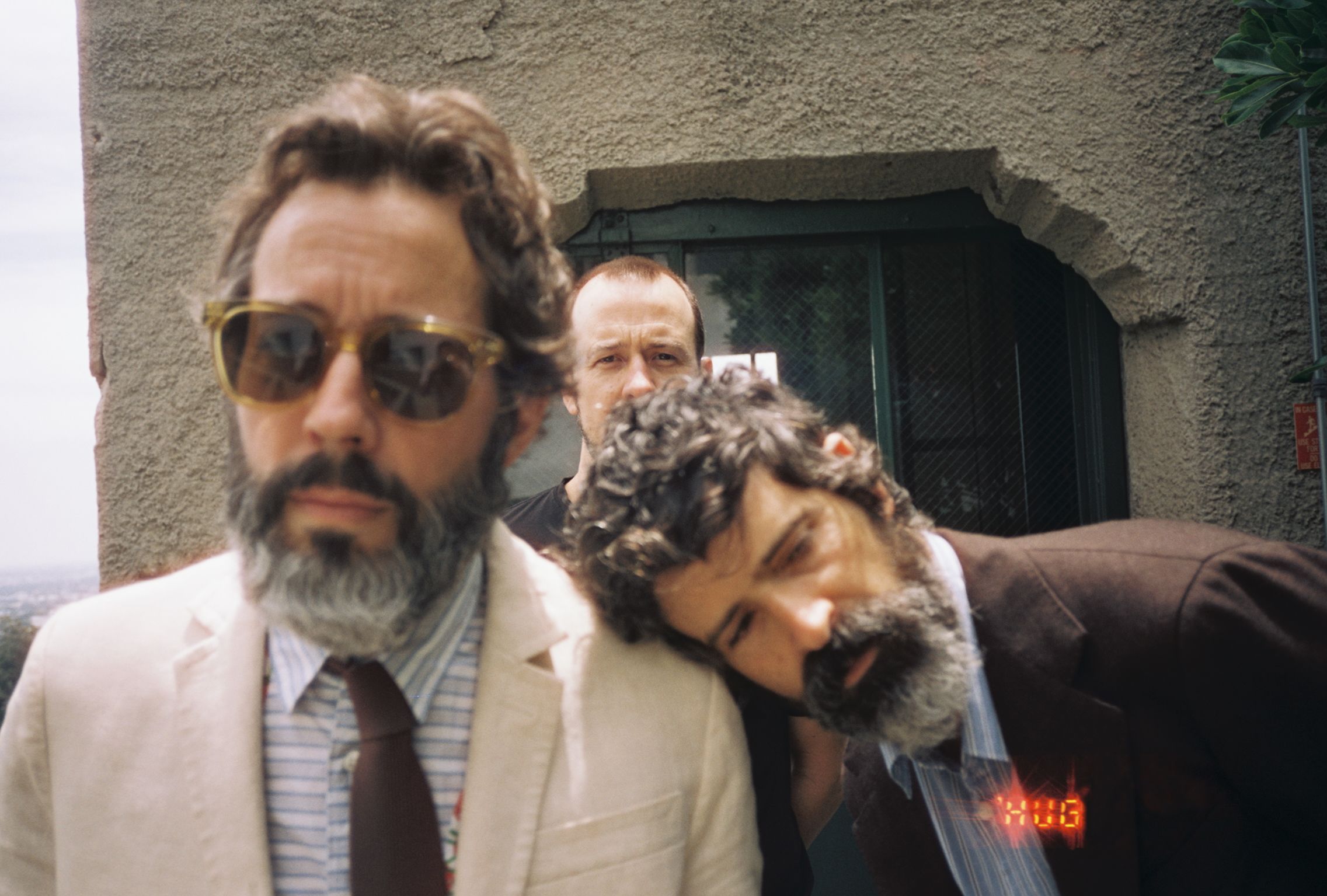
Devendra Banhart, Gyan Riley, and Noah Georgeson have launched a new band called Hug, with a self-titled debut album and a fall tour set to follow. The announcement, dated 8 July 2026, positions the project as a formalisation of a collaboration that has run, in various configurations, for the better part of two decades. Pitchfork, which broke the news on the afternoon of 8 July 2026 UTC, identifies the lead single as "Cow With Half Moon Parasol."
The trio is not, strictly speaking, a new entity so much as a name attached to an existing working relationship. Banhart, Riley, and Georgeson have shared studio and stage credits across solo records and side projects since the mid-2000s, with Georgeson in particular serving as a long-running producer-collaborator on multiple Banhart releases. What Hug offers is a single banner under which that working chemistry can be marketed, toured, and pressed to vinyl without the editorial overhead of being framed as a Banhart solo record with guests.
A working relationship, renamed
The practical case for Hug is straightforward. Banhart's solo discography, stretching back to the early 2000s, has long blurred the line between leader and ensemble; producer credits on his records routinely list Georgeson and Riley among the central collaborators. Launching a band, rather than another solo LP, allows the three to share songwriting credit, share billing, and present the material as the work of a unit rather than the latest turn in an established solo career.
Georgeson in particular is known to listeners of a certain stripe as a producer and engineer whose fingerprints appear on records by Banhart, Joanna Newsom, and others associated with a loose Bay Area and Los Angeles indie-folk circle of the 2000s. Riley, the son of composer Terry Riley, brings a guitar vocabulary that has shown up across Banhart's live band and recorded output. The grouping is less a debut than a recognition that the credits have, for some time, already pointed in this direction.
What the lead single signals
"Cow With Half Moon Parasol" is the track the announcement leads with, and the choice is doing some work. The title leans into the surrealist pastoral imagery that has long been a Banhart signature — animals, weather, objects rendered just slightly off-kilter — without the song's subject being reducible to a single image. For a first single attached to a new band name, the value is as much about texture and identity as it is about hooks: it tells a listener what Hug is meant to sound like, and reassures the existing audience that the move from solo work to trio branding is cosmetic as much as it is substantive.
Pitchfork's report on the single, distributed via its RSS feed and Telegram channel on 8 July 2026, does not include full streaming links or a complete tracklist in the announcement. Readers looking for a release date for the self-titled album, or a full routing for the fall tour, will have to wait for follow-up coverage. The outlets with full tour routing are the live-music trade press and the bands' own channels, neither of which the announcement wires to in this initial item.
The structural case for a band, not a solo record
There is a broader pattern here, and it is worth naming plainly. The economics of mid-career indie music have, for some time, pushed artists toward packaging their regular collaborators as bands. Solo projects face algorithmic disadvantage on streaming platforms, where the band profile, the back catalogue, and the tour routing all benefit from a shared brand. A trio credit also lowers the marginal cost of new material: three writers, one album cycle, one press push.
The trade-off is editorial. A solo career is a narrative instrument — a through-line the audience can follow, a critical frame that attaches to a name. A band trades that frame for collective credit. For Banhart, who has carried the solo frame for the better part of twenty-five years, the cost is smaller than it would be for a newer artist. For Hug, the upside is real: a back catalogue's worth of existing chemistry, repackaged under a banner that is easier to book, easier to market, and easier to extend into future records.
What remains uncertain
The announcement wires do not specify the album's release date, the label, the full tracklist, or the cities on the fall tour. The framing — three established names, a self-titled debut, a lead single with a surrealist title — is consistent across the two sources, but neither carries the operational detail a reader would need to plan around the record. That detail is likely to surface in trade press and the artists' own channels in the days following the announcement, and the fall tour routing, once published, will resolve the practical questions the launch item leaves open.
The other open question is whether Hug is intended as a one-off vehicle for a particular album cycle or as a permanent band. The wording in the announcement — "a new band," rather than "a one-time collaboration" or "a side project" — leans toward the former, but the sources do not commit either way. For now, Hug is a name, a lead single, and a tour. What it becomes next is a story for the follow-up coverage.
How Monexus framed this: the wires gave us a launch item with a name, a lead single, and a tour window. The analysis is about what the band structure signals for the three artists' working relationship and for the broader economics of mid-career indie music, not about the music itself — which the sources do not let us characterise in any detail.