Erdogan's Strait of Hormuz warning puts Turkey between two fires
Ankara's public posture on the Strait of Hormuz and on Tehran's negotiating track reads less like mediation and more like a hedge — and the hedging reveals where Turkish interests actually sit.
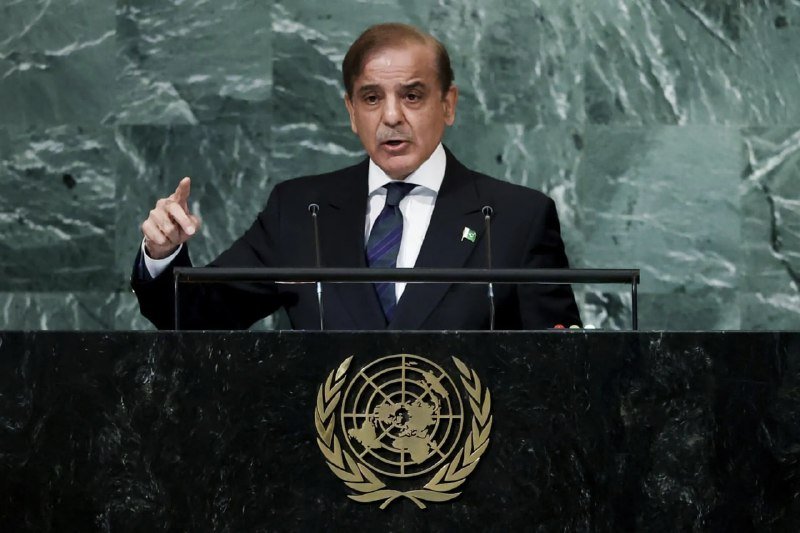
On 8 July 2026, three near-simultaneous statements from Turkish President Recep Tayyip Erdoğan landed within the same news cycle — each one calibrated, each one careful, each one designed to be read differently in Tehran, Washington, and the Gulf. The first: "We do not want the Strait of Hormuz to turn into a theater of war" (Clash Report, 18:06 UTC, 8 July 2026). The second: a reaffirmation that "Blue Homeland is a very, very important issue for us. Not only in the seas — when the time comes, we will continue to use it as a name within our borders" (Clash Report, 18:04 UTC, 8 July 2026). The third, moments earlier: "We are of course aware of the difficulties of the negotiation process. What is important here is that the will for a solution must be preserved. Despite the back and forth…" (Clash Report, 17:32 UTC, 8 July 2026).
Taken together, they are not the words of a mediator. They are the words of a regional power drawing its own red lines while claiming, in the same breath, the role of honest broker.
What Erdogan is actually saying
The Strait of Hormuz warning is the load-bearing line. Roughly a fifth of the world's traded oil moves through the chokepoint, and the phrase "theater of war" is a deliberate provocation. Ankara is not threatening Iran. It is warning external actors — primarily the United States and Israel, but also Gulf states now openly debating coercion of the Islamic Republic — that any military action which closes or mines the Strait pulls Turkey in. The Blue Homeland invocation, layered into the same morning, is the second signal: the Turkish naval doctrine that asserts Ankara's claim over large swathes of the eastern Mediterranean and Aegean is not a relic, and the language "within our borders" is a domestic-audience message that the doctrine is being normalised, not softened.
The third statement, on negotiations, is the diplomatic fig leaf. Erdogan is telling Tehran that Ankara is a fair interlocutor. He is also telling Washington, Riyadh, and Brussels that he wants a seat at any settlement table. The hedging is the point.
The Turkish interest, plainly stated
Turkey is the second-largest consumer of Iranian natural gas by pipeline volume, and any rupture in the Strait drives up the price of every substitute barrel Ankara buys. A shooting war on Iran's Gulf coast also threatens Turkish trade routes to Basra, to Qatar, and to the wider Indian Ocean. A negotiated outcome — slow, partial, reversible — keeps the gas taps open and the LNG arbitrage alive.
There is also a domestic-audience calculation. Erdoğan's Justice and Development Party is operating in a security-conscious environment where nationalist constituencies read any softening toward Israel, the Gulf, or the United States as submission. The Blue Homeland line is for them. The Strait warning is for the foreign-policy establishment in Ankara. Both audiences are addressed in the same news cycle, which is itself a tell.
The counter-read: is Ankara neutral?
The most charitable read is that Turkey is performing classic multi-vector diplomacy — talking to everyone, committing to no one, and extracting concessions from each side by being the indispensable channel. The less charitable read is that Ankara has chosen a side it cannot yet say out loud. A Turkish foreign-policy establishment that publicly invokes Blue Homeland and publicly warns against war in the Strait is signalling, in the same breath, that Turkish sovereignty and Turkish energy access are non-negotiable — and that any party that disrupts them will be treated as a hostile actor, regardless of how that party defines itself.
Iran's regional partners have heard the warning. Washington's Iran team has heard the warning. The Israeli security cabinet's analysts have heard the warning. The question each of them now has to answer is whether "we do not want" is the language of deterrence or the language of warning that a great power is being told to retreat before a fait accompli.
Stakes and what to watch next
The structural pattern here is familiar: middle powers in a region where the principal external player — the United States — is distracted, divided, and reluctant to project force, increasingly define their own red lines in public, and increasingly back them with naval and energy-infrastructure posture. Turkey is not the only state doing this. Saudi Arabia, the UAE, Egypt, and Pakistan are all running parallel hedges. The novelty is that Ankara is doing it openly, in three statements in a single morning, and naming the chokepoint by name.
The plausible forward paths are three. First, the negotiation track holds, Turkey is rewarded with a seat at the table, and the Strait language is filed as foresight rather than threat. Second, a kinetic event at the Strait forces Ankara to choose, and the Blue Homeland doctrine is operationalised in a way the Mediterranean theatre has not yet seen. Third, the language is read as bluff by one or more parties, and Erdoğan is forced to escalate in deed to preserve credibility. The sources do not specify which path is more likely. The fact that all three were publicly plausible enough to be addressed in the same morning of Turkish statements is itself the news.
Monexus framed this as a Turkish hedging story rather than an Iran-negotiation story: the principal actor, the principal risk, and the principal red line are all in Ankara, not Tehran.
Wire provenance
This editorial synthesis draws on the following public wire/social posts:
- https://t.me/ClashReport
- https://t.me/ClashReport
- https://t.me/ClashReport