Leverage and risk: the Hormuz crisis, the Lebanon withdrawal hint, and the shape of the next Middle East bet
Inside 24 hours the Trump administration threatened a Hormuz blockade, revoked the licence governing Iran's residual oil exports, and hinted at an Israeli pullout from southern Lebanon — moves that bind Tehran, Beirut, and Tel Aviv into a single negotiation with no off-ramp.
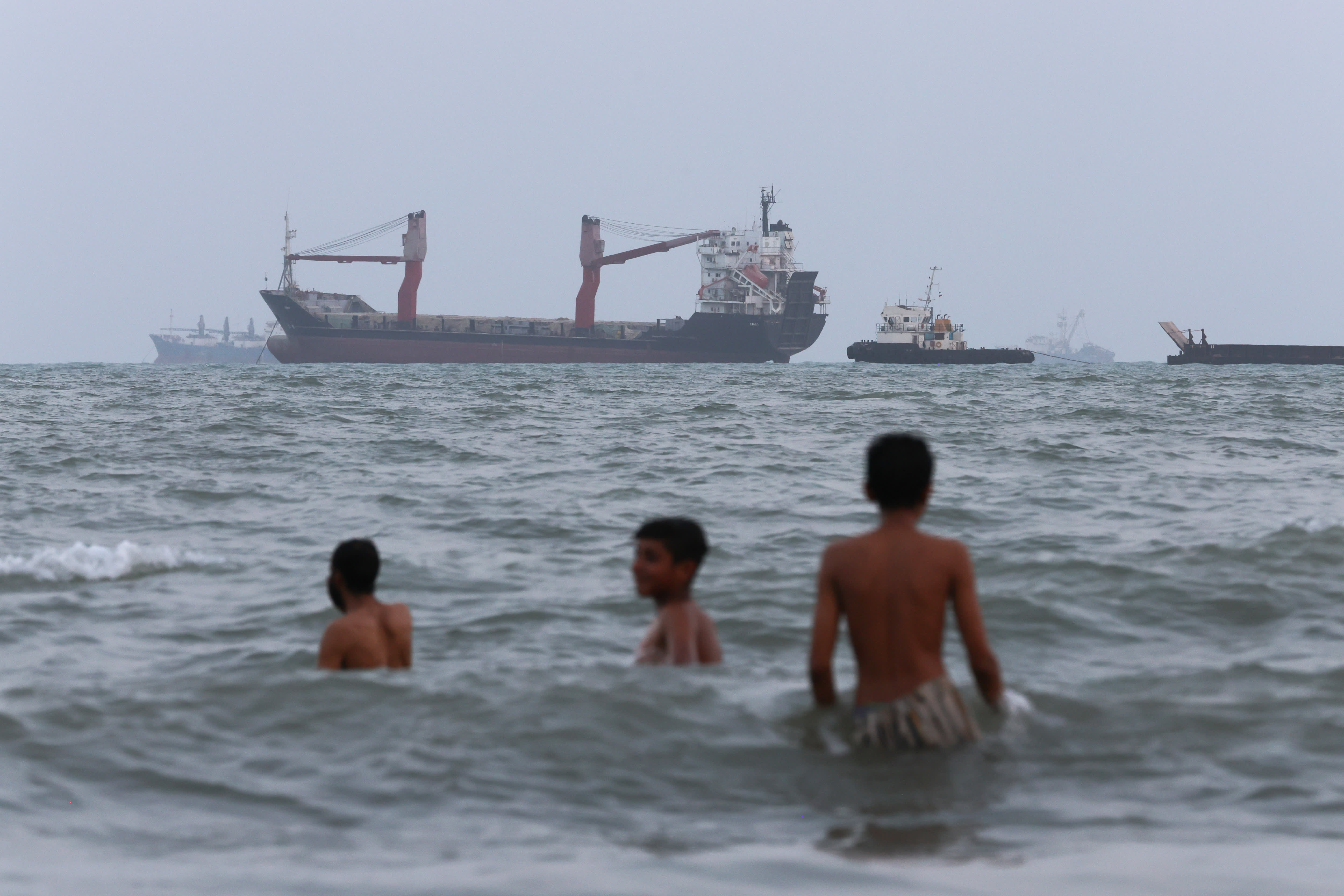
At 13:50 UTC on 8 July 2026, with the Iran file open on every desk in Washington and the oil curve already leaning, the US president said the words that traders, sailors, and diplomats had spent months trying not to price in. The United States, he announced, was considering reimposing a naval blockade of the Strait of Hormuz — the 21-mile-wide channel between Iran and Oman through which a substantial share of the world's seaborne crude moves each day. Less than a day earlier, Washington had revoked the licence that had allowed a narrow band of Iranian crude to reach buyers abroad, citing Iranian attacks on shipping in the waterway. The combination, delivered in 24 hours, was the sharpest escalation of economic pressure on Tehran since the most recent nuclear crisis broke, and it landed alongside a separate signal from the same office: that Israel, the United States' closest regional partner, was preparing to pull its troops out of southern Lebanon. The moves are best read together. They amount to a high-stakes attempt to use leverage — on water, on oil, on troops — to set the terms of a regional settlement whose contours are still being negotiated in private.
The connective tissue is energy. The Strait of Hormuz is the chokepoint no alternative pipeline network can fully replace at scale; even partial interdiction moves the global price of crude, forces re-routing around the Cape of Good Hope, and reshuffles the political weight of every Gulf producer. By revoking Iran's remaining oil-export licence and threatening a blockade, Washington is signalling that the economic floor under the Iranian state can be lowered further. By floating an Israeli withdrawal from southern Lebanon, the same administration is signalling that the military ceiling on the conflict can also be lowered. The bet is that Tehran, facing a tightening of energy revenue and the prospect of a quieter northern border, will accept a deal on terms more favourable to Washington and Jerusalem than the ones currently on the table. The risk is that the bet misreads what Iran, Hezbollah, and the broader axis of resistance are willing to absorb — and that an act designed as pressure becomes a trigger.
The Hormuz track: blockade threat, waivers revoked, attacks continue
The crisis has a clear chronology. At 16:27 UTC on 7 July 2026, Iranian forces intensified attacks on commercial shipping in the Strait of Hormuz, according to reporting carried by The Guardian. Within hours, at 19:11 UTC the same day, the US Treasury revoked the licence that had authorised a narrow band of Iranian oil sales, with a public warning that Hormuz aggression would carry consequences. By 19:20 UTC, the revocation was being reported as a direct response to the shipping attacks. The following afternoon, at 13:50 UTC on 8 July, the US president publicly raised the prospect of reimposing a naval blockade of the strait — a measure the United States last operated in force during the 1980s Tanker War.
Iran's framing of the same sequence has been explicit. At 16:59 UTC on 7 July, Tehran declared what it called a sovereign right to control parts of the strait — language that, in international law, is contested at best and indefensible at worst given the waterway's status as a transit passage under the United Nations Convention on the Law of the Sea. That posture, combined with attacks on commercial vessels, gives Washington the legal and political cover for a blockade that would have been harder to justify a week ago. It also raises a question that no market has fully answered: whether the US naval presence in the Gulf and Arabian Sea is configured to enforce a blockade of a coastline of more than 1,500 kilometres, with Iran's anti-ship missile batteries, fast-attack craft, and mining capability arrayed against it. The 1980s precedent required years of reflagging, convoy operations, and combat before shipping traffic returned to normal. The 2026 version would be fought by unmanned surface vessels, shore-based cruise missiles, and cyber tools that did not exist the last time this was tried.
The economic logic is straightforward. Iran's oil exports are the single largest source of foreign currency for a state under heavy sanctions. The revoked licence had been a partial release valve; its removal tightens the financial squeeze at exactly the moment Tehran is also absorbing Israeli strikes on its proxies and an internal security bill that is climbing. The implicit message is that the escalatory ladder in the waterway can be climbed in either direction — that the blockade threat is a bargaining chip, not an inevitability — but the chip is real. The risk for Washington is that the same logic applies in reverse: that any move short of full blockade is read in Tehran as another line not enforced, and that full blockade is read as an act of war.
The Lebanon track: a hint of withdrawal, weighted with caveats
Two hours before the blockade comments, at 14:38 UTC on 8 July, the same US president told reporters that he believed Israel was going to withdraw troops from southern Lebanon. The statement followed earlier remarks, circulated at 14:33–14:34 UTC, that Israel "wouldn't exist today" without the backing of the United States — the kind of affirmation of unconditional support that recent administrations have usually delivered behind closed doors rather than on camera.
The Lebanon signal is the diplomatic counterweight to the Hormuz threat. Israel's military footprint in southern Lebanon has been a standing source of friction with Beirut and a target for Hezbollah's residual rocket and drone capability, even after the leadership decapitation of late 2024 and the broader weakening of the group's external supply lines. A withdrawal, if it materialises, would be the first concrete movement on the ground in a year of exchanges that have otherwise moved sideways. It would also give Washington a deliverable to bring to any future negotiation with Tehran and with the Lebanese government: a quieter northern border in exchange for restraint in the waterway.
The caveats are several. Israeli security concerns along the Litani River and the frontier villages are real, are recognised as legitimate by the Western wire consensus, and have not been fully addressed by any announced political track. A US-brokered pullback would still require Israeli confidence that the buffer zone can be defended by the Lebanese Armed Forces — a confidence that has historically been in short supply. The president's language, moreover, is hedged: "I think Israel is going to withdraw," not "Israel will withdraw." The statement is calibrated to move expectations, not to commit troops.
What the Iranian counter-narrative says
Read from Tehran, the same 24 hours look different. Iran does not frame the Hormuz attacks as aggression; it frames them as enforcement of a sovereign claim over a waterway on its coastline. Iranian state media's narrative, echoed in the formal declaration of a sovereign right to control parts of the strait, treats the US naval presence in the Gulf as the provocation, not the response. The revocation of the oil-export licence, in that telling, is the third extraterritorial sanction in a sequence designed to collapse the Iranian economy, with the blockade threat the next step on a ladder whose top is regime change.
The structural case Iranian analysts make is that the United States has spent two decades contesting Iranian access to the international financial system, to global shipping insurance, and to oil buyers — and that escalation in the waterway is the predictable response of a state that has been denied every other lever. From that vantage, blockade is not a new policy; it is the logical endpoint of the existing one. The implication is that any Iranian concession on shipping, on nuclear activity, or on proxy forces will be made in exchange for the lifting of the underlying architecture of pressure — not for the absence of one more naval asset. Tehran's reading of the Lebanon signal is that the United States is trying to trade Israeli territory for Iranian restraint, without offering anything Iran considers its due.
That framing is contestable. The Western wire consensus holds that Iran's attacks on commercial shipping — vessels flagged to third countries, carrying cargoes unconnected to any blockade — are not enforcement but harassment, and that the cumulative effect is to raise the cost of trade for everyone who uses the waterway. The two readings are not mutually exclusive, and the diplomatic question is whether the United States is bargaining from a position that recognises only its own framing.
The structural frame: leverage without a destination
The pattern the last 24 hours illustrate is the use of asymmetric leverage — over energy flows, over allied troop deployments, over the residual oil trade — as a substitute for a political destination. The administration's strategy on Iran has, across its first eighteen months, leaned on a sequence of escalations and pauses: strikes on nuclear facilities, waiver revocations, a five-day war that ended in an unsteady ceasefire, and now a blockade threat layered on top of a revoked export licence. Each move tightens the economic noose; none of them is, on its own, a deal. The Lebanon signal adds a parallel lever, but the same observation applies: an Israeli withdrawal is a concession, not a framework.
This is the familiar shape of coercive diplomacy under conditions where the coercer has the bigger economy, the bigger navy, and the louder megaphone, but where the coerced party retains the ability to make the cost of coercion visible — in oil prices, in shipping insurance rates, in the headlines of every wire service. The leverage is real. So is the exposure. A blockade of Hormuz would, in the first weeks, push the price of crude up by a margin that is uncomfortable for any White House; it would also draw the United States into a naval operation that does not have a clean off-ramp, and that pulls in Chinese and Indian buyers as unwilling stakeholders in a conflict they have not chosen.
The broader transition this sits inside is the gradual unwinding of the architecture that has governed Gulf security since the 1980s — the combination of US naval dominance, OPEC spare-capacity management, and a sanctions regime that treated energy exports as a foreign-policy tool rather than a market. Each of those pillars is now under strain. The sanctions regime is contested by a Russian and Chinese energy complex that has learned to operate outside dollar channels. The naval dominance is contested by a layered Iranian anti-access capability that did not exist at scale two decades ago. The spare-capacity buffer is thinner than it was. None of those shifts is a surprise, but the current crisis compresses them into a single news cycle.
Stakes: who pays if the bet misses
The bet the administration is making can be stated plainly. If the blockade threat and the waiver revocation raise the cost of Iranian non-compliance faster than they raise the cost of US policy, Tehran moves on a deal. If the Lebanon signal demonstrates that the United States can deliver Israeli concessions, the credibility of the broader package rises. If the price of crude spikes but stabilises, the domestic political bill is manageable.
The inverse is the risk. If Iran responds asymmetrically — by intensifying attacks on shipping, by activating proxy cells, by demonstrating that a blockade of the strait is also a blockade of regional insurance markets — the cost of enforcement rises faster than the leverage. If the Israeli withdrawal stalls in cabinet, the Lebanon track produces nothing deliverable and the credibility of the overall package erodes. If the oil curve moves by a margin that breaks the budget arithmetic of a US election year, the policy becomes a domestic liability faster than a diplomatic one.
The actors with the most at stake are not the ones usually named. The Gulf states, led by Saudi Arabia and the UAE, have spent the last five years hedging between Washington and Beijing; an extended Hormuz crisis accelerates that hedge in a direction that does not favour the United States. India and China, the two largest customers for Gulf crude, have a direct interest in the waterway remaining open and priced; both have signed strategic-partnership documents with Iran in recent years. The Lebanese state, in the middle of its own economic reconstruction, has an interest in an Israeli withdrawal that is matched by an interest in not being abandoned to a follow-on settlement it did not negotiate. Israel has an interest in northern quiet; it also has an interest in not trading troops for paper commitments. Iran has an interest in sanctions relief; it also has an interest in being seen to extract a price for any concession.
What remains uncertain
The sources do not specify the size of the naval task force the United States would assemble for a blockade, nor the legal framework the administration intends to invoke. They do not say whether the Israeli cabinet has approved a withdrawal timeline, or whether the president's "I think" language is a stand-alone trial balloon or a coordinated signal. They do not specify the dollar volume of Iranian crude that flowed under the now-revoked licence, nor the share of recent Iranian export revenue that was nominally compliant. They do not name the vessels targeted in the 7 July attacks, nor the flag states of those vessels. They do not disclose what private communications have passed between Washington and Tehran, or between Washington and Jerusalem, in the interval between the most recent ceasefire and the present escalation.
What is verifiable is narrower. The Strait of Hormuz remains a vital transit chokepoint for seaborne crude. Iran has, in the past 36 hours, declared a contested claim of sovereign control over parts of the waterway and intensified attacks on commercial shipping there. The United States has revoked the licence governing Iranian residual oil exports and has publicly raised the option of a naval blockade. Israel is, per US presidential remarks, expected by Washington to withdraw troops from southern Lebanon. Each of those statements is sourced; each is also the starting point of a forecast, not the end of one. The next 72 hours — the window in which the blockade threat is either operationalised, suspended, or quietly dropped — will tell the markets, the regional ministries, and the Iranian leadership whether the leverage is real or merely rhetorical.
This article sits inside the Monexus long-reads desk and is built from the 7–8 July 2026 thread cluster on the Iran–US–Lebanon file. Where the Western wire framing emphasises Iranian aggression and the Iranian counter-framing emphasises US coercion, the desk has carried both and let the chronological record do the weighing.
Wire provenance
This editorial synthesis draws on the following public wire/social posts:
- https://t.me/ClashReport
- https://t.me/BellumActaNews
- https://t.me/ClashReport