Iran signals Strait of Hormuz off-ramp while keeping the door ajar — but says trust was never the basis
Tehran's foreign ministry says the bilateral memorandum was never built on trust but on reciprocal commitment, while warning Washington against 'creating challenges' in the Strait of Hormuz.
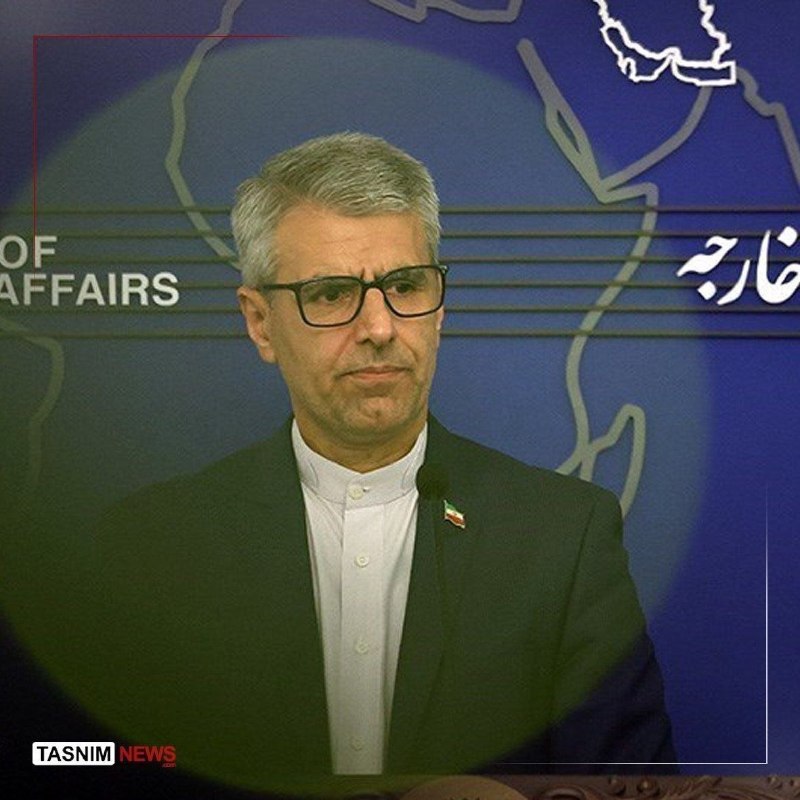
Tehran spent Tuesday afternoon delivering a single message through several voices: the unsigned memorandum of understanding with the United States is in force, but it was never predicated on trust, and any American move to "create challenges" in the Strait of Hormuz will be met with an Iranian response. Foreign Ministry spokesperson Esmail Baqaei set the tone in a statement carried at 17:12 UTC, framing the deal as "commitment for commitment" rather than reconciliation. A separate urgent bulletin from al-Alam Arabic minutes earlier carried the same line in Arabic, while a senior lawmaker quoted by PressTV went further: Washington, he said, has "no choice" but to recognise Iran's "new order" in the waterway.
The choreography is the story. Within a 25-minute window on 8 July 2026, Iranian state-aligned outlets produced three different formulations of the same point — denial that the MoU reflects a thaw, denial that the Strait of Hormuz is a free-fire zone for the US Navy, and a warning that Iran will safeguard its interests there. Read together, the message is calibrated for at least three audiences: Washington, the Gulf states watching from next door, and a domestic political class that remains deeply sceptical of any deal struck under sanctions pressure.
What Baqaei actually said
Baqaei's central line is procedural rather than emotional. The MoU, in his telling, did not "conclude on the basis of trust from the beginning," nor could it have. Trust, he implied, is built over time; what governs the present arrangement is a reciprocal ledger of obligations. The framing mirrors a long-standing Iranian negotiating reflex — codify the deal in narrow, technical language so that any violation can be flagged without reopening the political question.
That reflex has a purpose. It locks the United States into a compliance checklist (sanctions relief milestones, prisoner releases, verification of frozen funds) that Tehran can then administer one item at a time. The corollary, also visible in Tuesday's messaging, is that any American action outside the lane of the MoU — particularly military action in the Strait of Hormuz — is treated as a separate file, not as a breach of the agreement but as a provocation requiring a separate answer.
The Strait as the pressure point
The Hormuz reference is doing real diplomatic work in this exchange. Roughly a fifth of the world's seaborne oil transits the strait; Iran's coastline gives it a permanent ability to complicate that traffic through inspections, Revolutionary Guard inspections of foreign tankers, or kinetic action. PressTV's 16:50 UTC item, attributing the line to a senior parliamentarian, gestures toward the doctrine that has governed Iranian messaging on the strait for years: that the waterway is part of Iran's national-security perimeter and that external powers operate there only on terms Tehran tolerates.
The al-Alam Arabic bulletin carried the same logic in a press-spokesperson voice, citing Baqaei directly: "America is creating challenges in the Strait of Hormuz and Iran will protect its interests." That wording — "creating challenges" rather than "operating," "patrolling," or "interdicting" — is itself a posture. It implies that routine US Navy presence in international waters is being reinterpreted, in Tehran's framing, as a hostile act. Whether Iran intends to test that interpretation through boarding, inspection, or electronic warfare is the open question.
Yemen's statement, and what it adds
Outside the immediate Tehran-Washington exchange, IRNA reported at 15:57 UTC that the Yemeni government has condemned US strikes on Iranian territory and pledged continued support. The report frames the strikes as evidence of "criminal" American behaviour, language drawn from the broader Houthi-aligned communications ecosystem in which Sana'a operates. Yemen's relevance here is not bilateral with the United States — the two governments have no functioning relationship — but as a marker of which regional capitals are lining up, in word at least, behind Tehran's position. The statement is symbolic; its presence in the day's package tells the reader that Iran is presenting itself not as isolated but as the centre of a coalition of resistance against US policy in the Gulf.
Where the dominant framing holds, and where it does not
The Western wire read of Tuesday's exchange will treat Baqaei's "commitment for commitment" formulation as a hedging manoeuvre: a way to keep the MoU alive without conceding that the broader relationship has changed. That reading is plausible. There is a counter-reading worth taking seriously: the Iranian position is internally coherent. Trust was in fact never the basis of the MoU — the negotiating record of earlier rounds makes clear both sides negotiated under threat of re-sanction and continued deterrence, not under any shared political vision. Baqaei's public statement may be a defensive posture rather than a deceptive one. The uncertainty is whether "commitment for commitment" survives the next friction point — whether an American sanctions designation, a tanker incident, or a Houthi strike on Red Sea shipping is treated as in-lane or out-of-lane.
Stakes
For shipping and insurance markets, the relevant variable is whether Iran's signalling this week is read in London, Tokyo, and Mumbai as a credible threat to the Strait or as rhetorical positioning. War-risk premiums were already elevated before the MoU; if even a handful of boarding incidents or electronic-warfare engagements occur in the strait's approaches, premiums will rise further and rerouting through Saudi Arabia's east-west pipelines becomes commercially urgent.
For the United States, the immediate question is whether the MoU survives its first stress test. For Iran, the calculation is whether it can extract sanctions relief and frozen-funds release without giving Washington a political victory at home. For the Gulf states — Saudi Arabia, the UAE, Oman — the diplomatic geometry is moving away from an "Iran-as-threat-only" frame and toward a posture in which Tehran is simultaneously a negotiating partner and a disruptor of the waterway they all depend on.
That last point is the structural one. The Gulf is not splitting into two camps the way some Western commentary has assumed. It is hedging — engaging Tehran on diplomatic tracks while keeping Washington onboard as security underwriter. Iran's messaging on 8 July is calibrated for that hedging audience as much as for Washington itself.
This article was assembled from Iranian state-aligned Telegram channels and government news wires available to Monexus; Western-mainstream confirmation of the specific Baqaei statement was not in the wire package at the time of publication.
Wire provenance
This editorial synthesis draws on the following public wire/social posts:
- https://t.me/JahanTasnim/
- https://t.me/alalamarabic/
- https://t.me/alalamarabic/
- https://t.me/presstv/
- https://t.me/Irna_en/