Iran confirms eight armed forces killed in US strikes as IMF cuts 2026 outlook to 3 percent
Tehran has acknowledged the loss of eight service members in overnight US strikes, hours before the two sides are due to sign a peace accord in Geneva and hours after the IMF cut its 2026 global growth forecast to 3 percent.
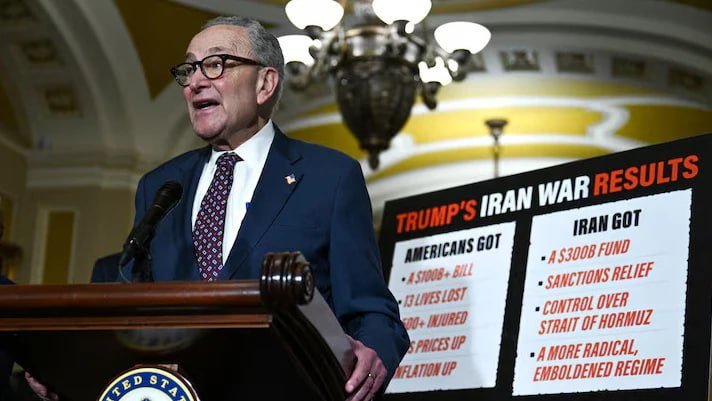
Tehran acknowledged on Wednesday that eight members of its armed forces were killed in US strikes carried out overnight and into the early hours of the morning, according to a live update from Middle East Eye and a parallel summary posted by the Russia-aligned RNIntel channel on Telegram. The disclosure, reported at 18:15 UTC and 17:57 UTC respectively, lands hours before Iranian and American delegations are due to sign a peace accord in Geneva on Friday, and within a single news cycle of President Donald Trump publicly suggesting that Iran is trying to assassinate him.
The arithmetic is jarring: a war that the White House says is winding down has just produced a confirmed body count on the Iranian side, while the headline economic price — a 3 percent world growth forecast from the IMF — is being paid by everyone else. The story of 8 July 2026 is less the strikes themselves than the gap between the diplomatic calendar and the military one.
What we know, and when we knew it
The two Iranian-side acknowledgements are the firmest data point of the day. Middle East Eye's live blog carried the figure at 18:15 UTC on 8 July, citing Iranian official confirmation; the Telegram channel RNIntel, which describes itself as a Russian-language intelligence feed, summarised the same confirmation at 17:57 UTC, using the verb "liquidated" to describe the strikes. That word choice should be flagged for any reader relying on Telegram traffic: the channel's framing is more florid than the underlying Iranian acknowledgement, and the two messages are not independent confirmations of the same underlying strike — they are two wires reporting the same Iranian statement.
The strikes themselves predate the confirmation. The Iranian announcement, as reported by both Middle East Eye and RNIntel, refers to "last night and early morning today," which places the kinetic action in the late hours of 7 July and the pre-dawn hours of 8 July, local time. US officials have not, in the materials reviewed here, publicly detailed which facilities or units were hit, what ordnance was used, or whether the strikes were retaliatory, pre-emptive, or part of a continuing air campaign suspended by a separate political track.
The diplomatic calendar keeps moving
The killing of eight Iranian service members sits inside a week defined by ceasefire diplomacy. Trump told reporters on 8 July that he does not expect the Iran conflict to start again, according to a Reuters wire logged at 17:10 UTC. The comment is consistent with the White House's broader line that the active phase of the war is over and that what remains is enforcement and negotiation — a frame the administration has held since the original ceasefire announcement.
That framing is, however, harder to square with the open-source intelligence circulating in the same hour. According to a post on the Open Source Intel Telegram channel at 16:58 UTC, the President told reporters in Ankara that he could "be gone" because Iran is trying to assassinate him, and reportedly returned to the claim three times in a single day. A reporter in the same press exchange asked whether he was departing Ankara not aboard the new Air Force One because of security concerns linked to Iran. Trump has not, in the materials reviewed here, presented evidence of an active Iranian plot, and Iranian state-aligned outlets have not, in these materials, responded to the allegation on the record. The White House line — war winding down — and the President's own language — assassination risk — are difficult to reconcile in a single coherent narrative, and that gap is itself the story.
The IMF has already priced the war
The economic cost is no longer hypothetical. The International Monetary Fund now expects the world economy to grow just 3 percent in 2026, according to a report filed by the South China Morning Post at 17:41 UTC on 8 July, framed by the wire as a downgrade attributable in part to the Iran war. NPR's parallel coverage on the same hour makes the channel through which the price is being paid explicit: crude oil prices jumped and equity prices fell after Trump declared an end to the ceasefire, with the outlet noting that the global economy entered this episode "already shaky." The two wires converge on the same diagnosis — a war that is being declared finished in diplomatic language is still being priced in financial markets as ongoing.
The structural point worth stating plainly: a 3 percent global growth figure is not, on its own, a recession. It is, however, materially below the IMF's own pre-war baseline, and it concentrates the cost in import-dependent emerging markets whose currencies have already taken the brunt of oil-price volatility. The wires reviewed here do not break the downgrade down by country, so the burden of the adjustment is not visible in the available reporting.
What remains contested, and what to watch
Three things are not yet knowable from the open materials. First, whether the eight killed were regular Iranian Army, Islamic Revolutionary Guard Corps, or a paramilitary affiliate — the Iranian announcement reported by Middle East Eye does not, in the excerpts available here, specify the branch. Second, whether the strikes were coordinated with the Geneva track, ran in parallel to it, or were a unilateral escalation that the diplomatic process will be asked to absorb. Third, whether the assassination language from Ankara represents a new US intelligence assessment or a rhetorical posture designed to harden the American negotiating position before Friday's signing.
The dominant Western wire framing — that this is a war in its final hours, with occasional kinetic punctuation — holds only if the Geneva accord is signed as scheduled and holds. The Iranian acknowledgement of eight dead is a reminder that the same week contains both a peace accord and a body count, and that financial markets have already chosen which one to believe. NPR's framing — that tensions with Iran "add fresh uncertainty to an already shaky outlook" — is the most defensible read of the moment: not a return to war, but not the clean ending the ceasefire language implies.
Desk note: Monexus framed this as a divergence between the diplomatic calendar and the military calendar, rather than as either a clean end-of-war story or a return-to-war story. The wire materials reviewed here support neither a triumphant "peace broke out" line nor a "fighting has resumed" line; they support a quieter and more accurate reading — that the war is being declared finished faster than it is being finished, and that the IMF has already taken out the insurance policy against the gap.
Wire provenance
This editorial synthesis draws on the following public wire/social posts:
- https://t.me/rnintel
- http://reut.rs/4eRHuGX
- https://t.me/osintlive