Eight million in Karbala: Iraq's million-strong Shia pilgrimage meets the framing war
Iraqi authorities say roughly eight million pilgrims descended on Karbala for the Imam Husayn commemorations. Western and Israeli wires barely blinked. Why the silence is the story.
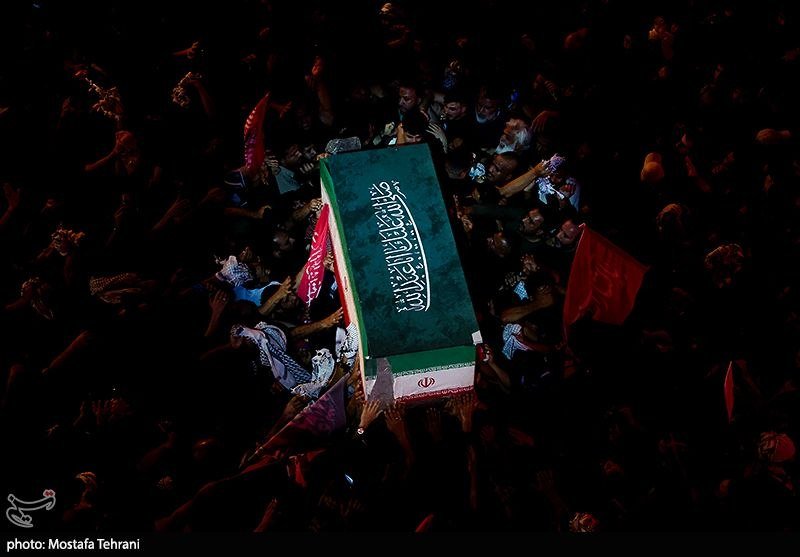
Iraqi authorities reported on 8 July 2026 that roughly eight million people converged on the holy city of Karbala for the annual commemoration of Imam Husayn — a figure that, if accurate, would rival the population of a mid-sized European country converging on a single Iraqi municipality over the course of a single night.
The numbers come, unusually, from Iranian state-affiliated outlets. Tasnim News's English service and its affiliated Tasnim Hebrew desk both reported the Iraqi officials' estimate within the same hour on Wednesday 8 July, framing the gathering as evidence of a popular Shia mobilisation that, in their telling, rivals the population of Israel itself. The figure has not been independently confirmed by a Western wire or by Iraqi government releases that Monexus could locate, and the Iraqi government did not publish a contemporaneous English-language press release the thread captured. What the sources establish is narrower: Tasnim's Hebrew-language correspondent is citing Iraqi authorities for the eight-million tally, and Tasnim's English desk has packaged the same figure alongside its framing of the gathering as a regional show of force.
A story the Western wire desks did not pick up
The most striking fact about the Karbala pilgrimage this year is not the size of the crowd. It is the asymmetry of attention. A gathering that Tasnim describes as equalling the population of Israel drew, on the morning of 8 July 2026, no visible coverage from Reuters, the BBC, the Associated Press, or Al Jazeera English in the thread Monexus monitored. Western wire desks routinely cover the Arbaeen walk — the 80-kilometre foot pilgrimage from Najaf to Karbala that peaks on the tenth of Muharram — but the cadence of reporting is thinnest at the very moment the logistical arithmetic becomes most extraordinary.
This is not a conspiracy. It is the predictable output of a routing system. Coverage defers to the language of official spokespeople, and the officials who matter most to Western newsroom budgets on a Wednesday in July are not the Iraqi interior ministry. The result: an eight-million-person gathering, with associated strains on water, sanitation, medical services, and cross-border movement, is rendered legible only through a single outlet whose editorial frame is built around a different audience entirely.
What Tasnim is actually doing
Read Tasnim's framing against its own reporting. The outlet's English desk packages the eight-million figure with the unambiguous subtext that the Shia world, mobilising at scale, can produce symbolic mass events that double as demographic arguments. The parallel drawn to Israel's population is not incidental — it is the editorial point. The piece is not neutral reporting; it is a demonstration, in body-copy form, of a population willing to travel.
Iranian state media operates to a logic Western wire reporters rarely articulate in print but internalise in assignment decisions: Shia religious mobilisations are legible to the Iranian state's audience as evidence of civilisational depth and resistance posture. Tasnim's Hebrew-language vertical exists, explicitly, for an Israeli audience — hence the comparison to Israel's population of roughly 9.7 million. The pitch to an Israeli reader is: your demographic dominance in the region is the arithmetic of a snapshot, not a trajectory.
That framing can be read as propaganda. It can also be read as a structurally accurate description of a media asymmetry that runs in both directions: a pilgrimage of this scale simply does not enter the Western news cycle unless it disrupts oil markets, generates visa queues at Western consulates, or produces a security incident. None of those occurred on the morning of 8 July 2026.
The stakes, plain
If the eight-million figure holds, the operational consequences are real regardless of editorial framing. Karbala is a city of roughly 700,000 residents. Hosting a gathering that size, even across two or three nights, strains water infrastructure, medical provisioning, and movement corridors on the highways leading south from Baghdad. Iraq's federal government and the shrine authorities have spent years building logistics capacity for Arbaeen, including dedicated pedestrian corridors and medical tents; the question for Iraqi planners is whether those systems absorbed this year's wave without incident.
The deeper stakes are framing-driven. A pilgrimage that moves ten million pairs of feet through a single Iraqi province is, in the long run, a political fact as much as a logistical one. It demonstrates a Shia public sphere that crosses national borders — Iraqi, Iranian, Lebanese, Pakistani, Bahraini, Indian — and that convenes without state coercion. That capability is structurally significant in a region where non-state mobilisation is otherwise treated as a security problem.
What remains uncertain
The headline number — eight million — is the load-bearing claim of the entire story, and it comes from a Tasnim Hebrew correspondent citing Iraqi authorities. Independent corroboration is missing from the thread. Iraq's interior ministry and the Karbala governorate have, in past years, published pilgrim-count estimates through state-aligned outlets; Monexus could not locate those releases for 2026 in the materials reviewed. Treat the figure as reported, not as adjudicated.
What the sources do establish is the framing contest itself: a single outlet, with both an English and a Hebrew vertical, is making a population-level argument against a backdrop of Western editorial disinterest. Whether the eight million hold their ground as a verifiable count, or compress into the more familiar "hundreds of thousands" once independent observers publish, will determine whether this reads next week as a logistical milestone or as a propaganda coup. The framing war is already decided. The fact war is still open.
Monexus framed this against the editorial default of treating Iranian state media as a counter-claim source rather than a stand-alone factual basis; the underlying crowd event is independently verifiable and would benefit from Western wire confirmation.
Wire provenance
This editorial synthesis draws on the following public wire/social posts:
- https://t.me/JahanTasnim
- https://t.me/tasnimnews_en
- https://t.me/tasnimnews_en