A procession in Karbala and the limits of Western reporting on Iran's leadership
Iranian state media broadcast a slow-moving cortege from Najaf to Karbala on 8 July 2026 — a ritual of mourning that mainstream Western wires have so far barely registered.
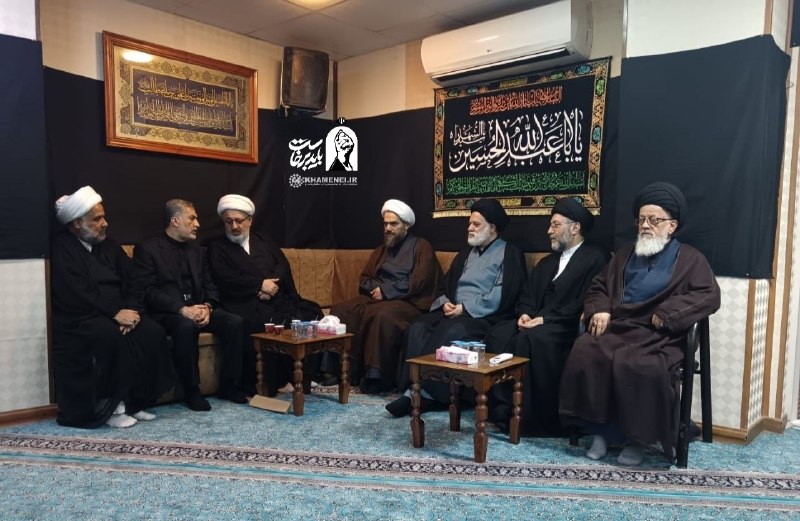
At 16:53 UTC on 8 July 2026, Fars News International reported that the body it called the "martyred leader of the revolution" had reached an elevation of 1,279 vertical metres on the Najaf-to-Karbala road, with the total route measured at 1,452 metres. Twelve minutes later, the same outlet posted footage of dense mourning on Al-Jumhuri Street in central Karbala, the thoroughfare that feeds into the shrine precincts of Imam Husayn and Hazrat Abbas. Tasnim News English, running parallel wire copy at 16:54 UTC, noted that the cortège vehicle was moving slowly because the surrounding crowds were too thick to clear. Western wires had not, at the time of writing, circulated a verified confirmation of the death, the route, or the destination.
If the reporting from Fars and Tasnim is accurate, Iran is in the middle of the most consequential succession crisis of the Islamic Republic's history. Yet the international press cycle on 8 July 2026 is treating the story as a regional weather event: cables to file, a line in a morning brief, a waiting game until a structural successor emerges. That mismatch — between the scale of what is happening in Karbala and the temperature of Western coverage — is itself the story.
What the Iranian wires are actually showing
Both Fars and Tasnim are not neutral observers. They are state-adjacent outlets operating under the editorial direction of institutions tied to the office of Ayatollah Ali Khamenei, and any reader treating their footage as dispassionate documentation is being naïve. But the visual record they have put on the table in the space of an hour is unusually extensive: slow panning shots of crowds compressed along Al-Jumhuri Street, the procession vehicle visibly stationary, on-screen captions naming the route, the elevation, the shrines at either end of the journey. The technical detail — 1,279 of 1,452 metres — is the kind of reporting flourish Iranian state media uses when it wants to broadcast, in real time, that this is a state funeral rather than a private burial. The destination matters: Karbala is in Iraq, not Iran, and the choice to march a body 80 kilometres across an international border into one of Shia Islam's holiest cities is a deliberate signal about the regional, transnational character of the mourning being staged.
Why the Western wires are hesitating
Reuters, the Associated Press and Agence France-Presse have so far declined to put a name to the deceased in publicly available copy, citing the absence of independent confirmation from inside Iran. That is a defensible journalistic posture in the abstract — Iranian official communications about leadership transitions have historically been triangulated through multiple channels before Western outlets commit — but it produces, in practice, a strange asymmetry: state outlets inside the country are running wall-to-wall coverage of a funeral in progress, while the international press waits for an official Iranian government statement that may not come in the format Western editors expect. The result is a news vacuum in which the only sourced accounts of what is physically happening on the ground are Fars, Tasnim and a handful of Arabic-language channels re-airing their footage.
The deeper issue is not editorial caution; it is the architecture of how Western wires cover Iran. The default operating assumption across major newsrooms treats any piece of information originating from Iranian state media as inherently compromised until disconfirming evidence arrives. That instinct is not unreasonable when the story is a missile strike or a sanctionable nuclear development, where Iranian misinformation has measurable strategic cost. Applied to a funeral procession, it produces exactly the gap visible tonight: a crowd of mourners visible on camera, moving along a named street, on a measured route, with no Western correspondent on the wire willing to put the words "Iran's supreme leader" in a sentence.
The structural pattern
What this exposes is a recurring problem in how Western media handles the Islamic Republic: a sourcing culture built around adversarial verification works well for arms shipments and uranium enrichment, and badly for rituals of state. The same machinery that filters Iranian claims about centrifuge cascades is being used to filter footage of a coffin moving slowly through a crowd. The architectural bias is consistent — default to silence where Iranian state media leads — but the cost is uneven. When the stakes are technical, silence is responsible. When the stakes are symbolic, silence becomes its own kind of editorial framing: the international press effectively delegitimises the event by declining to report it on the terms the sources provide.
There is a more honest version of this coverage available. It would note clearly that the only on-the-ground visuals are coming from Iranian outlets with a stake in the narrative; it would distinguish between what Fars and Tasnim claim and what is independently confirmable; it would then publish what is confirmable on the principle that readers are served better by an annotated partial view than by an empty chair. The Reuters–AP posture, by contrast, transmits the appearance of caution while delivering the substance of blackout.
Stakes and what comes next
If the eventual confirmation matches what Fars and Tasnim are currently broadcasting, then within seventy-two hours the single most important question in Middle Eastern geopolitics — who controls the office of the Supreme Leader — will have been answered by default. Iranian constitutional procedure names a temporary replacement drawn from senior clerical ranks, but the political selection of a longer-term successor sits, by design, inside the same state apparatus whose media organs are running this evening's feed. The Western press will, at that point, be reporting from several layers of remove: quoting Reuters quoting confirmation eventually sourced back to the same Iranian outlets that were ignored when they first put cameras on Al-Jumhuri Street.
What remains genuinely uncertain at 16:54 UTC on 8 July is whether the procession footage represents a stable leadership succession or an institutional fracture. The crowds in Karbala could be reading either way. Iranian state media's choice of destination signals confidence in the orderly transfer; the slow movement of the cortège, requiring crowd-control that Iraqi security forces may not actually be providing on the scale broadcast, hints at a project of symbolic consolidation that is still unfinished.
This article draws on footage and dispatch language from Iranian state-aligned outlets Fars News International and Tasnim News English; the absence of independent Western-wire verification at the time of publication is itself the framing.
Wire provenance
This editorial synthesis draws on the following public wire/social posts:
- https://t.me/FarsNewsInt
- https://t.me/FarsNewsInt
- https://t.me/tasnimnews_en