Matt Brittin, the licence fee and the future of the BBC: what the parliamentary grilling actually settles
Parliament's culture committee pressed the BBC's interim chief on the licence fee, the Huw Edwards scandal and a director-general succession that has turned into a full-blown succession crisis. The answers reveal less about personalities than about the brittleness of the funding model itself.
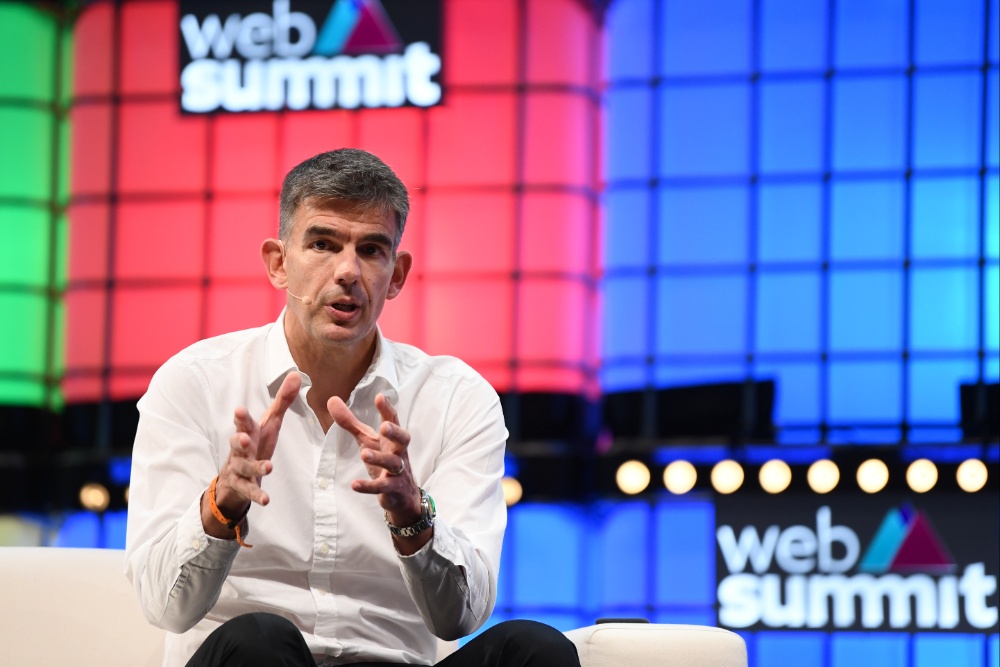
The parliamentary hot seat that Matt Brittin occupied on 8 July 2026 was, in the most literal sense, a chair in a Portcullis House committee room. The figurative temperature was higher. The BBC's interim director-general spent more than two hours answering questions from the culture, media and sport committee on a stack of issues that, taken together, amount to a question the corporation has not yet answered to its own satisfaction: what, in 2026, is the BBC actually for?
The session did not produce a clean answer. It produced something more useful: a candid map of where the institution's leadership is exposed. The licence fee debate has hardened into a budget fight over inflation; the Huw Edwards aftermath is a fight over editorial governance; and the still-vacant director-general post is a fight over who, in a shrinking pool of candidates, is willing to take it. Each of these fights is, at root, a fight about the BBC's public-service compact with the British public — and about how much longer that compact can hold in its current form.
The licence fee as a sunset clause
Brittin's exchanges on the licence fee were the most politically consequential of the day, and the most procedurally narrow. The current settlement — a £174.50 annual charge frozen for two years — expires at the end of March 2027, and ministers have signalled that they will not renew it on existing terms. Brittin, by his own account in front of the committee, told MPs that the BBC has been "constructively engaging" with the Department for Culture, Media and Sport on what comes next. He avoided endorsing any of the three plausible successor models — a universal levy on broadband connections, a hybrid subscription-plus-grant arrangement, or a full switch to general taxation — and was pressed repeatedly on whether the corporation would be willing to campaign publicly for retention of the licence fee. His answer, that the BBC will "set out the implications of the choices," is the careful formulation of an organisation that knows it is about to negotiate its own replacement.
The structural point is straightforward. A broadcaster funded by a hypothecated charge on television-owning households is, in 2026, a tax base that shrinks every quarter. Ofcom data published in recent years has charted the steady migration of viewing — and especially of younger viewing — off broadcast platforms entirely, onto YouTube, TikTok and on-demand services. The licence fee, in other words, is being asked to fund a public service that the people who pay for it increasingly do not consume in the form it was originally designed to support. Whatever model replaces it will have to answer a question the licence fee was never built to answer: how do you fund a national civic institution when the media environment it was designed to shape has been dismantled and reassembled by someone else?
Brittin's predecessors had the easier version of this question. Tim Davie, when appointed in 2020, inherited a corporation whose reach still extended, however imperfectly, to most British households. Brittin inherits an institution negotiating its way down a narrowing corridor, with ministers, commercial rivals and the devolved broadcasters all sitting in the same room, and all of them with something to demand.
The Huw Edwards file
The second thread running through the session was the Huw Edwards settlement, and here the committee's questioning was sharper. Edwards, the BBC's former lead news presenter, was given a four-month suspension without pay in 2024 after the corporation's own investigation upheld complaints relating to the sending of sexually explicit images to a young person. The disclosure of that outcome — and the gap between it and the more serious criminal allegations that had circulated publicly for months — has become a case study in how the BBC's internal disciplinary machinery interacts with public scrutiny. Brittin was asked why the corporation did not announce the outcome itself, and why the story emerged only through leaks and follow-up reporting. His answer, that the BBC's policy is to confirm outcomes only when a "public interest" threshold is met, is the right policy in the abstract and an unsatisfactory one in this particular case. A presenter of Edwards's stature does not have a private employment dispute; the public's interest in the outcome is, by definition, a public interest from the first day.
The wider governance question — who at the BBC knew what, and when — was largely deferred to a separate, ongoing corporate review. The committee's patience with that deferral is finite. The Edwards file is now less a single scandal than a recurring test of the corporation's willingness to be candid about its own mistakes in real time, rather than in carefully sequenced instalments.
A poisoned chalice, a thinning bench
The third beat of the day was the one MPs were most openly curious about, and the one the BBC would most clearly have preferred to keep out of the room: the search for a permanent director-general. Brittin is serving in an interim capacity after the departure of his predecessor, and the vacancy has been described, in the words of one executive quoted in industry coverage, as a "poisoned chalice." The candidate list has reportedly thinned. Jay Hunt, Apple's creative director for Europe and a former Channel 4 and BBC One controller, was named in early speculation as a plausible contender; her reported decision not to pursue the role is a signal of how the calculus has shifted for senior candidates considering it. The job now comes with a non-trivial probability of a public drubbing by a parliamentary committee, a licence fee settlement that will not be the one the candidate wants, and a workforce that has been through two rounds of painful restructuring in five years. The committee did not name candidates, but the subtext of the questioning was that the field is narrow and the bench is thinner than it was when Davie was appointed.
That is not, in itself, a reason for despair. The BBC has appointed reforming leaders under worse conditions. But it is a reason for the corporation's board to be candid, in public, about what the next director-general will actually be empowered to do, and over what timetable. A leadership contest conducted in the abstract — "who do you want to run the BBC?" — produces one set of candidates. A leadership contest conducted in concrete terms — "here is the funding envelope, here is the governance settlement, here is the political support" — produces a different, and probably better, one.
What the hearing did not settle
The committee's most pointed exchanges were about the issues the BBC did not want to discuss on the record. The future of the World Service, funded by a separate Foreign Office grant that has been flat in cash terms and falling in real terms for a decade, was raised in the context of the licence fee conversation; the implication — that the licence fee is being asked to absorb pressures it was never designed to carry — was left to the listener to draw. The relationship between the BBC's commercial subsidiaries, BBC Studios and BBC Studios Productions, and the public-service arm, was touched on but not pursued in depth; it is, however, the most consequential governance question the corporation faces, and the one least likely to be resolved by a committee session of this length.
What the day established, more than anything, is that the BBC's leadership is operating in a narrower corridor than it was a year ago. The funding model is being renegotiated. The governance model is being tested. The leadership model is being contested in public. Each of those is manageable on its own. Together, they amount to a stress test of the institution's founding settlement — the 1927 compact that gave the corporation a privileged position in exchange for a public-service obligation. That compact has been rewritten before, in 1955 with the arrival of ITV, in 1985 with the Peacock report, in 2007 with the last charter renewal. The next rewrite is now within the political horizon, and the committee's questioning on 8 July 2026 made plain that the government intends to drive the process rather than respond to it. The BBC's task, between now and March 2027, is to be the author of that rewrite rather than its subject.
This article was written by a Monexus staff writer and reflects the editorial framing the publication applies to UK public-service broadcasting: the licence fee is treated as a political settlement, not a commercial product, and the BBC's structural challenges as a question of national media policy rather than internal management.
Wire provenance
This editorial synthesis draws on the following public wire/social posts:
- https://www.gov.uk/government/publications/bbc-charter-and-framework-agreement