NATO's Rutte calls US strikes on Iran 'absolutely necessary' as alliance moves to enshrine the Russia threat in summit text
On the eve of a Hague summit that will formally elevate Russia to a long-term threat in NATO's strategic vocabulary, Secretary General Mark Rutte publicly endorsed US strikes on Iran — tying the two theatres of American power into a single message.
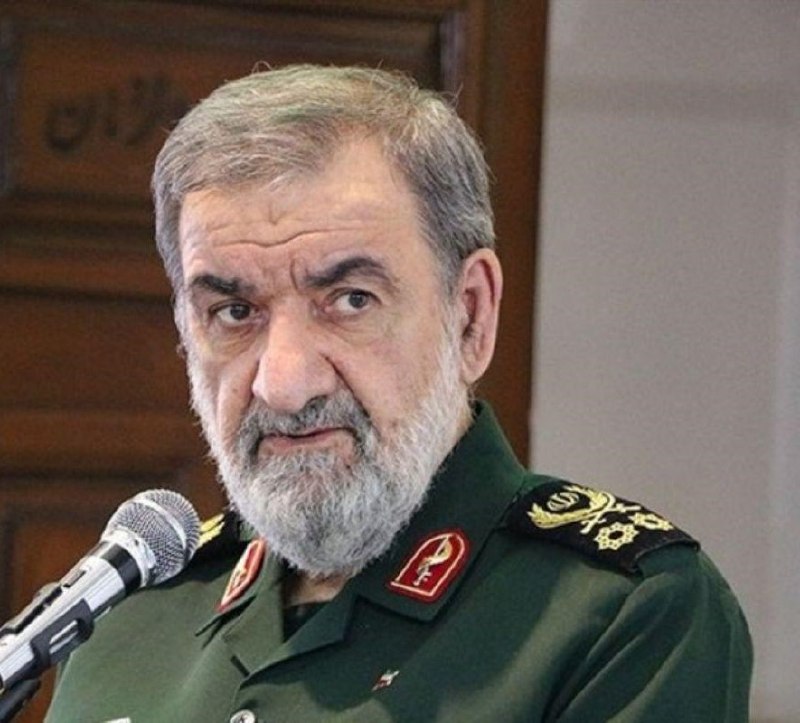
At a press availability on the margins of the alliance's pre-summit build-up on 8 July 2026, NATO Secretary General Mark Rutte called recent US military strikes against Iran "absolutely necessary," arguing that Tehran was "violating the ceasefire." The remarks, captured on camera by Euronews and circulated within minutes across X by the @sprinterpress account, landed within hours of a separate Ukrainian report that the summit's final communique will for the first time name Russia as a "long-term threat" rather than as the more familiar "acute" or "most direct" threat that has framed alliance language since the full-scale invasion of Ukraine in 2022.
The pairing is deliberate, and it travels. By publicly endorsing American force against one revisionist nuclear-armed state while simultaneously re-categorising another, Rutte is performing the alliance's updated operating theory: that NATO is no longer a regional defence pact stretched eastward, but the institutional spine of a Western security order confronting several revisionist powers at once. The Hague summit, which opens on 8 July, is the venue where that theory is meant to be written down.
What Rutte actually said
The question from the press pool was short — "What is your reaction to the recent US attacks on Iran?" — and Rutte's answer, captured in two independent video clips (one distributed by Euronews on Telegram, the other picked up by the open-source monitor @ClashReport), was briefer still. "I think it was absolutely necessary. Iran violates ceasefire," the Secretary General said, smiling through the response. Asked a second time by a separate reporter in the same gaggle, per the @sprinterpress clip, he repeated the formulation: "In my opinion, this action was absolutely necessary. Iran is violating the ceasefire." There was no qualification, no call for de-escalation, no mention of diplomatic off-ramps.
That absence is itself the news. NATO secretaries general are trained to speak in conditional verbs — the alliance is concerned, the allies have noted, partners should consider. Rutte chose instead the language of endorsement, in the present tense, on camera, in front of the cameras of two regional broadcasters. The choice tells the reader less about Iranian behaviour than about NATO's reading of its own room: there is, evidently, no political cost inside the alliance to publicly backing an act of American force against a third country.
The Russia paragraph waiting in the summit text
Almost simultaneously, Ukrainska Pravda's news desk reported, again at 05:41 UTC, that Rutte had confirmed that the final summit communiqué would contain an explicit reference to "the Russian long-term threat," and had emphasised that "it will be possible to talk about" the substance of that paragraph once leaders agreed on the wording. The phrase matters.
Since the spring of 2022, communiqués have referred to Russia as "the most significant and direct threat to Allied security." The shift from "direct" to "long-term" is not merely cosmetic. "Direct" frames the danger as an event the alliance must repel; "long-term" frames it as a structural condition the alliance must plan around — a posture of endurance rather than response, of capability rather than will. It is the language of an institution that has concluded it will live next to a hostile, nuclear-armed neighbour for at least a generation, and intends to budget, train, and procure accordingly. That is also the language that pairs neatly with the parallel line on Iran: a hostile nuclear-armed neighbour that is already breaking rules, paired with a hostile nuclear-armed neighbour that will keep breaking rules. Two theatres, one theory.
Why the Iran line is the harder one
The Russia paragraph is, in political terms, the easier one. Every NATO member has spent the last three and a half years aligning behind a common reading of the Kremlin's intentions, and the alliance's eastern flank has done the lobbying for it. The Iran line is more delicate. The United States conducted the strikes; NATO as a body did not. Several European allies — France, Germany, Spain, the Nordics in particular — have spent the post-2015 nuclear-deal era cultivating channels to Tehran precisely to keep them open against the day that this kind of operation might be required. For those governments, the Secretary General endorsing US action on the eve of a summit is not a neutrality question; it is a precedent.
The counter-reading worth holding in mind is that Rutte was doing what secretaries general do: he was reading the temperature of the room, not setting it. The Hague summit is the first to be held on European soil in five years, hosted by a Dutch government that has tilted markedly toward a harder line on both Russia and Iran. The text he endorsed is the text the United States wanted endorsed. The question the press did not ask, and which the available sources do not answer, is whether any ally privately demurred. If France's or Germany's foreign ministry subsequently circulated a note of "concern about escalation," as European ministries have after past US actions in the region, that would tell a different story than Rutte's on-camera endorsement.
The strategic sentence underneath both stories
Read together, the two threads from this morning's wire amount to a single argument: NATO is reorganising its threat taxonomy. The 2022 Madrid and 2023 Vilnius summits extended the alliance's frame to cover China for the first time, but in carefully adjectival terms. The Hague text, if Ukrainska Pravda's reading holds, retires the adjective. Russia becomes a long-term condition, Iran becomes an active rule-breaker, and the United States — which has done most of the kinetic work in both theatres — is publicly defended by the head of an institution that only eight years ago was still describing itself as a Euro-Atlantic regional alliance.
This publication reads that as the headline beneath the headlines: not "Rutte backs US strikes," but the alliance is being re-described, in writing, as the security organ of a wider Western order, and it intends to write that description into a communiqué whose lifespan is meant to outlast any single presidency. The structural shift is away from the reassurance-of-the-east posture that defined 2014-2022 and toward something closer to permanent forward defence against several revisionist peers at once.
Stakes, and what we still do not know
The stakes are concrete. If the communiqué language holds, allied defence budgets will be expected to sustain the 2-percent-of-GDP floor and almost certainly extend the 2.5-percent target ratified at last year's summit; long-range strike, integrated air and missile defence, and undersea cable protection become line items rather than aspirations. European industry — already pivoting toward ammunition, artillery, and deep magazines — receives a written signal that the demand curve is structural. For Ukraine, a Russia-coded threat paragraph does not unlock new aid packages by itself, but it forecloses the political argument that the war could be allowed to fade.
What the available reporting does not yet establish, and what Monexus cannot verify from the wire alone: the size and target set of the US operation against Iran that Rutte endorsed; the casualty figures, if any, on either side; whether the "ceasefire" being violated refers to the post-June-2025 de-escalation arrangement brokered under Omani mediation, or to a separate channel; and whether the Russia paragraph in the final communiqué will use the exact phrase "long-term threat" or a softened variant that merely gestures toward it. The Hague communiqué itself, and the post-summit press conference, will resolve those questions within 48 hours. Until then, the on-camera endorsement of US force by the head of NATO is the clearest single sentence the alliance has produced this year.
Desk note: Monexus framed this around the simultaneity of the two threads — the Rutte endorsement and the Russia-language shift — rather than around either one in isolation, because the simultaneity is the news. The Russia paragraph is reported here from Ukrainian wire; the Iran endorsement is reported from European and open-source channels. Iran's own state-aligned outlets have not, in the items available to the desk as of 05:56 UTC, responded to Rutte's characterisation; that silence is itself a data point.
Wire provenance
This editorial synthesis draws on the following public wire/social posts:
- https://t.me/euronews/
- https://t.me/ClashReport/
- https://t.me/ukrpravda_news/