'Pipes' and the Question of Who Sees a War: Karim Kassem's Lebanon at Karlovy Vary
A Lebanese director's new short premieres at Karlovy Vary with a thesis the regional press has been reluctant to print: war's toll extends past its casualties, into the labour and infrastructure that quietly keep a country standing.
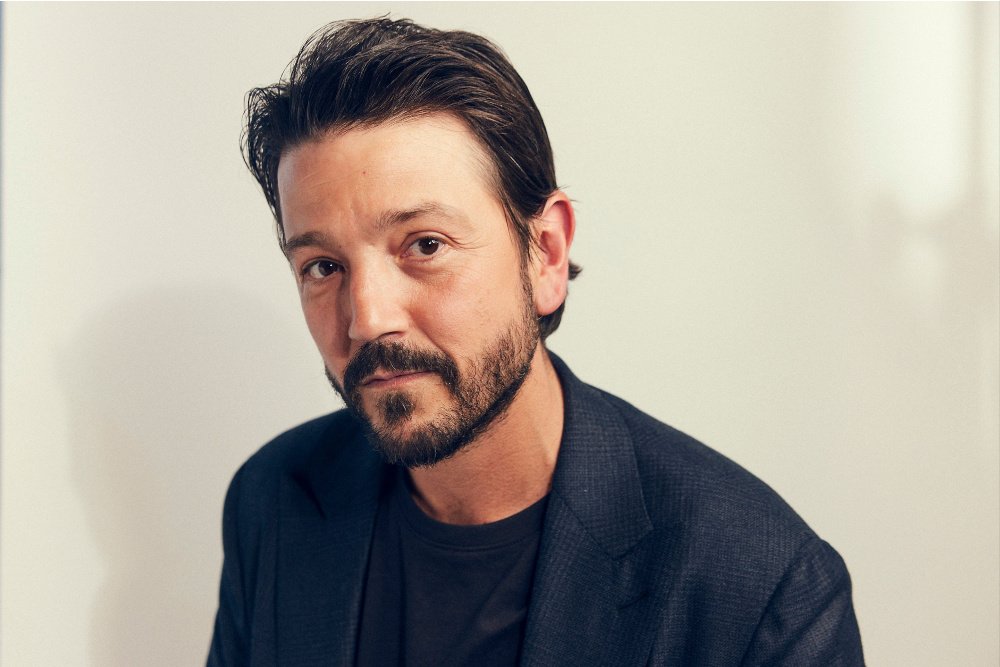
The short film premiering on 7 July at the Karlovy Vary International Film Festival runs just long enough to argue a point the Lebanese press has avoided for the better part of two years. Karim Kassem's Pipes, according to a profile published in Variety on 8 July, treats the country's migrant infrastructure — the workers, plumbers, electricians, domestic labour — as the connective tissue that determines whether a society recovers from war at all. It is, Kassem tells the trade paper, a film about people "affected by war" but invisible in its dominant imagery. The point lands because Kassem has spent a decade making that case across formats, from short film to commercial work for MENA broadcasters.
Kassem's pitch to the festival audience is straightforward: the framing of conflict in regional and Western coverage tends to flatten its material consequences. The casualty counts arrive; the reconstruction debate arrives months later, and the workers who carry it are absent from both. This publication reads Pipes as a continuation of Kassem's long-running argument that Lebanese cinema has an obligation to render the country's working population on screen, in part because no other institution reliably does.
The argument, on Kassem's terms
In the Variety interview, Kassem describes himself as one of the more prolific directors working out of Lebanon despite the country's protracted instability. The context matters: the Lebanese film sector has produced internationally recognised work across the last decade, even as the country's broader economy has contracted and its migrant workforce — drawn historically from Syria, Palestine, Egypt, Ethiopia, and South and Southeast Asia — has shifted in composition and legal status. Pipes, by Kassem's own framing, is not a documentary about that workforce but a fiction that puts the workforce in the frame.
The festival selection itself is part of the argument. Karlovy Vary remains one of the few European festival platforms that programmes MENA shorts at scale; for a Lebanese project that turns on migrant labour, the screening introduces the film to a curatorial audience whose own countries host significant Lebanese and Syrian diasporas. Kassem's commercial and short-film work has been consumed regionally more than internationally; Pipes pushes against that asymmetry.
What the dominant framing leaves out
Mainstream coverage of Lebanon over the past two years has run on two tracks. The first is high politics — the residual questions around the 2024 ceasefire architecture, the disarmament debate in the south, and the relationship between Beirut and Damascus. The second is humanitarian — displacement figures, reconstruction funding pledges, and the country's hosting of large refugee populations. Both tracks are real, but they share an editorial habit: the Lebanese state appears as a venue for negotiations, and the Lebanese citizen appears as a recipient of aid. The worker — the person whose labour produces the daily conditions of survival — is rarely the subject.
Kassem's framing pushes against that habit. The Variety profile quotes him explicitly: "A lot of people are being affected by war but we don't see the whole picture." The line is offered in defence of a fiction, but it works equally well as a diagnosis of how the war's aftermath is being narrated.
A structural read, in plain prose
What is being argued, stripped of theory, is that the architecture of post-war recovery in Lebanon depends on a workforce that the dominant media grammar refuses to centre. Plumbers, electricians, and domestic workers — many of them migrants — perform the labour that determines whether a bombed-out building is habitable, a clinic is functional, a school is open. The international conversation about Lebanon treats that labour as a residual cost rather than the substance of reconstruction.
This is a familiar dynamic in conflict coverage: the camera, the wire report, and the donor conference all privilege the moment of destruction and the moment of policy. The interval between them — the years during which the rebuilding actually happens, in the hands of workers who are usually absent from the coverage — gets short shrift. Kassem's Pipes, by his own account, is built to occupy that interval.
The counter-position is not that the dominant framing is wrong, but that it is incomplete. Western wires do report on reconstruction; international donors do fund labour-intensive programmes. What they under-report is the migrant status of much of that workforce, and the legal and political vulnerabilities that come with it. The film asks the festival audience to hold both halves of the picture at once.
Stakes
The stakes of the argument are concrete. If the post-war Lebanese recovery continues to be narrated without its workforce, the policy debate will continue to treat labour as fungible. If it is narrated with that workforce in view, the donor architecture — the EU's pledges, the Gulf reconstruction funds, the IMF negotiations — has to reckon with questions of pay, legal status, and the line between migration policy and reconstruction policy.
For Kassem personally, the stakes are curatorial. He is a director whose work has been consumed mostly inside the region; a Karlovy Vary premiere is a chance to put a Lebanese argument in front of the European festival circuit on its merits. The film is short, the platform is specific, and the case it makes is general enough to travel.
What remains contested
The sources do not specify the film's runtime, its full cast, or its distribution path beyond the world premiere. Kassem's broader commercial and short-film catalogue — referenced in the Variety profile — is not itemised there; this publication treats the catalogue's existence as established by the interview and does not enumerate it. The piece should also be read against an honest limit: a single trade-paper interview is evidence of how a director wants his film framed, not a complete picture of how it will be received. The festival reaction, and the post-premiere coverage in regional outlets, will determine whether the argument lands beyond Variety's pages.
This publication framed Kassem's argument as a challenge to dominant media grammar rather than as a celebration of Lebanese cinema, on the principle that a staff-writer voice earns authority by accuracy and restraint. The Variety interview is the single source for the director's quoted language; the structural read is the editorial frame this paper applied around it.