NATO's Rutte endorses the US strike on Iran — and that tells you where the alliance is heading
The NATO secretary general's full-throated backing of a renewed US attack on Tehran exposes a deeper shift: the alliance is no longer a defensive pact, but a clearing house for Washington's wars of choice.
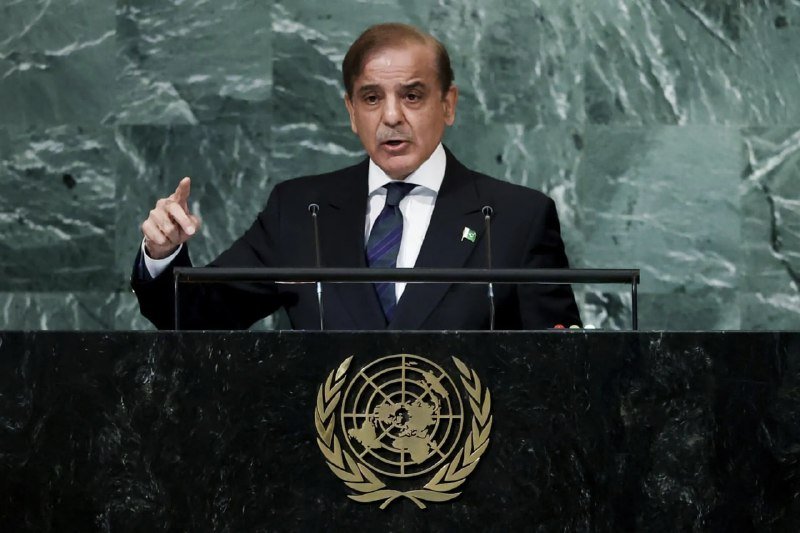
NATO Secretary General Mark Rutte said on 8 July 2026 that the latest US attack on Iran was "absolutely necessary," arguing that Tehran was "basically violating the ceasefire" and that it was therefore "crucial" for Washington to "forcefully react." The endorsement was delivered with the kind of crisp, unreluctant phrasing that used to be reserved for Article 5 solidarity statements. This time the article being defended was not European territory — it was an American war in the Middle East, on behalf of a NATO interpretation of a ceasefire that no neutral observer is currently enforcing.
The remark matters less for what it says about Iran than for what it says about NATO. An alliance built, in its public self-description, on the collective defence of its members has just provided political cover for a unilateral escalation by its most powerful member against a non-belligerent third country. That is not collective defence. It is alignment — and the difference is the story.
From Article 5 to political cover
Rutte's framing is a familiar one in the post-2022 alliance. When Washington acts, the secretariat general finds the language that makes the action sound inevitable, then broadcasts it. The pattern is now thick enough to deserve a name. In Brussels, the instinct is no longer to ask whether a contemplated US operation serves allied interests; it is to ask how quickly allied language can be mobilised behind it. The original bargain — European security in exchange for American power — has been quietly redrawn. The European side now supplies the legitimacy. The American side supplies the kinetic.
The Iran file is the cleanest test case. The strikes Rutte endorsed were not a response to an attack on a NATO country. They were, by his own account, a response to alleged Iranian behaviour inside an arrangement the United States itself negotiated and is now redefining in real time. Yet the secretary general's office did not pause to ask whether European publics — who have watched three years of Middle East escalation with mounting unease — were on board. The default position has become default endorsement.
What the Spanish fissure reveals
The Iran endorsement lands the same week that US–Spanish relations ruptured in public. Reporting carried by The Epoch Times on 8 July 2026 records that President Donald Trump has called Spain a "wasted cause" and threatened to cut trade ties after Madrid declined to join other NATO allies in pledging to raise defence spending. Spain's position was not radical: it is a NATO member, a committed EU actor, and a contributor to allied operations. The dispute is about the pace and shape of burden-sharing, not its principle.
The episode is instructive because it is the counter-image to Rutte's Iran comments. Where Spain hesitates on a budget number, Brussels hastens to bless a bombing run. The transatlantic bargain is not really about money. It is about who gets to define what the alliance is for. A NATO that endorses a US strike on a third party while publicly punishing a member for slow defence-spending growth is no longer a defensive pact. It is an instrument of US strategic preference, with a European cost base and a European flag of convenience.
The structural frame, in plain language
Strip away the institutional language and the trajectory is straightforward. A unipolar order runs on a single military currency. When that currency becomes politically expensive at home, the hegemon recruits allies to launder the cost — through burden-sharing arrangements, joint statements, and the quiet rewriting of mission statements. The result is an alliance that no longer needs a shared threat to act. It needs only a shared vocabulary, and a secretary general willing to use it on cue. Rutte's Iran comments, and the Spain row, are two data points on the same line.
Europe's complaint, when it bothers to make one, tends to be about tone — Trump is rude, the tweets are destabilising, the tariffs are insulting. The more consequential problem is that the alliance's centre of gravity has moved so far from its founding text that any future crisis will default to legitimising American action rather than constraining it. That is a different kind of risk, and a slower-burning one, than a trade spat.
Stakes — and what remains contested
If the trajectory continues, Europe gets an alliance that provides jets, bases, intelligence, and diplomatic cover for operations European publics did not vote for. The United States gets an off-the-shelf legitimacy layer for its Middle East policy. The losers are two constituencies: European electorates, whose governments speak for them at NATO councils in ways that increasingly outrun domestic consent, and the populations of the countries the alliance now blesses the bombing of. Neither group is at the table.
What remains genuinely uncertain is whether Rutte's comments reflect a coordinated allied position or a personal overreach by a secretary general eager to please the new Washington. The public reporting — Rutte speaking in a press exchange carried by The Epoch Times and amplified on X by @unusual_whales on 8 July 2026 — does not specify whether the alliance's 32 members were consulted before the language was issued. The sources also do not specify the operational scope of the new US strike, the casualty figures, or the specific Iranian actions that allegedly violated the ceasefire. Until those facts are on the record, the endorsement is, in effect, a blank cheque drawn on European credibility.
The default posture of the transatlantic press has been to treat Rutte's comments as straightforward alliance management. That framing is too kind. What an alliance is for is decided precisely in moments like this one — when the secretary general chooses to put his office behind a strike on a third country. The choice, in the end, was not America's alone.
This publication takes a different angle from the wire consensus: the more significant story is not the strike itself, but the speed and ease with which NATO's political leadership aligned behind it.
Wire provenance
This editorial synthesis draws on the following public wire/social posts:
- https://t.me/s/unusual_whales
- https://t.me/s/epochtimes