Strait of Hormuz is the chokepoint Iran and the United States are quietly squeezing
Tehran and Washington are again testing each other over the narrow seaway that carries a fifth of the world's traded oil. The escalation is incremental, the rhetoric is loud, and the margin for miscalculation is thin.
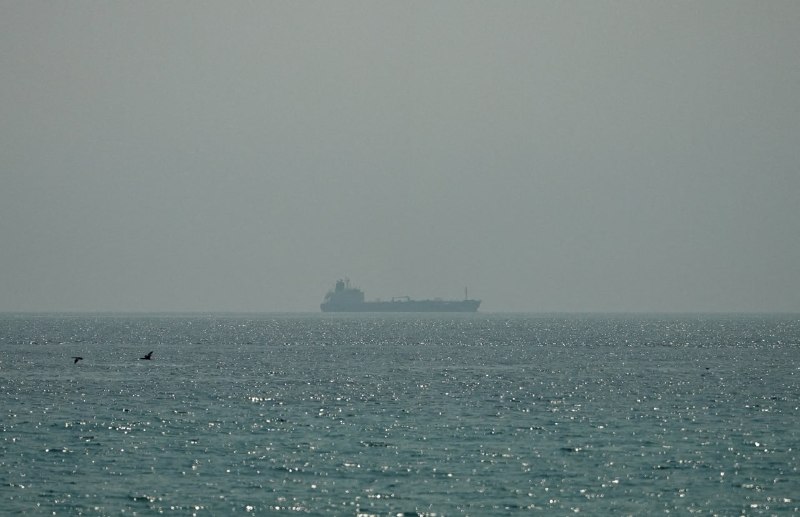
By the close of 8 July 2026, the question in Gulf shipping offices and Western energy ministries is no longer whether Tehran and Washington are trading threats over the Strait of Hormuz, but how close the exchange is to producing a real disruption. Iranian state media has spent the past 48 hours staging the confrontation as a managed standoff, with Press TV correspondents Roya Pourbagher and Homeira Ahad framing the dispute as an American overreach that Tehran can either tolerate or, if it chooses, weaponise against the seaway itself. The framing is not neutral — Press TV is the English-language arm of the Islamic Republic's broadcaster and reports in line with state priorities. But the underlying tension it describes is real, longstanding, and visible in Western naval deployments that have grown more public in recent weeks.
The thesis is straightforward: a corridor roughly 33 nautical miles wide at its narrowest, with shipping lanes compressed to a three-mile band in each direction, sits at the centre of a quiet contest between an incumbent maritime order that the United States has policed since the 1980s and an Iranian state that has spent four decades demonstrating it can disrupt that corridor without formally closing it. The current episode is the latest round in that contest, dressed in the language of management, transit rights and deterrence.
What the Iranian side is actually saying
Iranian state media has used the past two days to advance a consistent message: the United States is destabilising an arrangement that has, in Tehran's telling, functioned for years through quiet coordination with the Islamic Republic. The argument is that freedom of navigation through Hormuz is conditional on the United States not weaponising its naval presence in the Gulf, and that current American deployments — repeatedly described in Iranian coverage as a provocation rather than a reassurance — are pushing the arrangement toward rupture. The subtext is that Iran retains escalation dominance over the chokepoint itself.
This framing should be read with the source caveat that Press TV is not a neutral observer. It is, however, a useful window into how Tehran is calibrating its public line. The messaging is calibrated for two audiences simultaneously: a domestic one that is told the regime is defending Iranian sovereignty against American encroachment, and an international one — governments in Beijing, New Delhi and Tokyo, plus tanker operators — that needs to know whether Hormuz traffic is about to become a premium-risk environment.
What the structural picture looks like
Roughly a fifth of globally traded crude passes through Hormuz, alongside a large share of liquefied natural gas from the Gulf. There is no viable pipeline bypass for the bulk of Gulf crude; Iraqi, Kuwaiti and Qatari export volumes are effectively hostage to the strait's operability. Iran's geography gives it the means to harass that traffic with fast-attack craft, anti-ship missiles based along the northern shore, and naval mining — capabilities that have been built up over decades precisely for the scenario now being rehearsed in the press.
The United States, for its part, has treated Hormuz as a non-negotiable corridor for the global economy since the Iran-Iraq War's "Tanker War" phase, when the Reagan administration reflagged Kuwaiti vessels and the operation that followed effectively re-established Western control of the Gulf shipping environment. Successive administrations have kept a carrier strike group in or near the Gulf, supplemented by allied naval capacity, on the explicit premise that any disruption to Hormuz traffic is treated as a strategic shock requiring a military response. That premise is what Iran is now publicly testing.
The deeper pattern is familiar: an incumbent power treats a chokepoint as a public good it has underwritten, while a regional rival treats the same chokepoint as leverage it has been denied the formal custodianship of. The contest is rarely resolved through one decisive move; it is managed through a long sequence of calibrated pressures, signalling moves and mutual de-escalations, each of which can break down under the wrong conditions.
Why the rhetoric is louder than the risk — for now
Two things keep the present episode short of an actual closure. First, Iran does not want to close Hormuz. Tehran's own oil exports move through the same waterway, and a sustained closure would simultaneously deny Iran its primary hard-currency revenue stream while inviting a Western military response of a kind Iran is not seeking. The leverage Tehran enjoys is precisely that it can raise the cost of using the strait without shutting it — through the periodic detention of commercial vessels, the harassment of tankers, the staging of IRGC Navy exercises close to the traffic separation scheme, and the public rehearsal of closure scenarios in state media.
Second, the United States does not want an open conflict over the strait. A shooting war in the Gulf would draw in allied navies, spike global energy prices, and risk escalation along Iran's other axes — through Iraqi militias, through Lebanese and Yemeni fronts, and through its own missile and drone programme — in ways that an administration already managing multiple crises would prefer to defer. The pattern on both sides is therefore to push close to the edge of a disruption without quite producing one, and to leave the door open for the technical, behind-the-scenes de-escalation that has historically resolved these episodes.
What remains uncertain
The sources available for this article are not sufficient to identify the specific American deployment that triggered the current Iranian messaging cycle. Press TV references a "growing tension" and an "evolving standoff" without naming the ship movements, sanctions decisions or third-party incidents that catalysed the latest round. Western wire reporting on the incident — typically the more granular layer — is not represented in the material this article is built on. The framing in state media should be treated as one side's account of what is, in reality, a much more procedurally layered exchange.
What can be said with confidence is that the episode fits a recurring template: rhetoric from Tehran, naval signalling from Washington, an oil price reaction in Singapore and London, and a quiet diplomatic track that becomes more active as the public volume increases. The risk in 2026 is not that this template breaks in a single dramatic move. It is that an incident — a misidentified drone, a tanker collision in a darkened lane, an unannounced sanctions enforcement action — turns the managed standoff into a real one. That is the margin both sides are operating in, and it is narrower than the press coverage suggests.
Desk note: Monexus framed this piece from the Iranian state-media reporting layer, with the explicit caveat that Press TV is not a neutral observer and that the full incident requires Western wire reporting — which was not present in the thread context — for a complete picture. The structural argument draws on the open record of Hormuz as a contested corridor, not on the specific claims of either side's current messaging cycle.
Wire provenance
This editorial synthesis draws on the following public wire/social posts:
- https://t.me/presstv/1
- https://t.me/DDGeopolitics/1
- https://t.me/presstv/2