Strait of Hormuz in Flames: How a US-Iran Ceasefire Collapse Is Rewriting the Oil Map
Within twenty-four hours, the Trump administration declared a June understanding dead, revoked Iranian oil waivers and floated a renewed Hormuz blockade. Tehran claims parts of the waterway. Branded crude is repricing fast.
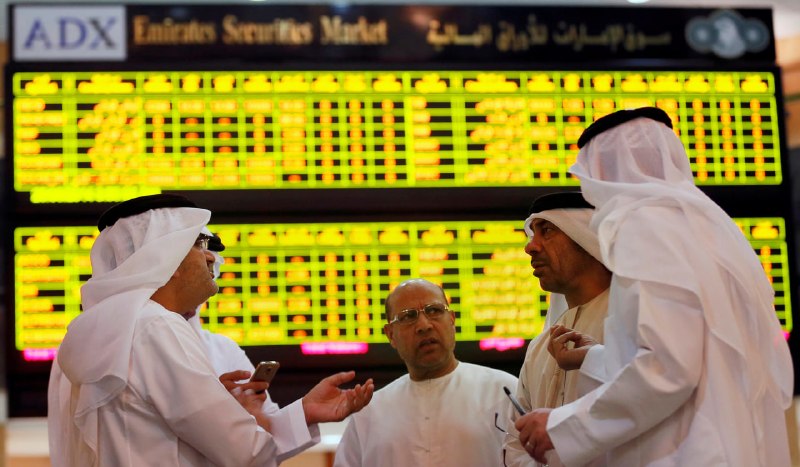
By the close of 8 July 2026, the brief, much-trumpeted US-Iran understanding that had cooled tensions in the Persian Gulf for roughly a fortnight was effectively in pieces. At 13:03 UTC, the X account associated with the prediction market Polymarket reported that Donald Trump had declared the Iran ceasefire "over." Ten minutes later, the same account logged a second item: the US president was floating the possibility of reinstating a naval blockade of the Strait of Hormuz. By 13:57 UTC, an Unusual Whales post summarised, citing the Yahoo Finance feed, that Trump had described the underlying US-Iran memorandum of understanding as finished. The sequence was not subtle, and the market read it instantly. A Telegram channel focused on the energy complex, Megatron, framed the move in its characteristic register: "After restarting the war with Iran, the price of branded crude oil explodes again."
What is unfolding is not a marginal escalation. It is a deliberate, public unwinding of a diplomatic track that, on the evidence of the past seventy-two hours, never held the weight that risk-on desks had priced into it. The United States has revoked the sanctions waivers that had allowed a narrow band of Iranian crude to reach buyers, after Iranian attacks on commercial shipping in the Strait of Hormuz, according to Axios reporting cited by Unusual Whales at 19:20 UTC on 7 July. Tehran has responded, via the same prediction-market channel at 16:59 UTC on 7 July, by declaring a "sovereign right to control 'parts' of the Strait of Hormuz." The Guardian, cited by the same account at 16:27 UTC, reports that Iran has intensified attacks on vessels in the waterway. The financial layer is real. A Kalshi contract quoted in the thread at 12:58 UTC on 8 July implies that speculators now put the probability of Hormuz traffic returning to normal levels by 1 December 2026 at just 44 percent. That is a structural repricing of the world's most important energy chokepoint, done in hours.
The collapse of the memorandum
The June arrangement between Washington and Tehran was always thin. It was, in the language of traders who watch the Gulf, a memorandum — not a treaty, not a protocol, not even the kind of structured interim deal that the Obama-era JCPOA or the early-2026 Saudi-Iran rapprochement produced. A memorandum can be set down. On 8 July, the US side appears to have done exactly that. The Polymarket account's item at 13:57 UTC — that Trump had said the memorandum was "over," per Yahoo Finance — captures a president treating a diplomatic instrument as a piece of paper he is allowed to discard. That posture is consequential not because of any legal weight the document carried, but because of what it signals about the credibility of US negotiating tracks with the Islamic Republic more broadly.
The revocation of the oil waivers, by contrast, has direct commercial teeth. Sanctions waivers are the mechanism by which a designated jurisdiction is permitted, for a defined window, to receive, insure, refine or ship crude that would otherwise be blocked. Pulling them compresses the legal universe for buyers in China, India, Turkey and a handful of Chinese teapot refiners who had come to depend on discounted Iranian barrels. Axios's reporting, surfaced by Unusual Whales at 19:20 UTC on 7 July, frames the waiver revocation as a direct response to Iranian strikes in the Strait — that is, a deliberate linkage between kinetic action and economic punishment. The Iranian foreign ministry's posture, that Tehran has a "sovereign right to control parts" of the strait, suggests that the linkage will not be permitted to stand without a counter-move.
The blockade question
The most consequential item in the cluster is also the most ambiguous. The Polymarket post at 13:50 UTC on 8 July reports that Trump "announces the U.S. may reinstate its blockade of the Strait of Hormuz." The modal verb is doing real work. "May" is not a programme of action; it is a signal that the option is on the table. But in the language of the Gulf, where Iranian naval doctrine has spent forty years calibrating responses to the implicit threat of a US blockade, the announcement itself is the event. Insurance underwriters, flag-state registries, and tanker owners do not wait for the Maritime Administration advisory to be filed; they reprice on the words.
A blockade of the Strait of Hormuz is not a normal policy tool. Approximately a fifth of globally traded oil passes through a channel roughly 21 nautical miles wide at its narrowest point, and Iran has the geographic capacity, with anti-ship missiles, fast attack craft, mining capability, and a subsurface fleet, to impose asymmetric costs on any interdiction force. The 1980s "Tanker War" precedent — when US and Iranian forces traded attacks on commercial shipping in the same waters, and the US reflagged Kuwaiti tankers under a now-discarded legal rationale — is the cleanest historical analogue. The standard counter-narrative, that the United States can impose control over the strait at acceptable cost, is grounded in the platform dominance of the US Fifth Fleet. The contrary view, that any blockade degrades into a slow-bleed war of attrition with no clean exit, is the position that Iran, by attacking shipping in the days before the memorandum was discarded, has already moved towards operationalising.
The market reaction, in real time
The Polymarket and Kalshi contracts that surface in the thread are not sentiment polls; they are instruments with money behind them. The 44 percent probability, on Kalshi, that Hormuz traffic does not return to normal flows by 1 December 2026 is the most informative single number in the cluster. It says, in effect, that the informed book is pricing more than four months of disruption as the central case. That is a structural change to the forward curve in seaborne crude, to freight rates on VLCCs, and to the cost of war-risk insurance for any hull moving in or out of the Gulf.
The Megatron Telegram post at 15:12 UTC on 8 July — "the price of branded crude oil explodes again" — captures the spot response. "Branded" crude in this register is the marker of physical grade: Murban, Dubai, Basrah Medium, Iranian Light where it is still transactable. The trade is well known. When the diplomatic floor drops out of the Gulf, the differential between physical Gulf grades and the Brent benchmark widens, refiners reach for alternatives, and the freight market in supertankers tightens. None of this requires a blockade to actually be declared. The threat, the wavering, the failed memorandum, and the attacks already in the water are sufficient to move the tape.
The counter-narrative: who gains from collapse
The dominant framing of the past twenty-four hours is a story of US escalation meeting Iranian retaliation. The counter-narrative worth weighing is structural. The Islamic Republic has, on the available evidence, a coherent interest in keeping the strait contested rather than keeping it open. A fully pacified strait is, for Tehran, a US-controlled strait in which the most powerful navy in the world operates as it wishes. A contested strait, by contrast, forces every consumer of Gulf energy — Beijing, New Delhi, Tokyo, Seoul, Brussels — to price Iranian displeasure into their calculations, and prices Iranian influence in the only currency the Islamic Republic has, which is the geography of its coastline.
From that angle, the attacks on shipping reported by The Guardian, the declaration of a sovereign right to "parts" of the strait, and the willingness to absorb a waiver revocation are not failures of Iranian statecraft. They are the deliberate re-imposition of a deterrent posture that the June memorandum had, briefly, suspended. The US, for its part, is not choosing escalation because it is the cheapest available option; it is choosing escalation because the alternative is to accept a pricing arrangement in which Iran can throttle energy flows at will. The structural frame is plain. Two states with irreconcilable positions on the legal status of the strait are, in a market where the cost of insurance reflects the probability of war, pricing each other out of the diplomatic channel they had occupied for two weeks.
Stakes, and what remains uncertain
The concrete stakes over the next four months are commercial, before they are strategic. Refiners in Asia will pay more for less reliable crude. Insurance underwriters will add war-risk premia to hull and cargo coverage in the Gulf, and in some cases decline cover entirely. European and Japanese strategic petroleum reserve drawdowns become a live policy option. The longer-tail stakes are about the architecture of energy security: a world in which the Strait of Hormuz cannot be relied upon is a world in which new pipeline corridors, including routes from the Eastern Mediterranean, from the Caspian via Turkey, and from the Gulf via overland export, carry a return that justifies the capex. It is also a world in which Iran's leverage, and by extension the leverage of any actor with the capacity to threaten a chokepoint, rises.
What remains genuinely uncertain is the depth of US commitment to the blockade path. The Polymarket line at 13:50 UTC on 8 July uses the modal "may," and Trump's own recent record on Iran is one of repeated public ultimatums followed by negotiated retreats. Iranian doctrine, for its part, has spent the post-2015 period learning how to manage periods of maximum pressure without losing the institutional coherence of the state. The book on Kalshi — 44 percent by 1 December 2026 — is the best public estimate of where the informed money sits, and it is consistent with neither a clean US victory nor a clean Iranian victory. The most plausible outcome is a long, low-grade contest over the legal status of the strait in which both sides have the capacity to impose costs, and neither has the capacity to finish the fight quickly.
A desk note on framing: the wire services have, on the whole, treated the past seventy-two hours as a discrete escalation event with named actors on both sides. The Telegram and prediction-market feeds that populate this thread's context treat it the same way, but in real time and in price action. The structural read — that a memorandum was always going to be discarded the first time either side wanted to move — sits below the event coverage, and is the more durable line to follow.
Wire provenance
This editorial synthesis draws on the following public wire/social posts:
- https://t.me/megatron_ron