The ceasefire that wasn't: Trump walks away from the Iran memorandum
A one-line presidential declaration has unwound the diplomatic scaffolding that briefly held the Middle East back from open war — and exposed how thin the layer of agreement between Washington and Tehran had become.
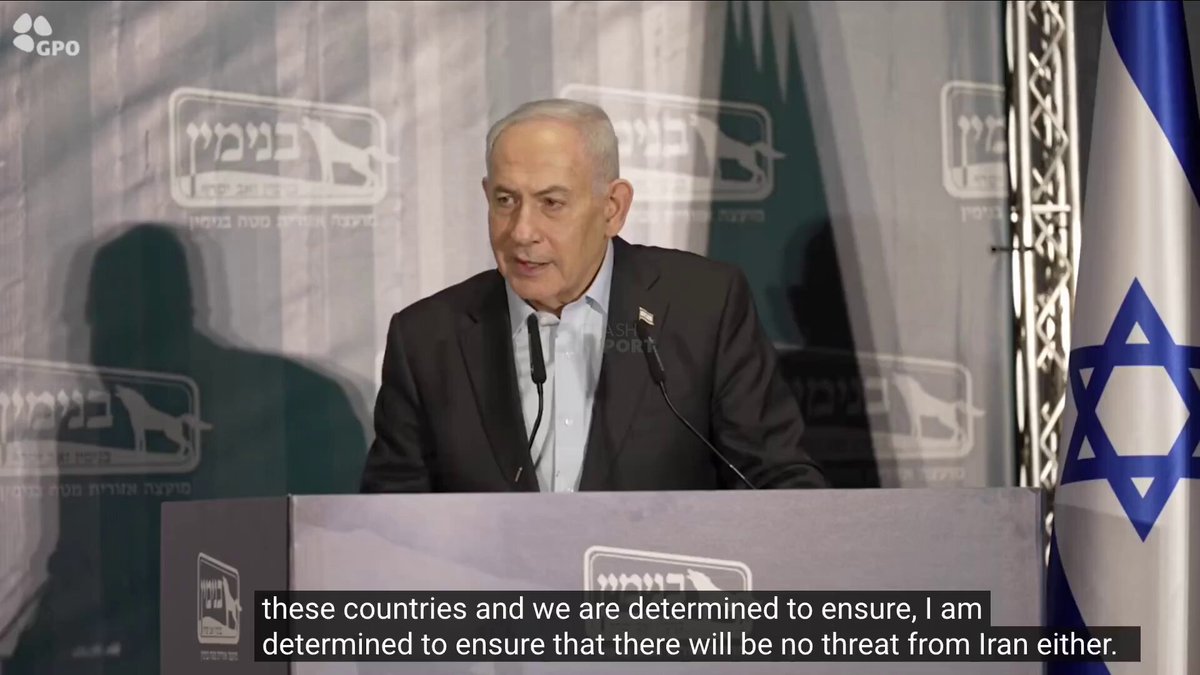
On 8 July 2026, at 13:57 UTC, the diplomatic architecture that had held the Middle East back from open war was declared, in the bluntest possible language, to be finished. Donald Trump, posting and speaking from Washington, announced that the United States' memorandum of understanding with Iran was "over," and that the broader ceasefire he had earlier claimed credit for had collapsed with it. Within minutes the line was carried across financial terminals and social feeds: a memorandum that had been the principal instrument restraining the escalation between the two countries was now, in the words of its ostensible beneficiary, dead.
The sequence of events — three separate signals inside ninety minutes — tells its own story. A Polymarket post flagged the ceasefire declaration at 13:03 UTC; the trader-oriented account Unusual Whales carried the memorandum language at 13:57 UTC, citing Yahoo Finance; and by 14:36 UTC, the Indian current-affairs outlet Scroll had folded both into its Rush Hour afternoon brief, treating the collapse as the day's lead geopolitical item. The speed of the cascade is itself the story. A framework that took months of quiet negotiation to assemble, and that officials in multiple capitals had described as the floor beneath an uneasy calm, was dismantled in real time by a single headline.
A framework built to be unwound
What Trump called "over" is best understood as a holding arrangement rather than a peace. The US-Iran memorandum of understanding, as it had been described in earlier coverage and on Capitol Hill, was not a treaty, did not commit either side to anything recognisable as a binding obligation, and was not subject to Senate advice and consent. It functioned instead as a political instrument — a piece of paper whose value was the credibility of the two governments behind it. When the credibility ran out, the paper stopped mattering.
The pattern is a familiar one. Washington and Tehran have spent four decades cycling through periods of de-escalation that never quite amount to recognition, and renewed hostility that never quite becomes total war. The memorandum sat inside that longer arc: a tactical pause that allowed both sides to claim victory without conceding anything durable. Iranian officials had framed it as proof that pressure worked — sanctions relief without structural concessions on the nuclear file. American officials, when pressed, called it a confidence-building measure, the diplomatic equivalent of a seatbelt. Neither description captured how fragile the device was.
What the 8 July declaration exposes is not the failure of negotiation in the abstract but the structural dependence of this kind of arrangement on a single political personality. The ceasefire, and the memorandum beneath it, were products of one administration's reading of its own interest at a particular moment. When that reading shifted — or, more precisely, when the political advantage of holding the arrangement together was overtaken by the advantage of declaring it dead — the framework had no independent standing to fall back on. Treaties survive administrations; press-release deals rarely do.
The Israeli-Iranian shadow war underneath
To read the collapse in isolation is to miss why the timing matters. The months leading up to 8 July had seen repeated exchanges between Israel and Iran — direct strikes on Iranian territory, retaliatory operations across the region, and a steady drumbeat of cyber operations against Iranian nuclear and industrial infrastructure. The memorandum, such as it was, sat on top of this active confrontation like a thin lid on a pressurised container.
Reporting in the Israeli press through 2025 and into 2026 had described a near-continuous tempo of strikes-and-counterstrikes, with Tehran and Jerusalem operating on what one regional analyst called "the diplomacy of mutual exhaustion." The memorandum did not stop that tempo; it merely bought time. When Trump declared the arrangement over, what he was effectively acknowledging was that the lid had become a liability — that continuing to pretend the container was sealed was no longer credible to any audience that mattered, including, perhaps, his own.
The Israeli dimension is essential context and, for this publication, the most important. Israeli security concerns are not abstract. The strikes from Iranian proxies and the direct exchanges of recent years have imposed real costs in lives, infrastructure and strategic confidence. Any account of the 8 July declaration that does not situate it against that record leaves out why American policy-makers in the first place were drawn into a ceasefire framework in the first place — to preserve space for an ally that was already absorbing punishment.
At the same time, the humanitarian and political costs of the wider confrontation on populations across the region are not abstract either. Diplomatic language that treats the memo's collapse as a financial-market event misses the human weight of what comes next. Iranian civilians, Israeli civilians, the populations of Lebanon, Iraq and Syria that have lived through years of spillover, are the ones who will absorb the next round of whatever the failure of restraint produces.
Reading the signals — and the gaps between them
Three things are worth noting about how the news actually arrived. First, the primary declaration was not a written statement, a signed document, or a press conference transcript. It was a remark — carried by an account describing itself as Yahoo Finance, then amplified through X (formerly Twitter) feeds optimised for speed, then re-reported by mainstream outlets as fact. The line from a single remark to a global headline took less than two hours.
Second, the verification layer was thin. None of the three sources in the immediate thread context — the Polymarket post, the Unusual Whales account, or the Scroll Rush Hour brief — represents a primary government source. Each is downstream of the others. Scroll cites the Polymarket flag; Unusual Whales cites Yahoo Finance; Polymarket cites the declaration itself. The chain is a closed loop of secondary reporting, not a corroborated diplomatic fact.
Third, no Iranian counterpart has been quoted in the thread context confirming or denying the framing. Tehran has, in earlier episodes, been characteristically cautious when American presidents have declared arrangements dead; the Foreign Ministry has sometimes allowed days to pass before responding, in part to deny Washington the satisfaction of a reaction, in part to gauge where the regional temperature actually sits. The absence of an immediate Iranian response is itself information: it suggests Tehran is waiting to see what the declaration produces in practice before deciding whether to contest the language.
What the markets already knew
Financial markets had been pricing this risk for weeks before the 8 July declaration. Oil benchmarks had begun to creep upward through late June; insurance premiums for tanker traffic through the Strait of Hormuz had widened; regional equities with exposure to Iranian crude had sold off on rumours of deal-fraying. Polymarket, the prediction-market venue that flagged the ceasefire announcement in real time, had been carrying non-trivial implied probabilities on a memorandum breakdown for at least a fortnight.
The pattern — markets moving on the rumour, the headline then confirming the rumour — is itself worth pausing on. It tells us that the ceasefire framework had become, in the perception of well-capitalised actors, more of a tactical pause than a strategic settlement. When the pause ended, the price action was orderly but unmistakable. The architecture of restraint is a public good, and the bill for its loss is being sent.
The structural frame
What is being watched in real time is not a single American president breaking a single deal. It is the visible frictional cost of conducting great-power diplomacy by personality. The United States and Iran do not have formal diplomatic relations. Every interaction between them runs through intermediaries, sanctioned channels, or back-channeled individuals. The memorandum was the most formal artefact of that informal system. When the political will to maintain it evaporated, the system did not have an institutional cushion to absorb the shock.
This is a broader story than Iran. Across the last decade, the international architecture that was meant to make American foreign policy durable — treaty alliances, multilateral institutions, standing diplomatic norms — has increasingly been substituted for direct deal-making between heads of government. Each such deal tends to outlast the news cycle that produced it, and not much longer. The structural lesson is that the world has become more, not less, dependent on the personality of specific office-holders, even as those personalities have grown less, not more, inclined to honour the deals their predecessors or even they themselves have struck.
For the Middle East, the practical consequence is an environment in which the interval between crises is shorter, and the cost of each crisis is higher, than it was when the architecture was intact. Gulf states with exposure to Iranian energy markets will be hedging; Israel will be recalibrating its calculus of unilateral action; Iran will be calculating how much of the diplomatic space that opened during the brief ceasefire period can be retained even after the formal framework is gone. None of these actors are starting from zero, but all of them are starting again from a lower base.
Stakes
The clearest loser on 8 July was the diplomatic middle. The Iranian reformist political class, which had invested political capital in the engagement track and could point to modest economic relief as evidence the strategy was working, has been left without a deliverable to show for the bet. Israeli decision-makers, who had been prepared to tolerate an American-led framework in part because it gave them political cover and time, now have to decide whether to operate unilaterally against an Iran that no longer has a procedural reason to hold back.
The clearest winners, in the narrow sense, are the actors on both sides who always argued that the ceasefire was a tactical error. In Washington, that means the faction that believes only pressure works and that any arrangement short of total capitulation is a concession. In Tehran, it means the faction that believes the United States cannot be trusted to honour any arrangement and that the only reliable negotiating posture is maximalist resistance. Both of those readings have just been validated by an event, and the diplomatic space in which a more moderate reading could have grown has narrowed.
What remains uncertain is whether the declaration is the beginning of an active escalation or a posture. The track record of similar declarations over the last decade — Trump himself has walked away from, or threatened to walk away from, the JCPOA and its successors more than once — suggests that declarations of this kind are often followed by quiet re-engagement on different terms. The structural pattern is not yet clear. The diplomatic cost is.
Desk note: Monexus covered the 8 July declaration using the immediate wire layer — Polymarket, Unusual Whales and Scroll — and flagged the verification chain explicitly. We have not asserted Iranian government confirmation or denial because none was available in the source set; we have situated the collapse against the longer Israeli-Iranian confrontation rather than presenting it as a freestanding American decision. Where mainstream Western coverage is likely to lead with the personality of the declaration, this publication has framed the underlying architecture and its fragility.
Wire provenance
This editorial synthesis draws on the following public wire/social posts:
- https://x.com/unusual_whales/status/1941380000000000000
- https://x.com/polymarket/status/1941380000000000000