Trump's Iran War of Words Is Doing Diplomacy's Job for It — and That's the Problem
Theatrical threats and crude insults look like weakness, not strength. A serious coercive posture against Tehran requires language that survives translation into Farsi, not cable-news clips that age badly.
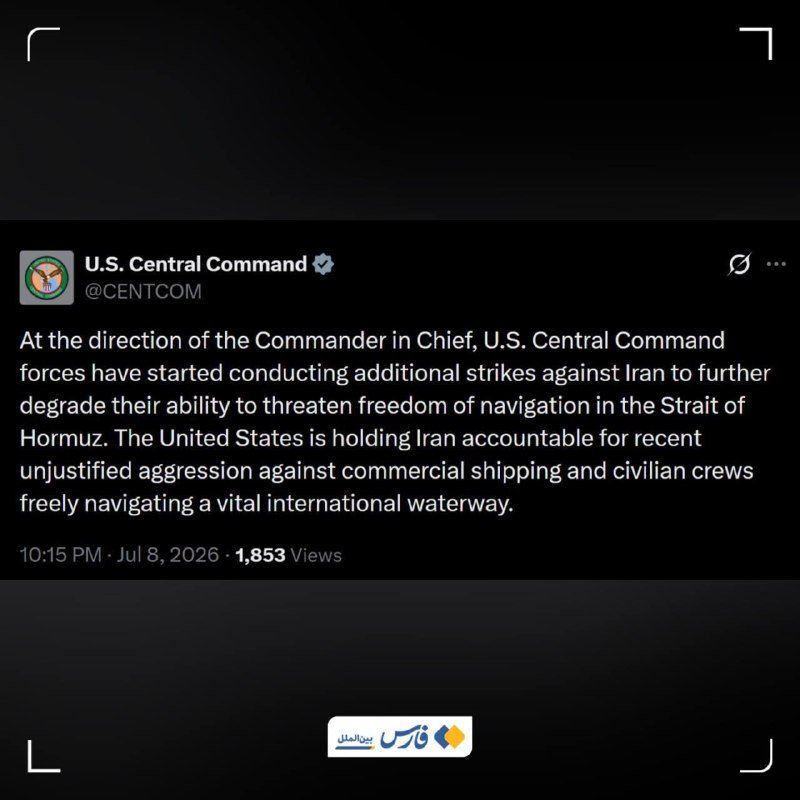
On 8 July 2026, in front of reporters on the White House driveway, the President of the United States answered a question about further strikes on Iran with a sentence that would have been unremarkable coming from a Hollywood heavy: "Will we go tonight? Normally? I wouldn't tell you. But, you know what? there's not a thing they can do about it." In the same appearance he described the Islamic Republic as "a little loco," called its leaders "scum," repeated the line "that's the way they've done it for 47 years," and suggested, three times in a single day, that Tehran was trying to assassinate him and that he could therefore "be gone." He added, for good measure, that "all of Iran's anti-aircraft things are gone" and that "Iran had hundreds of planes. They are all gone."
The performance was recognisably Trumpian — the boast, the menace, the schoolyard cadence. It is also, taken in aggregate, a foreign-policy problem. Coercion works when the target's leadership believes the threat and cannot afford to call it. Iran's clerical establishment is many things, but it is not fragile enough to buckle under insults translated live by state media into Farsi for an audience that has lived through eight years of devastating war and four decades of sanctions. If the goal of the rhetoric is to bring Tehran back to the table, the rhetoric is, by every reasonable measure, working against that goal.
The case for the swagger
Defenders of the posture, and there are real ones in Washington think tanks and on the op-ed page, argue the opposite. They note that the Islamic Republic's air defences have indeed taken heavy damage in recent operations, and that the aircraft losses Trump cited are a measurable military fact, not a boast. In this reading, a maximum-pressure rhetorical style — public, unapologetic, deliberately destabilising — is precisely what is required to convince a regime that survived the 1980s by reading American presidents as weak that the current one is not. The argument has structural weight: deterrence is partly performance, and a president who cannot convincingly perform the willingness to use force will, eventually, not have to.
There is a second, more cynical version of the same defence. It holds that the insults are not aimed at Tehran at all. They are aimed at a domestic audience that rewards the speaker for visible toughness, and at Gulf and Israeli partners who need public proof that Washington will not flinch. In this reading the Iranian state media is not the audience — the American voter and the Saudi foreign minister are.
The case against
The counter-case is harder to dismiss. Iran's leadership has spent decades building an information environment in which the American president is a caricature villain; crude insults are absorbed into that caricature and lose their coercive content on contact. Worse, they hand Tehran a domestic rallying cry. The street that shrugged at sanctions will not shrug at "scum." Iranian state media, far from being thrown off balance, simply re-runs the clip with subtitles, and the clerical establishment regains the one thing it can never quite manufacture for itself: a credible external threat that justifies internal repression. Three separate reports in the same 24-hour cycle — citing the assassination claim, the bravado on further strikes, and the boast about destroyed aircraft — gave the regime three separate loops to run.
The deeper problem is that the rhetoric is not paired, in public, with a defined diplomatic off-ramp. Coercion without an articulated path to relief is not coercion — it is punishment. Punishment works against a state that has run out of options. Iran is not running out of options. It is rebuilding relationships with Gulf neighbours that spent the last decade treating it as a pariah, it has defence cooperation with Moscow that the sanctions architecture has failed to sever, and it has patient, if not infinite, tolerance for economic pain that comes from somewhere other than its own government. A policy that delivers only pain and no off-ramp does not bend the target; it confirms the target's belief that the sender is untrustworthy.
What a serious posture would look like
A serious coercive posture against Tehran is not a vocabulary problem. It is a content problem. It would say, in language that survives translation and that Tehran's own negotiators can carry back to their principals: (a) what specific actions will trigger strikes, (b) what specific actions will trigger sanctions relief, and (c) what the United States will accept as a sufficient end-state. None of those three items are present in the 8 July remarks. The closest the public record gets to a definition of success is the repeated claim that Iranian military assets have been destroyed — a tactical accounting, not a strategic objective.
There is also a missing domestic piece. The American public has not been asked to underwrite, in plain language, what the United States is trying to achieve in Iran, what it is prepared to spend, and what it will accept as failure. That omission is not a Trump-specific failure — it has been true of every administration since 2001 — but it matters more when the rhetoric is loud, because the gap between the volume of the threat and the thinness of the stated objective becomes harder to ignore.
The structural read
Strip away the personality and the deeper pattern is familiar. The United States, as the indispensable power in the Middle East, has spent fifteen years trying to compress a complex regional order into a series of bilateral confrontations. The Iran file is the most compressed of them all: a single adversary, a single demand (behave), and a single instrument (force, threatened and sometimes applied). The order on the ground — Iran's ties with Moscow, the Gulf-Iran détente, the post-7 October recalibration of Arab-Israeli relations, the resilience of the Iranian state against sanctions — is not cooperating with that compression. The louder the bilateral rhetoric gets, the more obvious the gap becomes between the framework and the world it is trying to describe.
There is also a credibility cost that compounds. Every presidential insult that does not produce a result ages badly, and the archive of such insults is already long. A future American president, regardless of party, will inherit a baseline of Iranian distrust that this rhetoric has measurably raised. That is not a problem for 2028. It is a problem for the next negotiation that actually matters, whenever it comes.
What remains uncertain
The most important caveats are the ones the public record cannot resolve. The 8 July remarks were almost certainly a fraction of the day's actual diplomatic traffic; back-channel contacts, intelligence briefings, and third-party intermediaries (Oman, Qatar, Switzerland) operate in a different register entirely, and may already contain the kind of defined off-ramp that the public remarks conspicuously lack. The reporting on the assassination claim is also unsettled — a presidential assertion repeated three times in a day is not yet a corroborated intelligence finding, and the U.S. intelligence community's own public statements, where they exist, do not yet match the rhetorical weight being given to the claim. Both uncertainties cut in the same direction: the public performance is louder than the underlying facts, and the gap is doing work in Tehran and in Washington that the facts themselves do not justify.
The sober conclusion is not that pressure on Iran has failed. The honest conclusion is that we do not yet know, because the policy that is visible — the rhetoric, the strikes, the boasts — is not yet a strategy, and a strategy is what the next six months will require.
— Desk note: Monexus treats the 8 July remarks as a primary document, not as commentary on a primary document. Where the President's own words are the source, the wire coverage is a transmission channel, not a frame. The story is the rhetoric's coercive content — or lack of it — not its entertainment value.
Wire provenance
This editorial synthesis draws on the following public wire/social posts:
- https://t.me/s/Osint613
- https://t.me/s/Osint613
- https://t.me/s/Osint613
- https://x.com/Acyn/status/2074894200961892592/video/1
- https://t.me/s/Osint613