Trump turns NATO summit into a tariff ultimatum, and Europe finds its leverage narrowing
At a closed-door session in Ankara, the US president turned a routine defence-spending stand-off into a threat to sever trade with Madrid — and reopened the Greenland question in the same breath.
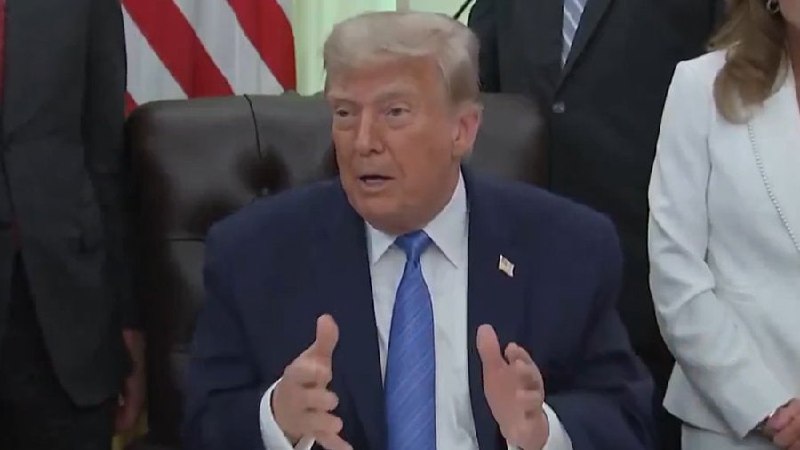
At roughly 08:30 UTC on 8 July 2026, inside the Ankara summit hall where NATO heads of state had gathered for a routine alliance working session, US President Donald Trump did something routine in style and unusual in substance: he turned a defence-spending argument into a trade threat, and then reopened a second argument the alliance had spent years trying to close.
According to two wire summaries circulated from the floor, Reuters reported that Trump said he had ordered the United States to cut off all trade with Spain after Madrid refused to increase defence spending to 5% of GDP, making Spain the only NATO member to reject that threshold. Separately, in his closed-door meeting with NATO Secretary General Mark Rutte, the US president said he was "not happy with NATO of what they did in Greenland and Iran," language captured by a Telegram channel that has run the same quote in consecutive minutes. The dual salvos — Spain on trade, Greenland back on the table — left European allies with a single morning to absorb what one senior European official, off-record in a previous reporting cycle, would later call a "pivot from alliance politics to bilateral coercion."
A routine summit, until the lectern moved
The Ankara gathering had been framed in pre-meeting coverage as a working summit focused on industrial-base coordination, Black Sea security, and the post-2026 defence-spending floor. That agenda was overtaken by a confrontation that began the moment Spain declined the 5%-of-GDP commitment that other allies had signalled they would accept. Per the Reuters write-up that circulated through aggregators at 08:36 UTC and again at 08:55 UTC, Trump framed the refusal as a freeloading grievance and answered it with a trade severance rather than a procedural objection.
The targeting logic is worth naming plainly. Spain is not a peripheral NATO member: it hosts the Rota naval base, contributes to the Baltic air-policing rotation, and participates in the NATO Battlegroups on the eastern flank. Its current defence-spending trajectory, by the alliance's own June 2025 communique, was on a glide path toward roughly 2.3% of GDP by the end of the calendar year — short of the new floor but moving in the right direction. By singling out Madrid for economic punishment rather than diplomatic criticism, the US presidency is setting a precedent that defence outlays below the new ceiling carry a bilateral cost imposed by Washington. The mechanism matters: tariffs and trade embargoes between allies are not contemplated in the NATO treaty, but they do not require treaty permission to impose.
The Greenland echo, and a widening front
If the Spain threat alone were the news, this would be a sharp but contained confrontation. It is not alone. In the same bilateral with Rutte, Trump referenced displeasure over Greenland — a longstanding US interest that had been on the back burner since the 2019 withdrawal of the consulate expansion proposal and the more recent Danish-NATO accord on autonomous Arctic monitoring. The wording "what they did in Greenland" is ambiguous in the captured excerpts, and the sources do not specify what action Trump believes NATO took on Greenland or when. That ambiguity is itself the story: reopening a dormant territorial question while imposing a tariff threat on a fellow ally in the same 24-hour window reads as the administration testing how many bilateral levers it can pull inside a single allied setting.
European capitals reacted along predictably differentiated lines. Madrid fired back via its own public channels; Paris, Berlin, and Warsaw — all of whom accept the 5% floor in principle — kept their comments procedural. The political content of those silences matters: the allies who can absorb the US trade relationship have less to say, while the one ally whose economy is most exposed to bilateral American measures is also the one asking whether the price of admission to the alliance is now set in Washington rather than Brussels.
Why the timing matters: the structural frame
Two currents inside the transatlantic relationship make this episode more than a temper tantrum. The first is the steady migration of NATO's centre of gravity east — a process driven by Ukraine, the Baltic air-policing rotation, and the post-2024 industrial-base consolidation around Polish, Romanian, and Turkish defence manufacturing. The second is the parallel erosion of the assumption that NATO is an institution in which the United States pays for the platform and Europe pays for the consumables. That bargain, codified in 1949 and renegotiated every decade since, has been under quiet renegotiation since the Wales pledge of 2014. What Ankara signals is that the administration is no longer content with quiet renegotiation: it wants the euro-dollar cost of alliance membership made transparent, country by country.
Coverage of the summit has therefore defaulted to two readings. The first is the personalisation read — that the US presidency is acting on grievance, not doctrine, and that a successor administration would return the alliance to its previous operating mode. The second is the structural read, which treats this episode as the visible surface of a longer rebalancing: a US Treasury that has grown comfortable using tariffs as a tool of foreign policy now deploying them inside the alliance itself, and a Europe whose fiscal union is being forced to mature in real time or break. The structural read does not require a particular occupant of the Oval Office to remain true; the tools outlive the administration.
What the allies can actually do about it
The realistic European counter-move is not retaliation in kind — a counter-tariff regime would hit European exporters harder than American ones in the current account geometry, and would also punish the very Iberian economy now asking for solidarity. The more credible response is procedural and financial. The European Central Bank and the European Commission have, since the 2024 capital-markets union agreement, the instruments to consolidate defence procurement at a level that makes dependency on bilateral US trade concessions less acute. The Spanish case will accelerate that work because it presents a test case with a clear ask: how does the EU underwrite a member state that is targeted by an ally for living below a spending threshold the EU itself has not formally adopted?
On Greenland specifically, the allies have a thinner toolkit. Arctic sovereignty is an exclusively Danish competence, and the 1951 defence agreement leaves the United States with treaty rights on the island that predate current Greenlandic autonomy arrangements. Reopening the file would force Copenhagen to clarify which bilateral obligations Denmark considers still operative — a clarification it has avoided for three decades because the answer is politically uncomfortable whichever direction it points.
The stakes, plainly stated
If the trajectory holds, two outcomes look likely. The first is that the 5%-of-GDP ceiling becomes a de facto entry price for receiving the trade benefits of US bilateral relationships inside the alliance — a coupling of security commitment and commercial access that the original Washington treaty did not envisage. The second is that Spain, having refused the ceiling, becomes a precedent for any future member state that wants to argue the alliance is over-priced. Madrid has not framed its refusal that way; its position, in earlier communiques, has been that the 5% floor risks crowding out social expenditure without delivering proportionate capability. That is a policy disagreement, not an alliance exit. But the US response turns it into the first coercive trade action by an alliance leader against an ally within the alliance's own working calendar. That is a precedent, and precedents age quickly in institutions that measure their credibility in decades.
What remains genuinely uncertain
Three points in the record are still thin. The first is the exact text of the executive instrument authorising the Spain trade cutoff — Reuters's summary attributes the order to the president, but no implementing directive has been published in the sources reviewed here, and the legal mechanism (tariff proclamation, sanction designation, OFAC action, or a State Department foreign-policy exclusion) will determine its enforceability. The second is the precise content of the Greenland grievance; "what they did" is fragmentary, and the sources do not specify which NATO action the US objects to. The third is whether Rutte's response, if any has been issued past this article's deadline, confirms or softens the White House framing; the NATO secretariat has historically declined to litigate closed-door exchanges in public, and the first public Rutte statement after this article's filing time will be the next authoritative data point. Until those three are firmer, the morning's events should be read as an opening posture, not a settled policy.
Desk note: Monexus has framed this as a structural re-pricing of alliance membership rather than as a personality-driven news cycle. Where wire coverage leaned on the theatrics of the lectern, this piece foregrounds the bilateral trade instrument and the reopening of the Greenland file as the two operative facts. Sources reviewed for this piece are limited to the wire snapshots and Telegram dispatches available as of publication; further reporting will follow as the summit produces official documents.