Eight dead and a shaky globe: what the NATO summit tells us about the new US-Iran rupture
Iran confirms eight military dead in overnight US strikes as President Trump, speaking from the NATO summit in Ankara, both downplays a renewed war and warns of an assassination plot against himself.
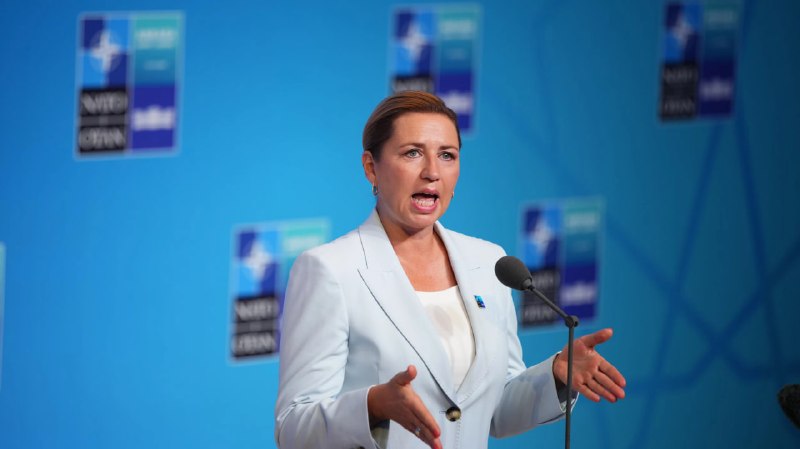
On the morning of 8 July 2026, Iran's government confirmed that eight members of its military had been killed in US strikes carried out overnight and into the early hours. The confirmation, carried by Iran-aligned channels including a Telegram post by RNIntel at 17:57 UTC, lands at the precise moment President Donald Trump is in Ankara for a NATO summit he is using to insist — in the same news cycle — that the war with Tehran is over, that it could flare again, and that he is personally being hunted.
The contradiction is the story. The United States and Iran spent the spring trading missiles and shadowing tankers; they then negotiated, haltingly, into a ceasefire whose terms were never publicly itemised. That ceasefire, in the words of NPR's reporting on 8 July, was effectively declared over by Trump, with crude prices jumping and equities falling on the announcement. The IMF now sees the world economy growing just 3% this year, citing the war as the marginal drag. Eight Iranian dead, an oil market on a hair trigger, a NATO ally hosting the American president, and a presidential warning of an assassination attempt against himself — this is what a "post-war" moment looks like when the parties never signed the same page.
What actually happened in the strikes
Iran's confirmation of eight military fatalities is the most concrete number to emerge from the renewed round of hostilities. The confirmation circulated through Telegram channels, including RNIntel, at 17:57 UTC on 8 July 2026. The strikes themselves were described as occurring "last night and early morning today," placing them across the overnight window of 7–8 July US time, with the target set described only as members of Iran's military.
The strikes reopen a sequence that the ceasefire had at least partially closed. The question of whether this constitutes a continuation of the prior exchange or a new chapter matters less than the operational fact: the United States is now hitting Iranian military personnel on a scale that Iran's own government is acknowledging, and acknowledging quickly. Public confirmation from Tehran, rather than the silence that often accompanies deniable operations, signals that the Iranian side has decided to put a body count on the record rather than absorb the loss quietly.
The specifics of what was struck, and with what ordnance, are not in the public reporting available on 8 July. The casualty figure, the timing window, and the Iranian government confirmation are. Everything else — target set, weapon type, location, rules of engagement — remains to be documented in the wire reporting that will follow.
Trump's two voices, in the same room
From Ankara, Trump has run two parallel lines in a single day. To Reuters, in a story filed at 17:10 UTC, he said he did not think the Iran conflict would start again. To the press corps at the summit, captured by channels including Open Source Intel at 16:58 UTC, he told reporters that Iran may try to kill him and that he may be "gone too, because I'm their number one target," a formulation he reportedly repeated three times in the day. Asked why he was reportedly departing Ankara not on the new Air Force One, Trump acknowledged security concerns tied to Iran, according to a reporter's question logged by Open Source Intel at 16:58 UTC.
In a separate exchange, captured by Witness from the Frontline at 16:53 UTC, Trump explained his own tonal shift on Iran's leaders — describing them, on different days, as both "very rational" and as "scum" and "sick people" — by saying he now views them differently than he did when the war was colder. The juxtaposition is the point. The American president is simultaneously selling the war as concluded and behaving — and being briefed — as if it is not.
NATO, the host institution, is not a party to the US-Iran fight. But Ankara is a venue that gives the rhetoric a global stage and a captive alliance audience. Whatever the merits of the security concerns driving the modified departure plan, the symbolic effect of an American president unable or unwilling to use the visible platform of US air power is not lost on either the Iranian government or the Gulf monarchies watching the room.
Markets, growth, and the cost of the rumour of war
The economic response has been as immediate as the political one. NPR reported on 8 July that crude oil prices jumped and stock prices fell after Trump declared an end to the ceasefire. The IMF, via the South China Morning Post's wire at 17:41 UTC, now projects world growth of just 3% for the year, with the Iran war cited as the marginal factor pushing the forecast down.
Three percent global growth is, on its own terms, not a recession number. It is, however, a downgrade from the post-pandemic baseline that financial ministries and development banks had been working with. The compounding effect of a 3% world with elevated defence outlays, higher energy premia, and re-routed shipping is to compress the fiscal space of the energy-importing emerging markets in exactly the period when their public-debt loads are largest. For African and South Asian economies, a 3% world with a 3% premium on imported diesel is a tighter world than the headline number suggests.
The market reaction also exposes how thin the ceasefire was. Equities and oil moved sharply on a presidential statement, not on a confirmed escalation. That tells you the trading floor had never priced in the ceasefire as a stable arrangement. It was, at best, a pause, and the price action on 8 July is the markets repricing that pause back to a war footing.
The counter-read: restraint, not rupture
The other reading of the day is that the system is, in fact, working. Eight casualties is a real number, but it is not a number that suggests a full reopening of the air campaign. Trump's own downplaying to Reuters — that he does not think the conflict will start again — is the line a commander-in-chief uses when he wants the market to settle. The Iranian government's decision to confirm the deaths and then, in the available reporting, stop short of threatening retaliation suggests the same posture from the other side.
The assassination talk cuts against the restraint read, and not only rhetorically. The reported modification of Trump's departure from Ankara — the suggestion that the new Air Force One was not used for security reasons tied to Iran — is a logistical fact that the White House has not, in the available reporting, formally denied or confirmed. If true, it implies an active threat picture, not a rhetorical one. If it is the press reading a routine security choice as geopolitically significant, it tells us something about how thin the line between operational fact and political theatre has become.
The most honest framing of 8 July is therefore the one both sides are signalling: the war is paused, the pause is fragile, and the parties are communicating through escalation and de-escalation in the same news cycle because the diplomatic channel is too narrow to carry the load on its own.
What this fits, and what it doesn't
The pattern is familiar. A great-power standoff produces a ceasefire that is, in substance, a tactical pause; the parties use the pause to restock and to signal; the global economy is asked to absorb the risk premium on the rumour of resumption; an international institution — NATO this time, the UN in other cycles — provides a stage rather than a settlement mechanism. The structural read is that the international order has, for the moment, fewer off-ramps than it did a decade ago, and the price of those off-ramps is being paid in oil, equities, and the casualty lists of other countries' uniformed services.
What 8 July does not yet tell us is whether the Iranian confirmation of eight dead is the closing line of a chapter or the opening line of the next one. Trump has, in the past, made the loudest statements about Iran and then accepted a de-escalation that the same statement appeared to rule out. The Reuters line and the Open Source Intel line can both be true if the underlying intent is to keep Tehran off-balance without paying the cost of a wider war. The risk is that the same ambiguity that gives Washington and Tehran room to back down also gives a third party — a proxy commander, an IRGC hardliner, a Gulf intelligence service — the room to escalate on nobody's behalf and on nobody's orders.
The honest uncertainty is on the timeline. The honest read of the evidence is that, on 8 July 2026, the war is not over, the ceasefire is not in force, and the world economy is being priced accordingly. The world grows at 3%. NATO hosts a president who cannot use the new plane. Iran counts its dead. None of those facts, on their own, point to a single direction. Taken together, they describe a global order in which the most consequential decisions are being made in rooms that the wire cameras do not enter, and the most visible decisions are the ones that move the oil price.
This publication treats 8 July as a moment of fragility rather than rupture: the strikes are real, the ceasefire is not, and the IMF's 3% world is the most honest single number on offer.
Wire provenance
This editorial synthesis draws on the following public wire/social posts:
- https://t.me/rnintel/2074903893100609536
- https://t.me/megatron_ron
- https://t.me/osintlive
- https://t.me/osintlive
- https://t.me/wfwitness