Indonesia’s B50 mandate lands as dollar holdings slip and China’s auto export machine hums
Jakarta pushes diesel to 50% palm content to cut import bills, even as the first survey in three years shows more reserve managers planning to reduce dollar holdings than add them, and Chinese automakers pivot harder to exports.
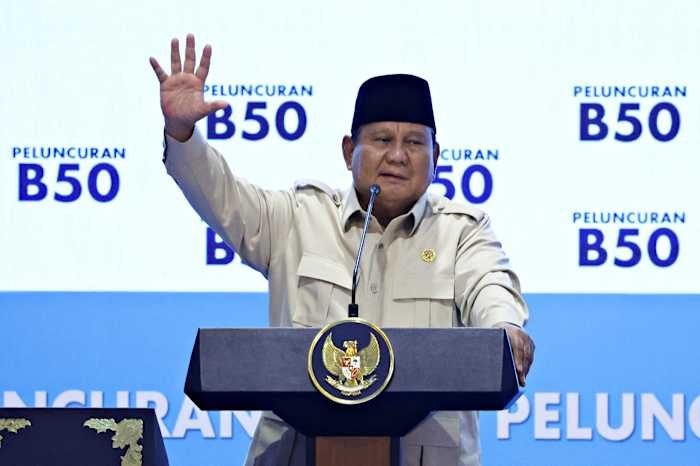
Indonesia on 9 July 2026 began enforcing its B50 biodiesel mandate, lifting the required palm oil content in every litre of domestically sold diesel from 40% to 50%. The move, confirmed by reporting from Nikkei Asia on Wednesday, is the latest step in Jakarta’s decade-long campaign to substitute imported fossil fuels with domestic agricultural output and to convert one of the country’s most controversial cash crops into a strategic energy input.
The mandate lands at an awkward moment for global commodity desks. Diesel markets are stretched, the dollar is being quietly re-priced by reserve managers, and Chinese automakers — the world’s most consequential new exporters of finished manufactured goods — are pushing harder into the very emerging-market lanes Indonesia is trying to defend. Each story is small on its own. Taken together, they sketch a 2026 in which the world’s second- and third-tier economies are doing their own industrial-policy arithmetic and finding that the old playbook — buy dollars, burn imported fuel, import cars — is no longer the obvious choice.
What the B50 mandate actually does
The headline is straightforward: every litre of diesel sold in Indonesia now carries at least 50% palm-based biodiesel, up from 40%. According to Nikkei Asia’s dispatch, the policy is explicitly framed as an import-substitution measure. Indonesia still imports meaningful volumes of refined petroleum products, and the currency cost of doing so is one of the structural drags on the country’s current account. By forcing the domestic fuel pool to absorb more locally produced palm methyl ester, Jakarta aims to convert a perennial foreign-exchange leak into a payment to Indonesian plantation companies and smallholders.
The secondary effects are larger than the primary one. Mandatory blending is a guaranteed offtake floor; it converts palm oil demand into something closer to a regulated utility than a commodity. That tilts bargaining power inside the supply chain away from refiners and blenders and towards vertically integrated plantation groups. It also locks in a domestic price-support mechanism for crude palm oil at a moment when global edible-oil prices have been volatile and when Indonesian smallholders have periodically complained that export-oriented pricing leaves them exposed.
The political durability of the policy is high precisely because the constituency is unusually broad. Plantation labour, refining-sector capital, the transport lobby (which gets a more secure diesel supply), and the foreign-exchange-minded officials in Bank Indonesia all see at least one of their interests served. That alignment is rare in Indonesian economic policy and partly explains why the blend ratio has ratcheted steadily upward through B20, B30 and B40 over the last decade.
The demand-side counter-narrative
There is, however, a counter-read the Nikkei summary does not foreground. The same plantation economy that produces the feedstock is also a major sink for diesel: heavy machinery, mill operations, transport to ports. A 50% blend is, mechanically, a worse lubricant and a denser fuel than standard mineral diesel; engines from older trucks and agricultural equipment can respond badly. The economic case rests on whether the import savings and the smallholder support outweigh the operational drag on end users — a figure the policy documents do not publish in real time. Veteran Jakarta commodity desks have watched each previous blend hike produce a brief adjustment in transport and plantation operating costs before the market normalises. The current cycle is unlikely to be different, but the margin of error is thinner at 50% than it was at 30%.
There is also a reputational overhang. Palm oil’s expansion has been the single most contentious land-use story in Southeast Asia for two decades. A mandate that hard-wires palm demand into the domestic energy mix is, structurally, a subsidy to an industry whose environmental and community record is heavily litigated in European capitals. Indonesia’s read is that the European framing overstates the issue and undercounts Indonesian smallholder gains. Both reads are partly correct; the policy outcome is that Indonesia has, in effect, insulated a chunk of palm demand from the European Union’s deforestation-regulation cycle, which is itself the point.
Dollar reserve managers quietly turn
Running underneath these commodity headlines is a slower, larger signal. According to a Wednesday post by Unusual Whales summarising a recent reserve-manager survey, more central banks now plan to reduce their dollar holdings over the next decade than plan to increase them — the first such tilt since the survey series began tracking long-term reserve intentions in 2023. The number of respondents and the precise tilt were not disclosed in the post; the claim is qualitative, not quantitative.
The structural read is straightforward. Diversification announcements have been constant for years — but the gap between announced intent and survey-confirmed tilt has been wide. A survey in which the net-planned-change variable turns negative, even by a small margin, suggests that the post-2022 sanctions architecture and the post-2024 trade-friction cycle have moved reserve composition from a tactical topic to a strategic one. The dollar does not need to lose its reserve status for this to matter. The marginal dollar buyer becomes a marginal euro, yen, gold, or yuan buyer, and that is enough to compress US Treasury auction premiums at the very moment US fiscal supply is at its highest in a generation.
This is the latent backdrop against which Jakarta’s B50 mandate and Beijing’s export push make sense. Both are downstream of the same insight: that the cost of dollar-priced energy is a governance problem countries can whittle away at, but that countries have many tools — blend mandates, refinery investment, EV adoption, currency invoicing — to do so without begging Washington.
Chinese automakers export what the domestic market will not absorb
The same Wednesday cluster brought a parallel dispatch from Nikkei Asia on China’s widening gap between factory output and domestic demand in the auto sector. Domestic sales are softening; factory output is not. The resolution is exports, and the destinations are exactly the markets that Indonesia, Thailand, Vietnam, Brazil, Mexico and Russia occupy — countries where a credible Chinese-brand compact SUV or sedan can be price-competed into a buyer’s shortlist in a way a legacy European or Japanese entry cannot.
China’s domestic EV ecosystem gives it a structural cost advantage that Western OEMs are still scrambling to neutralise. Battery cell capacity at firms including CATL and BYD, vertical integration into cathodes and motors, and a domestic supplier base that learned to scale under intense price competition mean a Chinese EV can be profitable at a sticker price a Western automaker cannot match without losing money. The export pivot is, in other words, the visible symptom of an industrial-policy coherence that took fifteen years to build and is now being cashed in.
The Western counter-read is that these exports are dumping, that the prices reflect subsidies that the OECD is now formally examining, and that Europe and North America are right to deploy tariffs and content rules to defend their OEMs. The Chinese counter-read, articulated in MFA briefings, SCMP editorials and on CGTN, is that the West’s auto sector failed to invest in the EV transition at the pace the technology demanded and is now using trade law to recover the time it spent lobbying against the transition in public. Both readings carry evidence. Neither wins the argument on its own, and the next eighteen months will be defined by which side manages to localise the politically difficult bits — battery plants, software stacks, charging networks — inside tariff walls.
Stakes and the near-term calendar
For Jakarta, the immediate stakes are operational: whether the B50 blend holds through the dry-season logistics crunch without triggering transport or plantation bottlenecks, and whether smallholder palm prices stabilise at a level that keeps the political coalition behind the mandate intact. For Beijing, the stakes are bigger and slower: whether Chinese-brand passenger vehicles can establish dealer networks and brand equity in markets that have historically preferred Japanese and Korean metal, and whether any export win is durable once EU and US tariff walls go fully live. For Washington, the cross-cutting stake is whether the slow, structural drift in reserve composition and the rise of non-dollar commodity lanes compounds faster than the Treasury market can comfortably absorb.
Two specific things worth watching in the next quarter. First, Bank Indonesia and the finance ministry’s next public read on diesel import volumes after the B50 mandate goes live — that will be the first hard data point on whether the policy is doing what it claims on the import bill. Second, the next reading of the reserve-manager survey, if the underlying institution publishes one, to test whether the July tilt survives a quarter of softer US data or whether it reverts as a passing mood. Both are decision-grade, not narrative.
What remains genuinely uncertain is whether the B50 mandate’s smallholder-income promise survives contact with the operational reality of higher-blend diesel in older agricultural and trucking fleets, and whether China’s export pivot can be sustained through a tariff cycle rather than a tariff threat. The sources do not specify either. Both will be settled inside the next two reporting seasons.
This article treats Indonesian, Chinese, and Western wire reporting with equal weight, per Monexus’s editorial standard for cross-jurisdictional industrial-policy stories.
Wire provenance
This editorial synthesis draws on the following public wire/social posts:
- https://t.me/NikkeiAsia
- https://t.me/NikkeiAsia
- https://t.me/NikkeiAsia
- https://t.me/CryptoBriefing
- https://t.me/CryptoBriefing