Sirens in Baghdad and Erbil: a thin pretext for another war
Rocket alerts at US bases north of Baghdad and over Erbil on 9 July 2026 fit a familiar escalation arc — and the West's reflexive framing deserves more scrutiny than it usually gets.
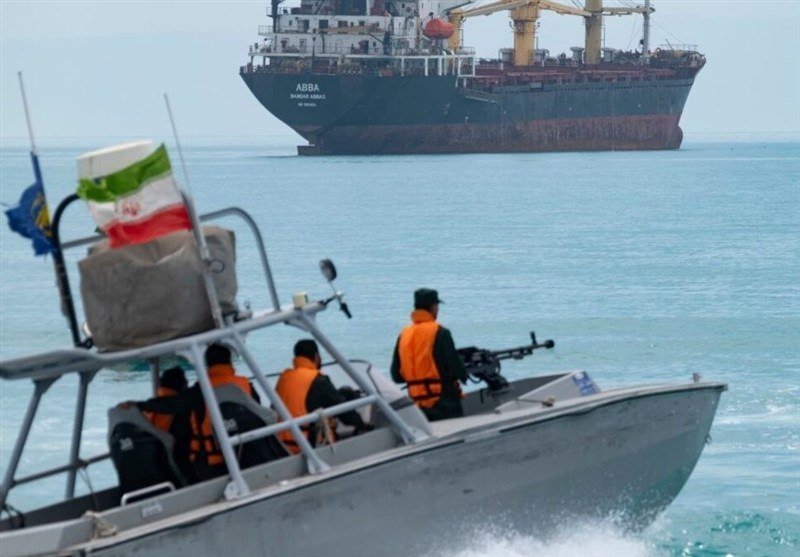
At 10:59 UTC on 9 July 2026, sirens went off at the US Taji Air Base north of Baghdad. Within the hour, witnesses reported explosions over Erbil in Iraq's Kurdistan region, with a second wave of alerts at US positions around the capital. Three Telegram channels — two posts from the same open-source account and one from a Baghdad-based correspondent — captured the sequence in near-real-time, before any government had issued a statement. The pattern matters more than the noise.
The reflex in Western wire copy is to treat any attack on US forces in Iraq as an Iranian act by proxy, and to read sirens as the opening note of a wider war. The reflex is not crazy: Iran-aligned militias have targeted US positions in Iraq repeatedly since 2020, and Tehran's arsenal of regional partners — from Kata'ib Hezbollah to factions inside the Popular Mobilisation Forces — gives the regime plausible deniability without requiring its own uniform. But "plausible" is doing heavy lifting in that sentence, and the dominant framing almost never pauses to ask who, specifically, fired, with what, on whose orders, and at whose benefit.
What we know, in order
Around 10:59 UTC on 9 July, the channel RN Intel reported sirens activating at Taji Air Base, a long-standing US logistics hub north of Baghdad. At 11:05 UTC, the same channel posted again, adding reports of explosions over Erbil — the capital of the Kurdistan Region and the site of a separate US Consulate facility and coalition presence. At 11:35 UTC, the correspondent Abu Ali, writing in English from an Iraq-based Telegram channel, said sirens had activated at American bases in both Baghdad and Erbil. None of the three reports identifies a launch site, a munition type, or a claimed perpetrator. None is attributed to the Iraqi Joint Operations Command, the US Central Command, or the Kurdistan Regional Government's interior ministry.
That thinness is the story. Three independent-feeling reports, all of them social-media-first, all of them describing the same hour of activity, none of them carrying institutional sourcing. Readers in Washington or London will see headlines within hours that compress this into "Iran attacked US troops in Iraq." Some of those headlines will turn out to be right. Some will not. The point is that the compression happens before the verification does.
The default frame, and its blind spot
The Western mainstream frame runs like this: Iran wants US forces out of Iraq; Iran commands Shia militias that have attacked US forces before; therefore any attack on US forces is Iranian unless proven otherwise. Each premise is defensible in isolation. Stacked, they form a syllogism that treats one of the most factionalised political landscapes in the Middle East as a single chain of command under Tehran's operational control. It is the same frame that, applied to Yemen, flattens Ansar Allah's local grievances into an Iranian war; applied to Lebanon, converts a domestic political crisis into a Tehran-directed one.
There is a better frame, and it begins with Iraqi agency. Iraq's Shia militias are not a faction; they are a constellation. Some — including those formally absorbed into the state security services after 2016 — answer, at least nominally, to the Prime Minister in Baghdad. Others answer to clerical networks inside Iraq, not Qom. A small hardcore operates at Iran's direction. The Iraqi state has its own reasons to want the US footprint reduced — sovereignty politics, domestic electoral pressure, the long memory of 2003 — without Tehran needing to dictate the script. A serious account of a rocket attack on a US base has to ask which of these layers is in play before reaching for the word "Iran".
What the structural picture actually shows
The bigger arc, beyond the sirens, is the slow unbundling of the US-Iraq relationship from a security partnership into a contested presence. Baghdad has spent the better part of two years negotiating the terms of the coalition mission, with successive Iraqi governments oscillating between the demands of their American-trained security services, Iran-aligned parliamentary blocs, and an Iraqi street that has long associated foreign bases with instability. Erbil adds a separate layer: the Kurdistan Region hosts a distinct US relationship, partly intelligence, partly economic, that survives changes of government in Baghdad but is not insulated from Iranian pressure on the ground.
In that context, a single hour of sirens is a data point, not a verdict. The question is what comes next: a US statement naming a perpetrator, Iraqi government investigations, kinetic retaliation, the activation of air defence over the Green Zone, or silence. Each path leads somewhere different. Each is being chosen, in part, by actors inside Iraq who are not Tehran and not Washington.
Stakes, and what remains uncertain
If the dominant frame holds and rockets are read as Iranian by default, the political space for an Iraqi internal investigation collapses within hours. Washington moves to retaliation; Baghdad is asked to choose between its American-trained security services and its Iran-adjacent parliamentary blocs; the Kurdistan Region's separate relationship becomes collateral. If the frame is held open for even a few days, the picture usually gets messier — local grievances, rogue factions, command-and-control failures — and the policy menu gets wider. Which frame prevails is, at the moment of writing, genuinely uncertain. The sources do not specify launch origin, casualty figures, or damage assessment. What they show is the seam along which the next narrative will be cut.
That is worth naming plainly: the most consequential decision of the next 48 hours may not be a military one at all. It will be the editorial decision — in wire copy, in cable news chyrons, in think-tank explainers — to treat three unverified Telegram reports as confirmation of an Iranian strike. The sirens were real. The conclusions drawn from them do not have to be.
Desk note: Monexus is publishing this as raw-event framing rather than wait for institutional confirmation. Western wires will compress this into "Iran strikes US in Iraq" within hours; we are marking the gap between the noise and the proof.
Wire provenance
This editorial synthesis draws on the following public wire/social posts:
- https://t.me/englishabuali/
- https://t.me/rnintel/
- https://en.wikipedia.org/wiki/Taji_(city)