Bahrain Sounds Civil-Defense Sirens as Regional Tensions Spike
Manama's Interior Ministry told residents on 9 July 2026 to seek the nearest safe place as danger sirens sounded across the small Gulf state, an alert that arrived with no accompanying explanation from officials.
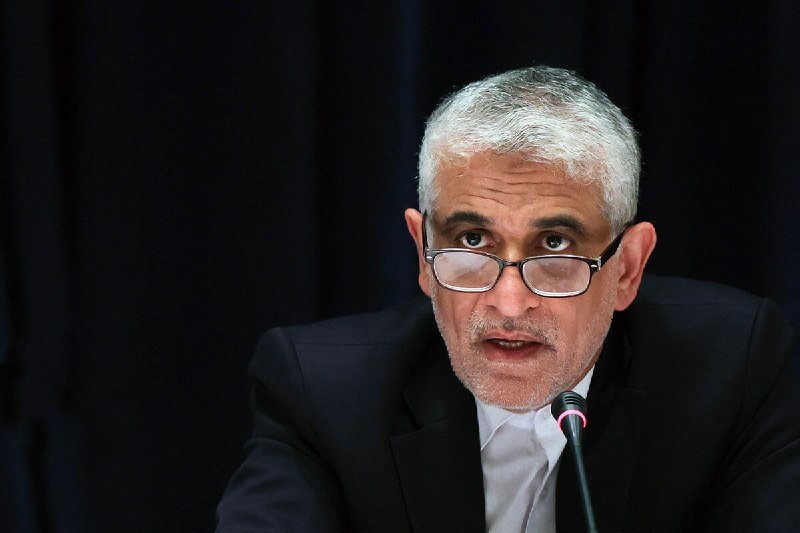
Civil-defense sirens sounded across Bahrain shortly before 08:00 UTC on 9 July 2026, prompting the kingdom's Ministry of Interior to direct citizens and residents to move to the nearest safe place. The three-line alert, in Arabic, offered no cause, no target, and no duration. It was relayed within minutes by Iranian state-linked outlets Tasnim News and Fars News International, the latter marking the bulletin with a red breaking-news tag.
The brevity of the warning — and the speed with which it travelled through Iranian rather than Gulf or Western wire services — is itself the story. Bahrain sits across roughly 20 kilometres of seawater from the eastern Saudi coast and within striking distance of Iranian naval and missile forces based on the opposite shore. A civil-defense activation in Manama is, by design, an unusual event, and the absence of immediate elaboration left citizens and outside observers to read the silence.
The alert and what officials said, and didn't
The text posted by Bahrain's Interior Ministry via the state information apparatus was identical across the three reporting channels this publication reviewed: alarms had sounded, the public should go to the nearest safe place. There was no reference to an air strike, a missile launch, a drone incursion, a terror attack, or a civil emergency such as an industrial fire or a hazardous-materials incident. The ministry's own channels had not, at the time of writing, published a follow-up clarifying statement.
That silence is unusual. Bahraini authorities have, in past episodes of regional tension, issued multi-line statements within an hour — naming the trigger, the location, and the protective guidance. The decision to issue a one-sentence alert, then stop, suggests either a fast-moving situation that officials are still verifying, or a deliberate choice to keep operational details opaque. The two readings have very different implications, and the public record does not yet let a reader choose between them.
The Iranian echo chamber
What stands out about the thread is its routing. The first three items reporting the Bahraini alert all originate from Iranian state or state-adjacent media: Jahan Tasnim and Tasnim News, both associated with the Islamic Republic's conservative press ecosystem, and Fars News International, an outlet long read as a barometer of the Islamic Revolutionary Guard Corps's public posture. Western wires, Gulf-based English-language outlets, and the official Bahrain News Agency were not among the immediate relays visible in the cluster this publication examined.
The pattern is familiar from previous episodes of Gulf tension. Iranian outlets frequently pick up and amplify civil-defense or military bulletins from across the Gulf Cooperation Council, partly because Tehran's regional press treats Gulf security moves as substantively its business, and partly because an unverified alert — even one issued by a foreign government — serves as useful material for an Iranian domestic audience already primed to expect confrontation. That does not make the underlying alert false. It does mean the bulletin reached a global English-language audience through channels with a known directional point of view, before any of the wires with track records of forensic verification had a chance to weigh in.
What we don't know — and what to watch for
Three things would tighten the picture quickly. First, a follow-up statement from the Bahraini Ministry of Interior, or from the Bahrain Defense Force, specifying whether the alert was triggered by an inbound threat, a precautionary activation, or an internal-system test. Second, a parallel readout from the U.S. Navy's Fifth Fleet, headquartered at Naval Support Activity Bahrain, whose public-affairs office has historically been the fastest external corroborator of any air-defence activity in the western Gulf. Third, Saudi or Emirati official commentary, since both monarchies treat a civil-defense activation in Manama as a matter of joint GCC posture, not a bilateral Bahraini affair.
None of those readouts had appeared in the cluster available to this publication at the time of writing. The sources do not specify the duration of the alert, the geographic scope of the sirens within Bahrain, or whether schools, government offices, or the causeway linking Bahrain to Saudi Arabia were affected.
The structural frame
A siren in Manama is not, on its own, a geopolitical event. Civil-defense systems are tested, false alarms occur, and Gulf states have drilled their populations on rapid sheltering for two decades. But the political economy of an alert issued without explanation, in a kingdom that hosts the U.S. Fifth Fleet and sits a few minutes' flight time from the Iranian coast, is shaped by everything around it: the slow-motion confrontation between Tehran and Washington over the Islamic Republic's nuclear file and its regional proxy network, the periodic sabotage and seizure campaigns against commercial shipping in the Strait of Hormuz, and the recurring shadow war between Iran and Israel that has spilled into Syrian, Iraqi, and now arguably Gulf, airspace.
The temptation, in coverage like this, is to read the siren as a single decisive event. The more useful frame is the opposite: the alert lands inside a region where the baseline probability of a security incident has been rising in small, mostly unattributed increments for months. Each siren, each intercepted drone, each tanker seizure tightens the band of acceptable risk for everyone in the waterway. The alert that matters most is rarely the one that sounds loudly; it is the one that never gets explained afterwards.
For now, the most honest read is also the most modest: Bahraini authorities activated a civil-defense procedure on the morning of 9 July 2026, told the public to shelter, and declined, in the window available to this publication, to say why. The Gulf will tell us, in due course, whether that silence was the silence of a false alarm, the silence of an active threat, or the silence of a state that has decided the public does not need to know.
— Monexus framed this as a still-unfolding civil-defense activation rather than a confirmed strike or attack, because the underlying alert offers no cause, and the first three relays all originated from Iranian state-linked channels whose directional incentives are well known. Where Gulf or Western wire readouts become available, this article will be updated accordingly.
Wire provenance
This editorial synthesis draws on the following public wire/social posts:
- https://t.me/JahanTasnim
- https://t.me/tasnimnews_en
- https://t.me/FarsNewsInt
- https://en.wikipedia.org/wiki/Bahrain
- https://en.wikipedia.org/wiki/Naval_Support_Activity_Bahrain