Interceptions over Manama: what the Bahrain strikes tell us about the Iran file
A burst of Telegram posts between 00:34 and 01:04 UTC on 9 July 2026 reports multiple explosions and interception attempts over Bahrain. The picture is fragmentary; the strategic implications are not.
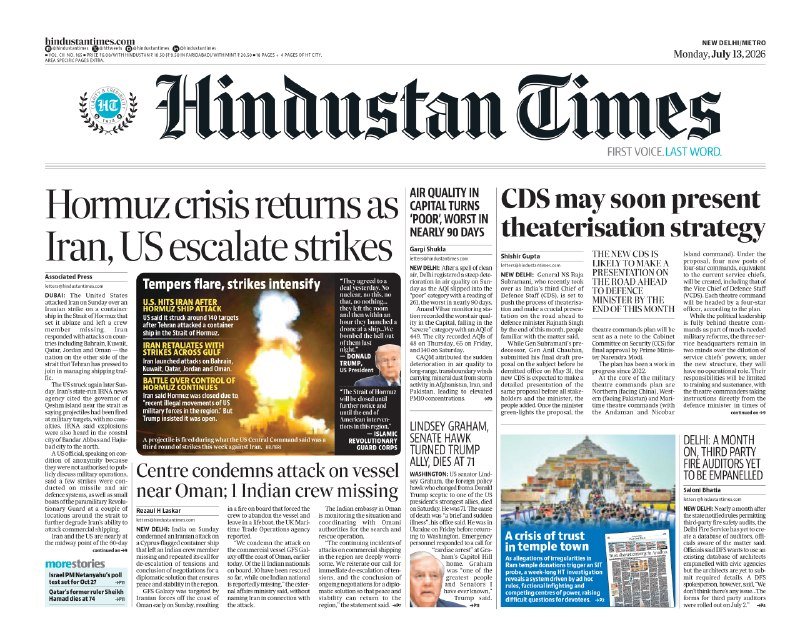
A roughly thirty-minute window between 00:34 and 01:04 UTC on 9 July 2026 produced a cluster of Telegram alerts that, taken together, sketch an unusual and still-unfolding event: multiple explosions over Bahrain, with reported interception attempts in and around Manama. The posts originate from a handful of channels that specialise in open-source conflict monitoring — GeoPWatch, intelslava, AMK_Mapping and Middle_East_Spectator — and they converge on a single geography without yet converging on a single explanation.
The reporting this far is fragmentary. That is itself the story. Gulf airspace is among the most heavily surveilled on earth; the US Fifth Fleet is forward-based in Bahrain, alongside Royal Bahraini Air Force assets and a layered network of US Patriot and THAAD batteries. When a burst of interception alerts lands on conflict-tracking channels within minutes of each other, the question is not whether something happened — it is what was targeted, by whom, and what the calibrated response is signalling.
What the channels actually said
The earliest of the cluster, timestamped 00:34 UTC on 9 July 2026 from GeoPWatch, reports "more explosions" over Bahrain. Three minutes later, at 00:37 UTC, Middle_East_Spectator — a channel frequently cited by Western researchers tracking Iranian activity — posts what it labels as "interception attempts in Bahrain." AMK_Mapping, a mapping-focused channel with a track record on Ukrainian and Middle Eastern airspace events, repeats the line at 00:38 UTC and tags Middle_East_Spectator as the originating source. At 00:41 UTC, intelslava adds a US flag to the framing, suggesting that American assets are involved in the response. Two further GeoPWatch posts at 00:46 and 00:47 UTC describe a "new batch" of explosions, and a final GeoPWatch alert at 01:04 UTC closes the cluster with the bare phrase "more explosions."
The pattern is familiar from earlier Gulf episodes: a conflict-monitoring channel flags an event, a second channel confirms with a slightly different framing, a mapping account pins the geography, and a flagship aggregator reiterates. None of the channels in this thread is a Bahraini government source, an Iranian state outlet, or a US Central Command release. They are OSINT intermediaries, and their evidentiary status sits one step removed from the underlying footage, radar data, or eyewitness accounts they are relaying.
Who can hit Manama, and from where
The geography matters. Bahrain is a small archipelago off the eastern Saudi coast, host to Naval Support Activity Bahrain — the operational home of US Naval Forces Central Command and the Fifth Fleet. Its air-defence architecture combines Royal Bahraini Air Force F-16s, US-deployed Patriot and THAAD batteries, and naval air-defence capability from the embarked carrier and cruiser groups that regularly operate in the Gulf. An interception event in Bahraini airspace is, almost by definition, an event the United States is proximate to in real time.
That proximity frames the second question: who is firing, and at what. The Telegram posts do not name an attacker, and the emoji framing in GeoPWatch and Middle_East_Spectator suggests rather than confirms Iranian involvement. Missiles and one-way attack drones capable of reaching Manama from the Iranian coast are well within the inventory documented by US Navy briefings, UN Panel of Experts reports on Yemen, and open Israeli and Saudi strike assessments of Iranian transfers to Houthi forces. The same inventory has been used against Saudi Arabia and the UAE in earlier episodes. A burst over Bahrain is consistent with that pattern, but consistency is not attribution, and the channels in this thread do not provide it.
What Tehran's playbook says about a Bahrain strike
Even without named attribution, the strategic logic of an Iranian strike on Bahrain reads differently from a strike on, say, Tel Aviv or Erbil. Iran does not have a territorial dispute with Bahrain; the two states restored diplomatic relations in 2022 after a years-long rift. The point of a strike on Manama, in the established pattern, is not the territory — it is the American flag on it. Iranian doctrine, as set out in successive IRGC briefings and as read by analysts at research centres tracking the file, treats US bases in the Gulf as the centre of gravity rather than the host government. A strike calibrated at US assets in Bahrain is a strike calibrated at Washington's risk calculus.
This is also the frame in which Iran has tended to deny or muddy attribution after the fact. The pattern is well-rehearsed: Iranian state media attribute early reports to "Zionist media" amplification, Houthi-aligned channels claim responsibility on their own behalf, and Tehran holds the diplomatic space open while the regional order absorbs the shock. The Bahraini government, for its part, has historically preferred quiet acknowledgment of US-led interception over public escalation, in part because the Bahraini domestic political cost of being seen as a frontline in an Iran-US exchange is high.
Why the OSINT layer is racing ahead of the wires
The most striking feature of this cluster is what is not yet in it: no Bahraini government statement, no US Navy or CENTCOM release, no Iranian MFA briefing, no Saudi or Emirati reaction. The reason is partly logistical — Western wire agencies do not move on Telegram-flagged events until they have either official confirmation or independently verified footage — and partly editorial, in the best sense. Wires do not want to be the vector that turns an unverified burst into a regional escalation.
That leaves the OSINT layer doing what it increasingly does in Gulf flashpoints: aggregating open flight-tracking data, geolocating explosion videos, and triangulating interceptor trajectories before official spokespeople are ready to put their name to a line. The trade-off is real. OSINT channels are faster and often more granular, but they also flatten sourcing — a single Telegram post can be amplified across four channels in minutes, acquiring the appearance of confirmation without the substance of it. A reader looking only at the posts above could plausibly conclude that the United States has intercepted an Iranian missile salvo over Manama. The sources support something narrower: that multiple channels reported explosions and interception attempts over Bahrain in a tight time window, with US assets apparently engaged.
What it means, and what it doesn't
Read narrowly, the cluster is a data point in a longer pattern of low-intensity exchange between Iran and the US-aligned Gulf order. Read structurally, it is a reminder that the Gulf sits inside a coercive bargaining framework in which calibrated strikes, calibrated interceptions, and calibrated silence are all parts of the same negotiation. Whoever fired, and whatever was intercepted, the event will be read in Washington, in Riyadh, in Abu Dhabi, and in Tehran as a signal — about thresholds, about US willingness to escalate defensively, and about the cost of moving the next round up the ladder.
What remains genuinely uncertain is the scale and the attribution. The sources do not specify how many projectiles were fired, whether all were intercepted, what hit the ground if anything did, or who claims responsibility. They do not record casualty figures, infrastructural damage, or a flight-ban order from Bahrain's civil aviation authority. Until the Bahraini interior ministry, US Central Command, or a wire with on-the-ground reporters in Manama puts a fuller picture on the record, the prudent read is that something was intercepted over Bahrain on the morning of 9 July 2026 UTC, that US assets were involved, and that the regional information environment is still catching up to the hardware. The Telegram channels flagged it within minutes. The official record will take longer — and on this file, the gap between those two speeds is itself part of the story.
This article relies exclusively on the Telegram thread referenced below. Monexus did not have access to Bahraini government, US CENTCOM, or Iranian state-source material at the time of publication. Where the channel posts use emoji to imply attribution, the article does not.
Wire provenance
This editorial synthesis draws on the following public wire/social posts:
- https://t.me/GeoPWatch
- https://t.me/Middle_East_Spectator
- https://t.me/AMK_Mapping
- https://t.me/intelslava