China's AI Race Has a Power Problem, and Beijing Knows It
A four-front scramble — chips, tokens, retail, watts — is exposing the structural constraint Beijing cannot brute-force past: electrons.
On 9 July 2026, four dispatches from Chinese-language and Hong Kong reporting landed within an hour of one another, and together they sketched a single picture: the contest between Beijing and Washington over artificial intelligence is no longer running on code. It is running on volts, on shop floors, on tokens, and on the question of whether a planned economy can out-deliver an unplanned one when both run out of cheap electrons.
That is the structural argument sitting underneath this week's coverage, and it deserves to be stated plainly. The US–China AI rivalry is being framed, in much Western commentary, as a contest over chip architectures, model benchmarks, and export controls. All three matter. None of them is the binding constraint anymore. The binding constraint is electricity — and the politics of who gets to build, fuel, and route it fastest.
The watt economy
The South China Morning Post's opinion desk made the point directly on Wednesday: the contest "boils down to a contest over electricity." That framing is not metaphorical. Training runs for frontier models already consume gigawatt-hours; inference at scale — the actual deployment of AI into products, logistics, and public services — consumes multiples more. China's installed generation capacity has expanded faster than any peer economy over the past two decades, but the demand curve from data centres, EV charging, and electrified industry is now biting into the same grid. Western commentary has tended to read Chinese build-out as a problem of overcapacity in supply; the more accurate read, on the evidence available this week, is a problem of over-demand against a still-expanding but increasingly strained backbone.
The counter-argument from Western analysts — that the United States retains a structural advantage in permitting speed for gas turbines, in siting flexibility for data centres, and in capital-market depth for grid financing — has real force. But the Chinese side of the ledger is also real: state-directed finance can compress siting and interconnection timelines that, in the US, routinely stretch into a decade. Whether that compression survives the current power-demand spike is the empirical question the next 18 months will answer.
The token economy and the knockout framing
Two further SCMP pieces, filed the same day, sharpen the stakes. A technology-policy conference heard experts describe a "token economy" emerging as AI use soars inside China — the unit of value is shifting, in practical terms, from the model to the inference token, the billable call against the model. That shift matters because it changes who captures value: the country that runs the inference at the lowest marginal cost per token wins the deployment layer, not necessarily the training layer.
Separately, SCMP's diplomacy desk carried an analysis framing the AI race as a "knockout game" China cannot afford to lose. The framing is provocative and worth handling carefully. Read uncharitably, it is threat-inflation; read charitably, it captures a real asymmetry: the United States can tolerate coming second in deployment and still capture training-layer rents through chip design and cloud pricing. China, on this argument, needs to win the deployment layer because its domestic market is the deployment layer. That structural dependence is a vulnerability, not a strength — and it is one Beijing's planners appear to recognise.
The retail counter-current
Alongside the AI stack coverage, SCMP also reported that Beijing is moving to revive physical retail, pitching "immersive" in-person experiences as a deliberate counter-weight to platform e-commerce. Read narrowly, this is a domestic-consumption story. Read in context with the AI and electricity beats, it reads differently: a state that is simultaneously pushing the most compute-intensive technology build-out of the decade is also trying to keep human-scale commerce alive in its cities. Both impulses can be true. The interesting question is whether they pull against each other on the same grid, the same labour pool, and the same political bandwidth.
What we don't yet know
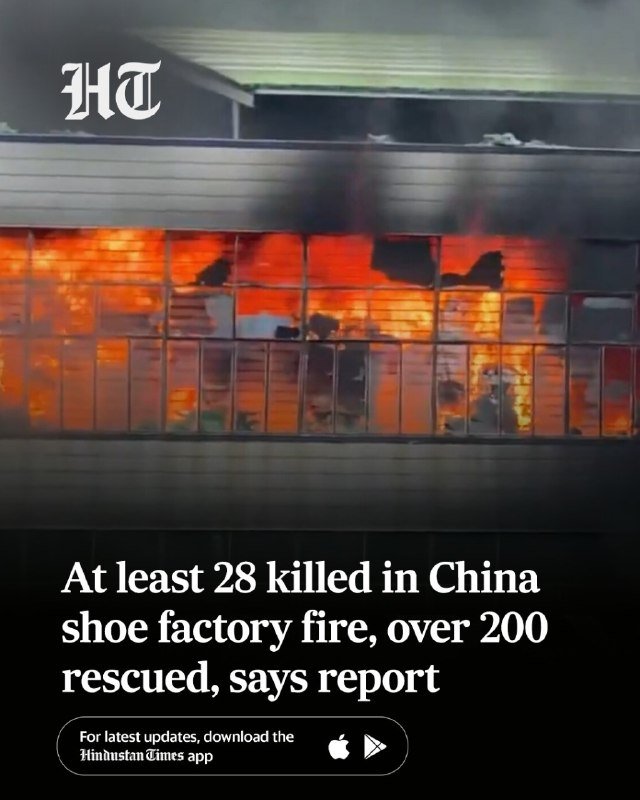
The week's reporting also included a breaking incident — at least 28 people reported killed in a fire that engulfed a shoe factory in China, with Beijing demanding an all-out response. The fire does not, on the evidence available, appear connected to the AI or retail stories. It is named here only to mark a boundary: industrial safety in mainland China remains a live policy problem, and any analysis that frames Chinese state capacity as frictionless is overreaching. The sources do not specify the factory's ownership, jurisdiction, or regulatory history. Monexus will update if those details firm up.
The honest summary is this. The US–China rivalry is being decided, in 2026, on terrain that neither side fully controls: the speed at which gigawatts can be sited, financed, and dispatched; the price at which inference tokens can be sold; and the political tolerance for keeping parts of the old economy alive while the new one is being built at speed. The framing in Western commentary tends to default to chip controls. The framing in Hong Kong commentary this week is more honest: it is a contest over electricity, with everything else downstream of that.
Desk note: The Western wire line this week led with chip-export politics and model benchmarks. Monexus led with the power constraint, because four same-day dispatches pointed the same direction and the structural argument is cleaner from the grid outward.