England meet Norway with a shirt shortage and a market that doesn't believe in them
Norway's run has crashed the replica-shirt market, prediction markets give the underdog a 35% chance, and England's biggest World Cup history with the Norwegians is a commentary line from 1981.
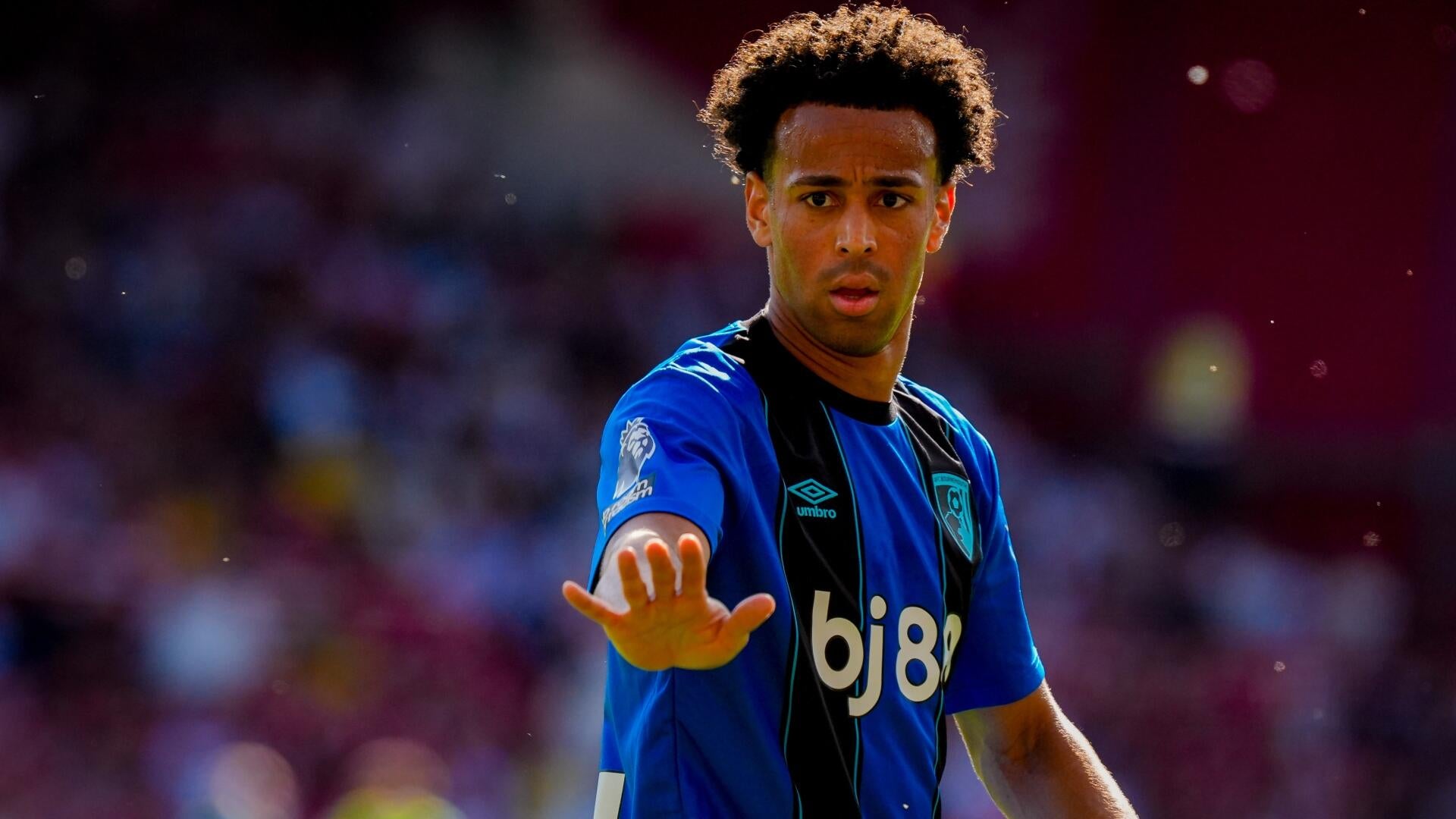
By the morning of 9 July 2026, the question facing English fans ahead of the World Cup quarter-final in the United States was no longer just tactical. It was logistical. Norway's run to the last eight has produced a replica-shirt shortage so severe that the team kit has effectively sold out before a ball has been kicked in the quarter-final, according to BBC Sport reporting published at 14:34 UTC on 9 July 2026. Suppliers have not been able to meet demand generated by a Norwegian campaign that has converted casual observers into buyers.
That retail pressure is the most visible signal of how seriously the tie is being taken off the pitch. On the prediction markets, England are clear favourites but not overwhelming ones. A market on Polymarket was pricing Norway at a 35% chance of winning the quarter-final as of 14:47 UTC on 9 July 2026 — a number that would have been laughed out of the room a tournament ago. The market's read is that England, the pre-tournament favourite from a European section, are vulnerable to a side whose depth and directness have already unsettled higher-ranked opposition.
A rivalry older than the modern shirt industry
England and Norway have met rarely in tournament football, and the games that have stuck in the memory have done so for reasons unrelated to the scoreline. BBC Sport's 8 July 2026 feature on the fixture revived the commentary moment that has come to define the Anglo-Norwegian relationship in football: the "Your boys took a hell of a beating" line, originally delivered in 1981 by a BBC summariser after a 2-1 Norway win over England in a World Cup qualifier in Oslo. The line has outlived the result. It has followed the teams into every meeting since, including the 2026 quarter-final, because England's modern audience still uses it as shorthand for any evening when a Norwegian side refuses to play the understudy.
The historical framing matters because it sets the tone for a tie in which the bookmakers' line and the prediction market's line diverge in instructive ways. England are favourites; the public money, retail demand and broadcast build-up all assume an English progression. But the margin is thin enough that a single Norwegian set piece, a single counter-attack, or a single refereeing decision can flip the optics of the tournament within ninety minutes.
What the prediction market is actually saying
Polymarket's 35% Norway price is not a statement of belief. It is a price discovery mechanism that aggregates the wagers of participants willing to put money behind the outcome. Read at face value, it implies that, in the collective judgement of that pool of bettors, England win the tie roughly two times out of three. That is a worse price for England than their seeding would suggest and a much better price for Norway than the casual viewer would assume.
Three things follow. First, the spread is wide enough to make this a genuine contest rather than a formality. Second, the market is implicitly pricing in the volatility that Norway have shown in the group stage and round of sixteen, where their direct, vertical play has troubled opponents built to play against possession-based sides. Third, even the market's England-favoured outcome does not preclude a tight, low-scoring game decided by an individual error — the kind of game Norway have proved capable of producing.
The shirt shortage as economic signal
Retail supply rarely makes it into serious World Cup coverage, but this tournament is being staged across the United States, where the licensed-replica market is a structurally larger share of football merchandise revenue than in most European markets. Norway's shirt selling out before the quarter-final is a measurable signal of two things: a step-change in Norwegian support inside the United States, and a manufacturing base that did not anticipate the run.
For the Norwegian federation, the missed revenue is a real cost. For the supplier — whose identity BBC Sport's reporting does not specify — the problem is the inverse of the usual over-production risk that haunts World Cup merchandising. They have under-shot demand at exactly the moment when a deep tournament run would have justified a larger print run. The economic lesson is the same one that the prediction market is teaching in microcosm: the tools used to size a Norwegian football audience, both on the merchandise side and on the betting side, were calibrated for a different Norway.
Stakes and uncertainty
If England win, the narrative writes itself: progression, a semi-final, a route that avoids the heavier side of the bracket until the final. If Norway win, the structural consequences are larger than one tie. A Norwegian semi-final would re-rank the European football hierarchy in the same way that a Greek win at Euro 2004 or an Icelandic run at Euro 2016 did — not by creating a new power, but by demonstrating that the existing order's margins are slimmer than the seeding suggests. The shirt shortage is the early indicator. The result will be the confirmation or the correction.
What remains genuinely uncertain is whether the prediction market's 35% is overstating or understating Norway's chances. The market does not, by itself, know the team news, the weather, or the tactical plan. It only knows the aggregate wager. The supply chain does not, by itself, know whether Norway's run will continue past the quarter-final. It only knows that demand has outrun the print run. Between the bettors and the kit supplier, the truth about England's quarter-final will be settled on the pitch.
This article treats the prediction-market price as a sentiment indicator rather than a forecast. Monexus reads Polymarket's 35% Norway figure as a measure of the wagering crowd's caution toward an English favourite, not as a probability claim endorsed by the publication.