Germany buys the Tomahawk — and redraws the European deterrence map
On the margins of a NATO meeting in Ankara, Berlin agreed to buy and host US Tomahawk cruise missiles — a quietly consequential shift in European security architecture that puts longer-range American firepower on German soil.
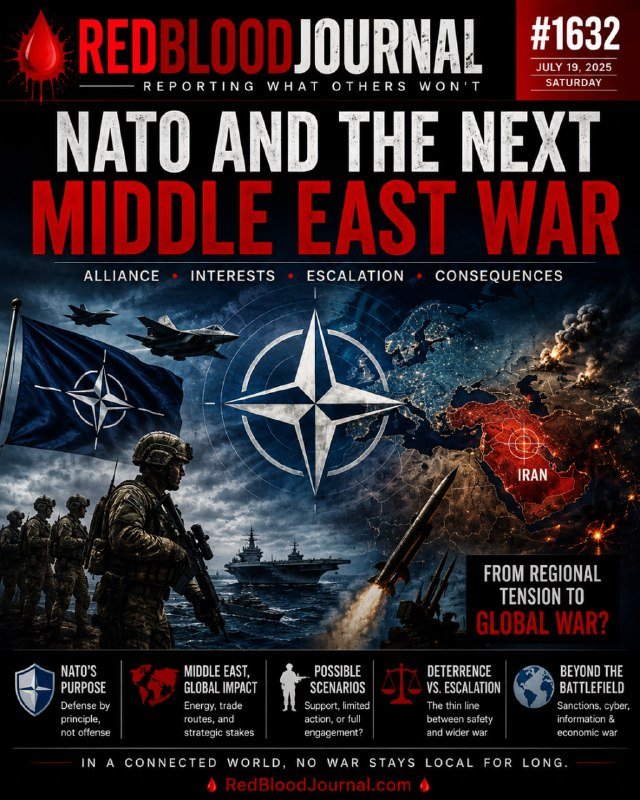
At the close of a NATO foreign ministers' meeting in Ankara on 9 July 2026, Germany's chancellor confirmed that Berlin had reached agreement with Washington to purchase US Tomahawk cruise missiles and station them on German territory. The announcement, carried by outlets monitoring the chancellor's remarks on the margins of the summit, marks one of the most consequential German force-posture decisions in the post-Cold-War era — and one whose implications stretch well beyond Berlin.
The Tomahawk is a long-range, conventionally armed cruise missile capable of striking targets at distance with high precision. Hosting it on German soil is not a symbolic move. It hard-wires German territory into US strike planning, deepens NATO's forward posture in Central Europe, and signals to Moscow that any future escalation will be met from a launching point closer than ever to the Russian exclave of Kaliningrad. Read in isolation, this is a procurement story. Read in context, it is the European leg of a wider rearmament that has been quietly compounding for two years.
What was actually agreed
The announcement is notable for its brevity. According to the chancellor's own remarks on the sidelines of the Ankara meeting, the deal was struck "with the American government" — meaning an executive-level understanding rather than a signed parliamentary procurement contract. Tomahawks are not off-the-shelf purchases; their sale to a NATO ally requires both an executive approval from Washington and a host-nation infrastructure package. What Berlin now has is the green light. The contract, the basing arrangements, the numbers, the cost, and the operational timeline have not yet been published.
That ambiguity matters. Tomahawks have historically been a US Navy and US Marine Corps weapon. Forward-basing them in Germany extends their reach into the European theatre in a way that previous US deployments of shorter-range systems did not. It also implies infrastructure — hardened shelters, maintenance facilities, warhead storage — that cannot be built quietly and will become a domestic political subject in its own right.
The European deterrence map, redrawn
Germany has been the quiet pivot of European defence industrial policy since the 2022 Zeitenwende announcement. The launch of a special defence fund, the pledge to meet alliance spending benchmarks, and the slow rebuilding of the Bundeswehr's warfighting readiness were the visible scaffolding. Stationing American long-range strike assets inside Germany is the deeper layer: it converts the country from a logistical hub into a launch platform.
The move also recalibrates the intra-European balance. France and the United Kingdom carry their own nuclear deterrents; Germany does not. Until now, that asymmetry allowed Berlin to argue that its contribution to European defence ran through conventional capability and industrial output, not through firepower projection. Tomahawks on German soil change that line. They bring a non-nuclear, US-controlled, long-range strike option into the heart of continental Europe under a German flag — host-nation, but not sovereign weapon.
This places pressure on two conversations running in parallel. First, the Franco-British discussion about extending nuclear burden-sharing to the rest of Europe. Second, the Polish-led Central European push for permanent US presence. A German Tomahawk base does not replace either conversation; it sits alongside them and arguably makes both more pointed.
The counter-read: is this really about Russia?
The official framing is unambiguous: long-range precision strike on German soil deters further Russian aggression in the Baltic and on NATO's eastern flank, and reassures allies who have watched Russia's full-scale invasion of Ukraine grind into its fourth year. The argument has surface plausibility — Tomahawks launched from Germany can reach targets inside the western military districts of the Russian Federation without the political friction of strikes from US Navy vessels in the Mediterranean.
But the same weapon system has utility well beyond the Russia file. It can reach deep into the Middle East from Central Europe with mid-air refuelling and appropriate routing. It can threaten hardened command-and-control nodes far beyond Europe's perimeter. A reading that takes the procurement at face value — deterrence of Moscow — is the charitable one. A more sceptical reading asks why the operational radius, not just the alliance perimeter, needed expanding in 2026.
There is no public evidence that Berlin has been asked to take the missile on terms that exceed its NATO obligations. But the absence of a published basing agreement leaves the question formally open.
Stakes
For Berlin, the bet is that deeper US presence on German soil insulates Germany against the worst-case scenarios of an American drawdown. For Washington, Germany becomes the most cost-effective forward launcher in the European theatre — a sovereign ally absorbing the political cost of hosting while the United States retains control of the warhead. For Moscow, the message is that the gap between Russian Kaliningrad and NATO strike capability has narrowed by roughly the length of a cruise-missile flight. For the rest of the alliance, the precedent is now set: a NATO ally has volunteered to host long-range US strike assets inside its borders for the first time in the post-Cold-War period, and did so at its own procurement.
What remains genuinely uncertain is the procurement envelope, the basing footprint, the parliamentary debate the deal will trigger in Berlin, and whether other NATO allies — particularly those on the eastern flank — will seek matching arrangements or push for a Europe-wide command-and-control framework rather than a patchwork of bilateral US-host deals. The Ankara announcement was the headline. The next eighteen months will be the negotiation.
This publication treats the announcement as a procurement-and-posture story, not a treaty event; until a formal basing agreement is published, the operational meaning of "stationed in Germany" remains unspecified.
Wire provenance
This editorial synthesis draws on the following public wire/social posts:
- https://t.me/ClashReport
- https://t.me/operativnoZSU
- https://en.wikipedia.org/wiki/Tomahawk_(missile)
- https://en.wikipedia.org/wiki/Zeitenwende