When a baby name becomes a wire story: how the Iran ceasefire unraveled between Tuesday and Thursday
Within 36 hours, US officials told CNN the Iran ceasefire had 'at least temporarily ceased,' Tehran accused Washington of war crimes, and Britain's baby-name charts crowned Muhammad for a third straight year. The juxtaposition tells you more about Western news judgment than either story does alone.
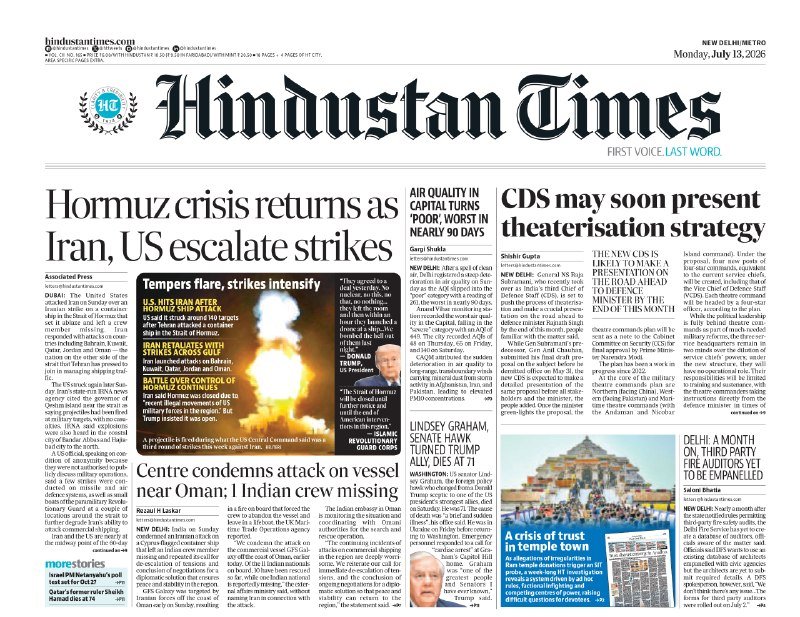
At 22:35 UTC on 8 July 2026 a US official told CNN that the ceasefire with Iran "has at least temporarily ceased." Thirteen hours later, on the morning of 9 July, Iranian state-aligned channels carried Tehran's accusation that the United States had committed "war crimes." On the same day, in a parallel news cycle entirely unconnected to the Middle East, the BRICS News wire reported that Muhammad had ranked as the top baby name for boys in England and Wales for the third consecutive year. The juxtaposition is not editorial mischief. It is a window onto how Western newsrooms are now allocating attention — and how the architecture of "the Iran story" is shifting in real time.
This publication's reading of those three wires is straightforward: the diplomatic channel that briefly held between Washington and Tehran has fractured, the rhetorical temperature has spiked, and the British baby-name beat is the kind of human-interest filler that desks reach for when a serious geopolitical thread goes cold. The order matters. A ceasefire that "temporarily ceases" is, in plain terms, no longer a ceasefire. An Iranian accusation of war crimes is, in plain terms, the diplomatic language that precedes escalation.
What the three wires actually say
The CNN-attributed line is the most consequential. A US official, speaking to the network, used the phrase "has at least temporarily ceased" to describe the Iran ceasefire. The wording is carefully hedged — "at least temporarily" preserves the possibility that the arrangement can be restored — but the operative verb is "ceased." On the diplomatic ledger, that word converts a holding pattern into a breakdown. The status of the ceasefire had been the single most-watched variable in Middle East reporting since it was announced, and the CNN line is the first explicit confirmation, on the record from a US source, that the framework is no longer holding.
The Iranian counter-claim, dispatched through Telegram channels aligned with the BRICS News wire at 12:31 UTC on 9 July, escalates the register. "Iran accuses the US of war crimes" is not the language of negotiation; it is the language of the Security Council chamber. State-aligned channels have carried similar formulations before, but the timing — hours after the CNN scoop — gives the accusation the shape of a structured response rather than a generic talking point. Tehran is signalling, in the only vocabulary available to a sanctioned state, that it intends to internationalise the dispute.
The Muhammad headline, filed the same morning via the same BRICS News feed, has nothing to do with either story. It belongs to the UK's Office for National Statistics release cycle, which lands each autumn with mechanical predictability. Its appearance here is a small illustration of a structural pattern: when the Middle East desk has nothing confirmed to print, the wires pad the hour with demographic colour. The story is real. The placement is editorial.
The structural frame, in plain prose
A ceasefire that "temporarily ceases" is the diplomatic equivalent of a market that closes for trading. Both sides retain the legal architecture; neither side is bound by it for the moment. In contests between great powers with no supranational arbiter, the rational move for each party is to maximise relative strength during the gap — to test what the other will tolerate while the framework is suspended. The fact that Washington chose to confirm the suspension through a CNN attribution, rather than a State Department readout, is itself a signal. Leaks to cable news travel faster than readouts and are deniable in a way that on-the-record statements are not.
The Iranian counter-frame deserves equal weight. Tehran's "war crimes" formulation is structurally equivalent to a US framing of "provocation": both compress a complex operational record into a single normative bucket that the other side cannot accept without conceding the argument. Western reporting routinely treats such formulations as boilerplate; Monexus treats them as evidence of how the Iranian state intends to argue its case in whatever forum next receives it.
What the wire consensus misses
The CNN line and the Iranian state-media line are both, in their own way, performances. The American performance is the leak — controlled, deniable, and timed for maximum leverage before any negotiation resumes. The Iranian performance is the moral charge — designed for a UN audience that does not yet exist but might, if the situation deteriorates further, be assembled. Neither line tells the reader what specifically broke the ceasefire. The sources do not specify whether the trigger was a kinetic incident, a sanctions action, a diplomatic slight, or a quiet decision in a third capital.
That gap is the story. A press corpus that can confirm the death of an arrangement within hours, but cannot identify the cause of death, is a press corpus that has been read into the outcome but not the process. The reporting is downstream of decisions made elsewhere.
Stakes and the next 72 hours
If the ceasefire is not restored by the weekend, the practical consequences are measurable: insurance and freight pricing in the Gulf will reprice within hours; European energy ministers will be obliged to issue statements whether or not they have anything to say; and the diplomatic calendar — which had been quietly clearing space for a lower-profile channel of talks — will be overtaken by crisis management. The structural winner of a prolonged suspension is whichever side can credibly threaten to reopen the file; the structural loser is whichever side has to choose between escalation and a face-saving climbdown.
The serious point beneath all of this is that a ceasefire reported in the past tense by one side, and reframed as a war-crimes file by the other, is not a ceasefire in any operational sense. It is a word that both sides are still using, for now, because the alternatives — open conflict, formal collapse — are each more costly than the suspension itself. The British baby-name headline, filed the same morning, will run and be forgotten. The CNN line will run and be argued over for weeks. The gap between those two stories, on the same morning, is the actual editorial story of the day.
Wire provenance
This editorial synthesis draws on the following public wire/social posts:
- https://t.me/s/Polymarket
- https://t.me/s/bricsnews
- https://t.me/s/bricsnews