Live Wire
08:49ZDDGEOPOLITAs millions poured toward Mashhad for Khamenei's burial, the Epstein Coalition struck the Tehran-Mashhad rail…08:49ZPRESSTVThe plane carrying the coffins of the martyred Leader of the Islamic Revolution and his family has arrived at…08:48ZIRNAENMashhad's Hasheminejad Airport is preparing to receive the body of the martyred Leader of the Islamic Revolut…08:48ZPRESSTVBody of Iran's late president, others arrives home with fighter jet escort08:47ZOSINTLIVEIran launches drone, missile strikes on U.S. military in region08:47ZOSINTLIVEKazakhstan imposes strict entry restrictions at Russia border08:47ZTHECANARYUUK Poll Shows Significant Support in Northern Ireland for Rioters, Research Group Finds08:47ZDAILYNATIOMary Wambui loses bid to suspend Equity Bank administration of Glee Hotel over Sh9.1bn debt
Markets
S&P 500747.03 0.22%Nasdaq25,871 0.20%Nasdaq 10029,253 0.27%Dow523.28 0.10%Nikkei92.64 0.10%China 5033.22 0.66%Europe88.26 0.09%DAX41.31 1.76%BTC$62,908 1.24%ETH$1,754 0.89%BNB$572.47 1.71%XRP$1.1 1.45%SOL$78.17 1.55%TRX$0.331 0.93%HYPE$68.07 0.25%DOGE$0.0729 1.99%RAIN$0.0145 1.79%LEO$9.5 0.86%QQQ$715.84 0.62%VOO$686.66 0.20%VTI$368.62 0.10%IWM$294.31 0.28%ARKK$80.5 0.42%HYG$79.66 0.00%Gold$376.92 0.66%Silver$53.53 1.33%WTI Crude$110.46 1.56%Brent$42.87 1.61%Nat Gas$11.57 0.26%Copper$37.07 0.00%EUR/USD1.1404 0.00%GBP/USD1.3348 0.00%USD/JPY162.49 0.00%USD/CNY6.8002 0.00%
CLOSEDNYSEopens in 4h 38m
The Monexus
Vol. I · No. 190
Thursday, 9 July 2026
Saturday Ed.
Updated 08:51 UTC
  • UTC08:51
  • EDT04:51
  • GMT09:51
  • CET10:51
  • JST17:51
  • HKT16:51
← The MonexusGeopolitics

Iran claims strikes on US bases in Kuwait and Bahrain as tit-for-tat cycle opens new Gulf front

Tehran says the Revolutionary Guards hit American facilities in two Gulf monarchies hours after US strikes on southern Iran, framing the exchange as retaliation for the killing of Khamenei.
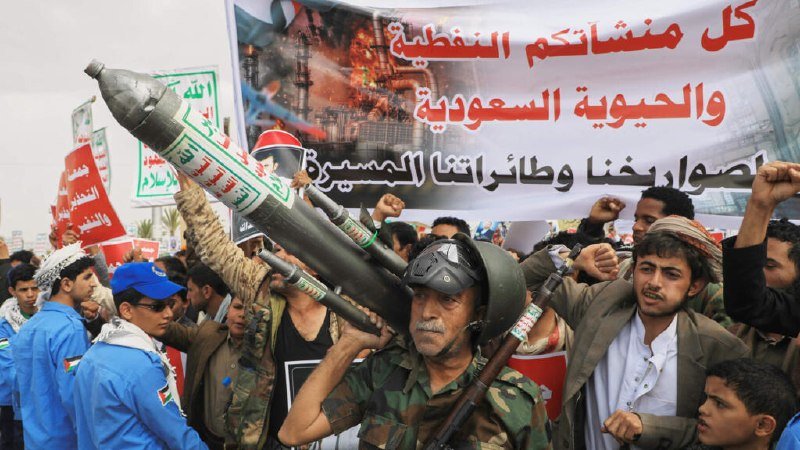
Screen capture of an IRGC-linked channel announcing strikes on US positions in Kuwait and Bahrain, posted on 9 July 2026. IRNA via Telegram

The Islamic Revolution Guards Corps claimed on Thursday, 9 July 2026, that it had struck United States military bases in Kuwait and Bahrain with missiles and drones, opening what Iranian state-aligned outlets cast as a direct retaliation for American attacks on Iran's southern coast. The announcements — circulated in parallel by Iran's official IRNA news agency and the English-language channels of outlets close to the Guards, including Press TV and the Telegram feeds of commentators aligned with the establishment — came roughly twelve hours after the first reports of US strikes on targets in Iran's southern coastal provinces, which Tehran says followed the funeral ceremonies of Supreme Leader Ali Khamenei.

The exchange marks the first time in the present escalation that Iran has publicly named US facilities in two Gulf monarchies as targets. It also pushes the confrontation onto the territory of states that host the bulk of America's naval and air power in the Gulf — a deliberate widening, if the claims hold, of a war that until now had been fought across the Strait of Hormuz and inside Iranian airspace.

What the Iranian side is saying

The IRGC's English-language channel carried a statement in the early hours of 9 July UTC describing the United States as a "treacherous" actor that had, in successive moves, violated its commitments and struck "multiple locations in Iran's southern coastal provinces" before targeting "two" further sites in what the statement frames as anti-civilian acts. IRNA's English feed amplified the message and added that the Guards had launched missile and drone strikes against American bases in Kuwait and Bahrain. Press TV's Telegram account repeated the framing that the operation came after the funeral rites of Khamenei, a sequencing that places the Supreme Leader's death at the emotional and political centre of the Iranian narrative and that Tehran will use, in the days ahead, to argue that the United States struck a grieving, transitioning state. None of the Iranian-aligned channels published coordinates, munition types, or independent corroboration of hits; the announcements read as claim, not confirmation.

The fact that the messaging was coordinated across IRNA, Press TV, and several IRGC-adjacent Telegram accounts within a roughly ninety-minute window suggests a deliberate information operation rather than a tactical press release. The Persian-language channels added operational detail absent from the English statements, including references to specific coastal districts in southern Iran and a second-wave pattern, but did not name the Iranian units involved.

What is not yet known

No Western wire service, no Pentagon spokesperson, and no government in Kuwait or Bahrain had confirmed damage or even an attack as of the timestamp on the Telegram posts in the public thread Monexus reviewed. The US Central Command public posture on 9 July has not been independently verified within the source set available to this article. Kuwait's and Bahrain's state news agencies — which would normally be the first to break news of an attack on their soil, given the political cost of appearing surprised — are not yet in the record. Iranian state-aligned outlets have historically been first and loudest with strike claims that subsequent open-source analysis has either confirmed in part, contested, or quietly dropped; readers should treat the operational specifics as unverified pending satellite imagery, base-side statements, and the eventual Western wire read.

The death of Khamenei, foregrounded in the Press TV framing, is itself a separate claim that the available sources do not corroborate from non-Iranian outlets. Whether the Supreme Leader has in fact died, or whether Iranian media are using the funeral narrative as a mobilising frame around an earlier strike campaign, is a question the public record cannot yet settle.

Why targeting Kuwait and Bahrain changes the geometry

If the IRGC's claim survives verification, the strategic implication is not the damage to any single installation but the crossing of a political line. Both monarchies host the operational backbone of the US Fifth Fleet and the primary basing architecture that has, for two decades, made it possible for Washington to project air power across the Gulf without flying from Diego Garcia or Qatar. Striking those bases, even partially, forces a host-nation decision: either publicly disavow the use of their soil for offensive operations against Iran, or accept the consequences of being treated as a co-belligerent. Either outcome narrows American freedom of action in the Gulf.

Iran's structural calculation here, if the claim is the opening move of a deliberate doctrine rather than a one-off retaliation, is to deny Washington the quiet use of allied territory. The Gulf monarchies have spent two decades balancing American protection against domestic politics that do not want to be seen as participants in an Israel-Iran war. A strike on their soil, regardless of who fired, tips that balance.

The information environment around the claim

The sequencing of the Iranian messaging — IRGC statement first, IRNA amplification within an hour, English-language Telegram channels republishing the text verbatim — mirrors the playbook Tehran used after the October 2023 and April 2024 escalations. The audience for the early Telegram posts is not the Gulf; it is the Iranian diaspora, the Global South commentary circuit, and the Western foreign-policy reader who follows the channels as a primary read on Iranian intent. By the time the wire services catch up, the frame is already set.

That frame — American aggression, Iranian retaliation, Gulf states as unwilling battlegrounds — is the one this article has no choice but to operate inside until independent reporting catches up. The structural argument is straightforward: when one side controls the first hour of the news cycle and the other side is still asleep in Washington, the dominant narrative for the day belongs to the side that woke up first.

What to watch next

Three signals will resolve the question of whether the IRGC's claim reflects what actually happened on the ground. First, statements from Kuwait's and Bahrain's ministries of interior or defence — silence past 12:00 UTC on 9 July would be the loudest signal of all. Second, satellite imagery of the named bases, which commercial providers typically publish within twenty-four to forty-eight hours of a strike claim. Third, the Pentagon's daily read-out, which has historically been the slowest but most consequential confirmation in any Gulf escalation.

The Iranian side has, for now, won the morning. Whether it has also won the day depends on what the next twelve hours corroborate.


This article draws on Iranian state-aligned Telegram channels and the English-language feeds of outlets close to the IRGC. Where independent confirmation from Western wire services, Gulf state news agencies, or US Central Command is not yet in the record, this publication has said so. Monexus will update as the picture sharpens.

Wire provenance

This editorial synthesis draws on the following public wire/social posts:

  • https://t.me/Irna_en
  • https://t.me/englishabuali
  • https://t.me/abualiexpress
  • https://t.me/presstv
© 2026 Monexus Media · reported from the wire