When a 'martyr leader' fills the streets of Tehran and Mashhad, who is actually being addressed?
Iranian state media has filled its channels with footage of mourning crowds in Tehran and Mashhad for a 'martyred Leader.' The political theatre is unmistakable — and so is the question of who the framing is really aimed at.
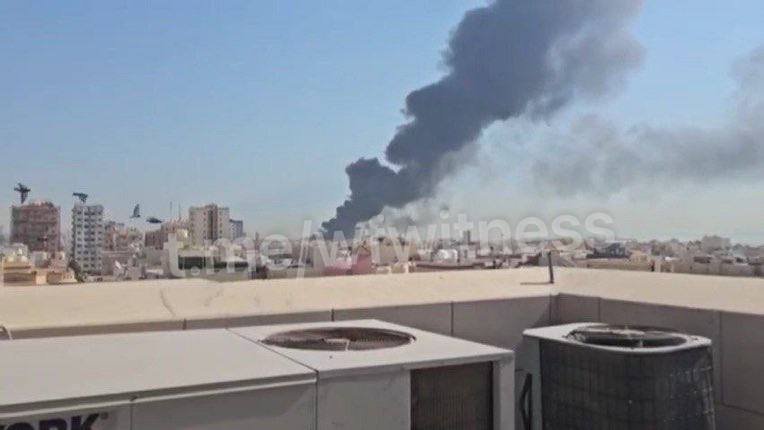
At 12:13 UTC on 9 July 2026, IRNA's English channel posted its first photo set of the day: the funeral procession in Mashhad for Iran's "Martyr Leader." By 12:18 UTC, PressTV's documentary feed had declared the Tehran farewell "a historic day of mourning." By 13:03 UTC, Mashhad was being framed as ready to welcome the remains. By 13:36 UTC, Iraq was folded into the choreography: "the day Iraq walked as one, united in a final farewell to the martyred Leader." The English-language arms of Iranian state media were, in the span of 83 minutes, running a single coordinated script across borders and platforms.
That script — leader, martyr, farewell, unity — is not news reporting in any conventional sense. It is a political vocabulary the Islamic Republic has used for decades, now operating at full volume on a stage with international audiences. Reading the framing closely is more useful than reading the crowds.
The label does the work
"Martyr" is not a metaphor the Iranian state uses loosely. It carries a defined legal and theological status inside the Republic, and applying it to a sitting or recently deceased leader is itself a constitutional and symbolic act. PressTV's documentary handle ran every item today under the hashtag #MartyrLeader, a packaging choice that flattens what is in fact a contested claim into an apparently settled designation. IRNA's photo captions followed suit, framing the Mashhad procession as a single devotional event rather than a managed procession with security, transport, and broadcast logistics built around it.
For domestic audiences, the repetition is reinforcement of a familiar story: the leader died in the service of a sacred project, and the nation is gathered in grief. For external audiences, including Iran's neighbours and the wider Muslim world, the function is different — it is to position the leader inside a recognisable register of religious-political sacrifice that travels across sectarian lines.
Why Iraq, and why now
The 13:36 UTC item is the most editorially interesting of the day. Iran's English-language outlets do not normally script Iraq into a unified emotional subject. "Iraq walked as one" is a deliberate construction: it asserts a transnational Shia public, grieving in unison, that crosses the border the Islamic Republic's rivals insist is a fault line.
Read against the past two years of regional realignment — Iran's deepening security footprint in Iraq, the struggle over Hashd al-Shaabi formations, the recurring rocket exchanges between Iranian-aligned militias and US positions in Iraq and Syria — the line reads as soft-power messaging aimed as much at Baghdad's political class as at mourners. The English-language channel is the audience. The Arabic-language counterparts in Iran's media ecosystem will carry the same message to Iraqi Shia Arab readers directly.
A language that flatters the regime and tests its rivals
There is a quieter function in all of this. By flooding its English feeds with religious-martyrdom vocabulary, Iranian state media forces a choice on Western editors covering the story. The choices, in practice:
- Quote the word "martyr" and import the theological frame.
- Use scare quotes, which signals editorial distance but also amplifies the term.
- Substitute "leader" or "supreme leader" and soften the religious register.
Each option produces a different paragraph in a Reuters or BBC explainer, and each one tells the reader something different about what kind of state Iran is. The Iranian side has spent decades perfecting this dilemma; today it is running the play at speed.
The structural frame is plain: a state with constrained soft power and expanding security reach uses its martyrdom vocabulary as projection, especially in moments of leadership transition. The vocabulary does not just describe grief. It claims inheritance, courts regional solidarity, and frames any future political challenge to the new leadership as an affront to a sanctified office.
What remains genuinely uncertain
The footage and captions circulating today tell the reader very little about how many people are actually in the streets of Mashhad, who organised the turnout, or how the procession will be secured over the coming days. State outlets do not publish independent crowd estimates; opposition Iranian outlets reporting from outside are working from limited access. Outside observers cannot, on the basis of today's posts, distinguish organic mourning from mobilised participation — and that distinction is exactly the one that matters for any political reading of the transition.
Also uncertain is whether the martyr framing will hold as the succession process moves forward. The Republic has used this vocabulary for battlefield figures and assassinated officials many times; extending it to a sitting leader, in a sustained English-language campaign, is something rarer and more consequential.
This publication reads the day's wire as one coherent framing operation, not as five separate news items — and treats the Iraqi reference as the most strategically loaded line in the set.
Desk note: Monexus treats Iran's English-language state feeds as primary sources for what the regime wants external audiences to hear, while noting in the body that they are not independent verification of crowd size or political sentiment. Western wire coverage of today's events should be read with that asymmetry in mind.
Wire provenance
This editorial synthesis draws on the following public wire/social posts:
- https://t.me/presstv/29512
- https://t.me/presstv/29510
- https://t.me/Irna_en/42118
- https://t.me/presstv/29509