Iran's missile alert over Jordan exposes the brittle arithmetic of regional escalation
On 9 July 2026 the US embassy in Amman told American citizens to take shelter as Iranian projectiles crossed Jordanian airspace. The episode is small; the questions it forces are not.
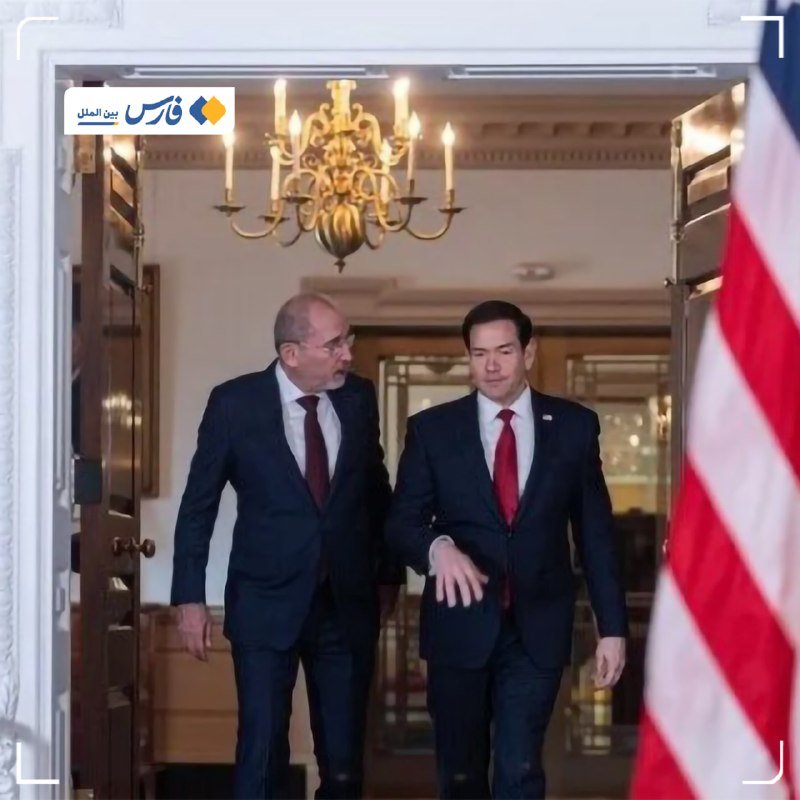
At 11:04 UTC on 9 July 2026 the United States embassy in Amman sent a security message to its citizens: reports of "several missiles, drones or rockets" in Jordanian airspace, with instructions to seek shelter immediately and stay indoors. Two Iranian state-aligned outlets — Tasnim, via its Persian feed and English wire, and Fars — carried the alert in near real time, framing it as evidence that the projectiles had reached a US-allied airspace in plain sight. The American message was a precaution, not a casualty report. The political reading it forces is heavier than the event.
This publication's read: the most dangerous thing about the Jordan alert is not what flew, but the consensus that it was newsworthy enough for Iranian state media to amplify and a US embassy to formalise. That consensus, on the day it landed, told readers what the principals on both ends of the corridor were claiming — and what they were not.
What the alerts actually said
The embassy language was deliberately noncommittal on origin. Missiles, drones or rockets: the three-word list is the diplomatic equivalent of a foghorn. The US mission in Amman does not publish shelter-in-place notices for routine air traffic, and it does not name the firing party in an active alert; that is left to the follow-on attribution cycle, once the projectiles have landed, or not landed, and once regional air-defence operators have spoken. The Tasnim and Fars wires, by contrast, ran the alert under headlines that read the absence of a name as a confirmation: Iranian missiles, in their framing, were the cause that the embassy had declined to print.
This is the asymmetric coverage pattern that has governed US-Iran reporting for the better part of a decade. State-adjacent outlets in Tehran treat the absence of a US denial as a tacit admission; Western wires treat the absence of a US attribution as a gap to be filled cautiously, with caveats and sourcing. On 9 July neither side waited. The American public-facing message was out; the Iranian amplification was out; and the open-source satellite, radar and overflight picture that would let an outside reader adjudicate — that is the part that lags.
Why the Jordan corridor is the stage that matters
Geography is doing the work here. A projectile that crosses Jordanian airspace is not in Iraqi airspace, is not over the Gulf, is not in the Mediterranean. It is on the spine that connects Iran, Iraq, Syria and Lebanon — and, increasingly, the route by which Iranian defence exports, advisors and proxy logistics reach the Levant. Jordan sits in the middle of that line, a quiet US treaty partner and a quiet air-traffic neighbour. An alert issued in Amman is therefore read in Tehran as a sign that the United States is registering movement on a corridor it has spent fifteen years trying to keep quiet.
Two structural facts underline the framing. First, Iran's missile and drone inventory is the principal surviving instrument of a deterrent doctrine that has lost its principal clients in the region: the air-defence networks, the forward bases, the proxy chain that took two decades to build. When those assets erode, the missile inventory is what remains in the public-facing ledger of power. Second, Jordan's air-defence cooperation with the United States is among the most operationally integrated in the Arab world. A notice to American citizens, in that context, is not a tourism advisory; it is a tacit American acknowledgement that the regional early-warning chain has detected a real track.
The counter-read that has to be taken seriously
It is easy, and intellectually lazy, to read the Tasnim framing as the whole story. It is also incomplete. Three readings have to be on the page, in roughly equal weight, before the analysis is sound.
The first is that the projectiles were Iranian, in line with the Tasnim and Fars framing, and that the embassy alert is a routine precaution taken when a US ally's airspace is in a live track. The second is that the projectiles were fired by a non-state actor operating from Iranian-aligned territory — Iraq's paramilitary ecosystem, the Syrian corridor, Lebanon — and that the embassy language's refusal to name Iran is the point. The third is that the alert was precautionary in a thinner sense: that a radar or satellite track was ambiguous, that the embassy erred on the side of shelter-in-place rather than wait for attribution, and that the Iranian state media machine filled the gap with the most consequential interpretation. The sources available at the time of writing do not adjudicate between these three. Pretending they do, on either side, is the failure mode.
The stakes, plainly stated
What the alert on 9 July tells Monexus is that the regional escalation ladder is being used in a public-facing way that it has not been used in years. A US diplomatic shelter-in-place notice is an instrument, not a rumour. The questions it forces are operational and political, in roughly equal measure: who was firing, at what, and on whose authority; what the air-defence and radar picture looked like in the minutes after 11:04 UTC; and whether the Iranian state media line — that the projectiles were a demonstration aimed at the United States through a third-country corridor — was the intended one. The day's evidence, read honestly, supports the framing that the alert was real and that the attribution is contested. It does not, on the public record, support any cleaner conclusion.
That is the brittle arithmetic of the present moment. Missiles, drones or rockets cross a sovereign airspace; an embassy tells its citizens to shelter; state media on the originating side runs the alert as victory; and the international wire cycle waits for the corroboration that arrives hours later, if at all. The gap between the alert and the attribution is where the next escalation will be written. This piece was written by Monexus as an opinion reading, not as a wire report; the three cited feeds are the public record available at 11:04 UTC on 9 July 2026, and nothing more is claimed of them than that.
Desk note
The Monexus editorial line on the US-Iran corridor is to steelman the Iranian framing where the structural evidence supports it, to give the US state-department and embassy language its full weight without the conventional deference, and to refuse the false choice between the Iranian state-media line and the Washington press-briefing line. This article takes the Tasnim and Fars wires as primary source material on what Tehran chose to amplify, and reads the embassy alert as a US institutional fact. The two are not equivalent in evidentiary standing, and the piece says so.
Wire provenance
This editorial synthesis draws on the following public wire/social posts:
- https://t.me/JahanTasnim
- https://t.me/FarsNewsInt
- https://t.me/tasnimnews_en