Iran's missiles over Jordan: a regional test that lands in Washington
Jordan says it brought down eight Iranian ballistic missiles on 9 July, the most public test yet of whether Arab states will publicly intercept Iranian fire — and where Washington is positioned to backstop.
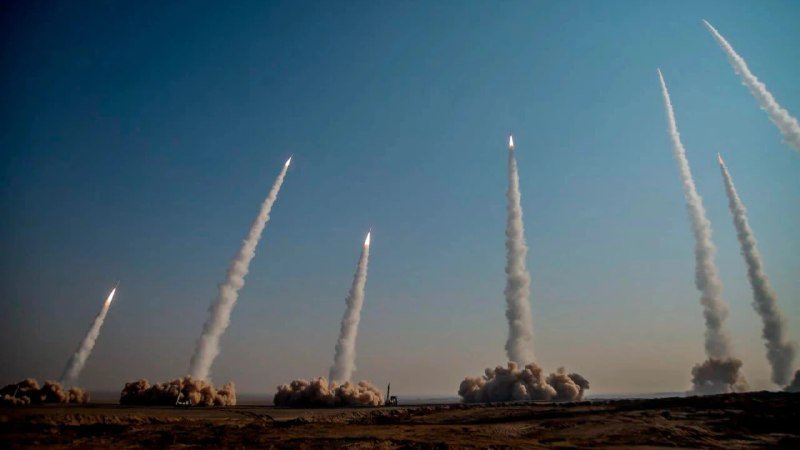
Air-raid sirens sounded across Jordanian cities at roughly 11:25 UTC on 9 July 2026, and within minutes the country's armed forces announced the interception of eight Iranian ballistic missiles over its territory. The alert, captured in real time across Jordanian networks and field documentation channels, marks one of the most public Iranian strikes to be engaged by an Arab state using its own inventory, and it arrives inside a wider week of missile and drone exchanges that have already tested Israeli, Iraqi and Gulf air defences.
What makes this incident politically significant is not the number — eight missiles, eight interceptions — but the venue. Iran has fired before; Jordan has intercepted before. The novelty is that Amman has chosen to say so on the record, naming the launch origin, crediting its own air-defence crews, and effectively drawing a public line under what had until recently been a quieter posture of containment. The episode is a small piece of evidence about who, in this region, is being asked to be visible.
The intercept, by the numbers
According to a 09:25 UTC summary carried by field documentation channels, Jordan's military said it had intercepted eight Iranian ballistic missiles fired toward its territory. Sirens had been sounding in multiple Jordanian cities; those alerts were first logged at 11:11 UTC, repeated at roughly 11:36 UTC, and continued into the early afternoon, suggesting either a salvo that took time to clear or a follow-on launch that drew a second wave of warnings. Al Jazeera English carried the footage at 12:12 UTC, by which point the intercept had already been officially confirmed.
The Jordanian statement, as relayed through these channels, contained two notable features. First, the launch origin was identified as Iran — not a proxy, not "incoming fire of unknown origin", not an "aggression from regional sources". Second, the framing language credited Jordanian crews and the country's air-defence architecture, rather than attributing the success to US Central Command or to a coalition arrangement. In a regional environment where attribution is usually muddied, that matters: it tells the audience — and Tehran — that Amman is prepared to be the named actor.
What changed in Amman's posture
For most of the past year, Jordan's response to Iranian or Iranian-aligned projectiles crossing its airspace has been to engage, then to de-escalate rhetorically. Statements emphasised "technical incidents", "rockets of unknown origin", and a willingness to absorb the incident politically rather than name the shooter. That posture reflected a calculation: Jordan shares a long border, hosts large refugee populations, and depends on cross-border trade and quiet diplomatic channels.
The 9 July intercept breaks that pattern. By naming Iran publicly, and by framing the engagement as a domestic success, Amman has moved from a strategy of containment to one of public attribution. The move carries risk. It gives Tehran a propaganda opening, since the Islamic Republic can now claim it demonstrated the ability to reach Jordanian airspace and that the "Zionist-US air umbrella" failed to stop its salvo. It also creates expectation inside Jordan that further launches will be met with similar public posture, narrowing Amman's room to de-escalate next time.
Where Washington sits in this
US assets in the region — air-defence crews, early-warning aircraft and Patriot and THAAD batteries deployed across Jordan, Iraq and the Gulf — have been the implicit backstop for Arab intercepts for several years. Public reporting has routinely described successful engagements without specifying which country's weapons or crews drew the kill. That ambiguity is, by design, deniable enough to allow Arab partners to claim defensive sovereignty without forcing Washington into a public exchange-of-fire narrative.
The 9 July messaging suggests Amman is moving away from that ambiguity. If future Iranian salvos carry similar public attribution, the question becomes whether US systems — or any systems traceable to a US posture — were also engaged, and whether that engagement is acknowledged. The sources circulating this episode do not specify US involvement. They do, however, frame the intercept as a Jordanian success, which is consistent with a policy choice: visible Arab defence, quiet American tail. The structural pattern is that of allied burden-manifestation without escalation-by-attribution.
The stakes if this continues
Iran's calculus on missile strikes has historically been calibrated to test the willingness of Arab states to absorb politically — and to be seen absorbing — Iranian fire without retaliating toward Tehran. A publicly-attributed Jordanian intercept, repeated, begins to shift that calculus in the opposite direction. Tehran now has to assume that further strikes will produce public attribution, which limits its ability to run routine pressure campaigns under cover of ambiguity.
The more uncomfortable scenario is escalation by miscalculation. A future salvo that lands, or that produces casualties, would land on top of a year of public attribution, narrowing the diplomatic headroom for de-escalation. Gulf states, Israel, and Iraq — all of which have intercepted Iranian or Iranian-aligned fire this year — would face pressure to follow the Jordanian template, naming Iran publicly rather than absorbing strikes into routine defence reporting.
Two areas of uncertainty deserve flagging. First, the channels carrying this story do not yet specify whether any missile debris or warhead reached Jordanian ground; Jordanian military statements as relayed suggest all eight were intercepted, but on-scene confirmation was not in the materials reviewed. Second, the wider Iranian motivation — whether the salvo was a probe, a retaliation for an earlier event, or an extension of an ongoing exchange of fire involving other actors — is not addressed in these sources. The dominant framing, that Jordan has chosen to make this incident public, holds on the available evidence; the underlying Iranian intent is the part of the story still in shadow.
How Monexus framed this versus the wire: where mainstream coverage in the early hours tends to play the intercept as a routine defence success, Monexus is reading Amman's choice to publicly attribute the launch to Iran as a posture shift — one that gives Tehran less room to probe in silence and reduces the deniability buffer US partners have relied on.
Wire provenance
This editorial synthesis draws on the following public wire/social posts:
- https://t.me/intelslava/124736
- https://t.me/intelslava/124733
- https://t.me/rnintel/58291
- https://t.me/AMK_Mapping/47208
- https://t.me/englishabuali/30117
- https://t.me/ClashReport/81104
- https://t.me/englishabuali/30115