Iran claims strikes on US-linked targets in Kuwait and Qatar as Hormuz escalation widens
Iran's army says it struck Patriot systems in Kuwait and early-warning sites in Qatar in retaliation for US aggression, while Axios reports the White House is bracing for a prolonged exchange over the Strait of Hormuz.
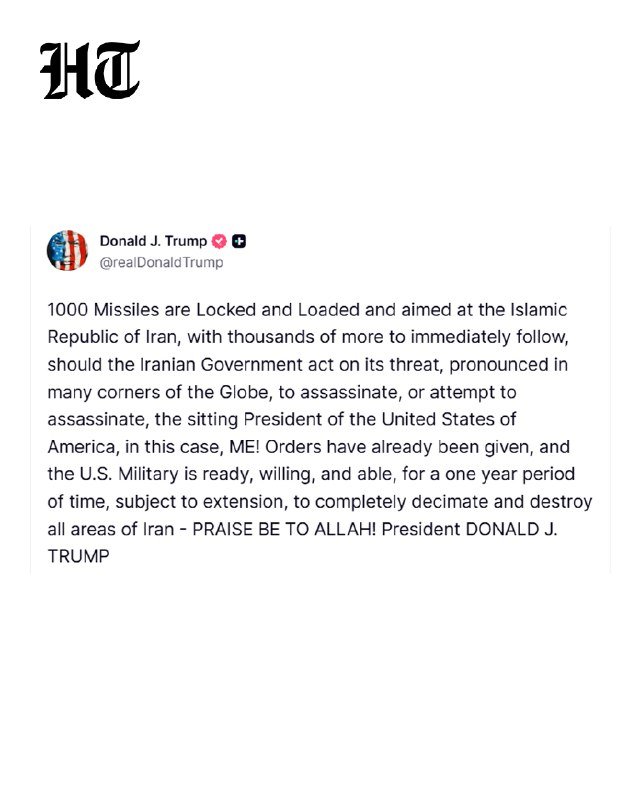
Iran's army claimed responsibility on 9 July 2026 for a series of drone and missile strikes against US-linked military infrastructure across the Gulf, marking a sharp widening of the confrontation that has gripped the Strait of Hormuz since US operations against Iranian territory began. In statements issued at 06:12 UTC and carried by Iranian state-linked outlets, the army said it had targeted Patriot air-defence installations in Kuwait, early-warning sites in Qatar, and fuel depots belonging to US forces in the region, describing the action as retaliation for what it called "American aggression" against Iranian territory. Iran's Islamic Revolutionary Guard Corps separately said important infrastructure at American bases in Kuwait and Bahrain had been hit, according to Fars News at 06:00 UTC.
The claims, if confirmed, would represent the most direct Iranian military action against US assets in the Gulf since the current escalation began, and would pull two Arab host states — neither of which has publicly consented to being a frontline in a US-Iran exchange — into the operational map. The timing matters: within minutes of the Iranian statements, Axios reported at 06:09 UTC that the White House is preparing for a "potentially prolonged exchange of fire" over the Strait of Hormuz, with US officials telling the outlet the confrontation could last "days, weeks, or longer" depending on choices made in the next 72 hours.
What Iran says it did
The army's public-relations statement, relayed by Tasnim News at 06:02 UTC and amplified by Al Alam and AMK Mapping in the minutes that followed, frames the operation as a direct response to US strikes on Iranian soil. The army said drone attacks had hit "American strategic bases and centres in the region," and Tasnim's English feed cited the army's public-relations office saying operations would continue against targets associated with what it called the "terrorist American army." AMK Mapping summarised the same statement as referring specifically to a Patriot air-defence installation in Kuwait and an early-warning radar site in Qatar. The IRGC's separate Fars statement at 06:00 UTC added Bahrain to the list of host states whose US facilities had been struck, and praised what it described as the Iranian public's "timing" and resolve. None of the Iranian statements offered a casualty count from the defending side, and none of the reports cited independent confirmation from Kuwaiti, Qatari, or Bahraini authorities.
The wording is significant. By naming Patriot systems by type, and by pairing the Kuwait strike with the early-warning site in Qatar, the Iranian statements telegraph that the targeting list is being drawn from publicly known US force posture in the Gulf — a posture that has been documented in open-source defence reporting for years and that includes Patriot battalions, AN/TPS-77 and similar radar installations, and pre-positioned fuel infrastructure at Arifjan, Al Udeid, and the Naval Support Activity in Bahrain. That Tehran is willing to name the system types suggests either confidence that the strikes landed or a willingness to claim them regardless, both of which carry operational signalling weight.
The White House posture
The Axios report, which the outlet attributes to US officials speaking on background, is the first Western readout of how the administration is calibrating its next move. The framing — preparation for a "prolonged exchange" rather than a contained tit-for-tat — implies that Washington does not currently expect Iran to de-escalate after a single round. The Strait of Hormuz itself, a 21-mile-wide chokepoint between Iran and the Arabian Peninsula through which roughly a fifth of seaborne oil trade normally transits, is the implicit centre of gravity: any sustained exchange raises the prospect of Iranian moves against commercial tanker traffic, against the tankers of Gulf producers that depend on the strait for export, or against the US Navy's own presence in the Fifth Fleet's area of operations.
For the Gulf monarchies hosting US hardware, the situation is operationally and politically untenable without their own public posture. Kuwait and Qatar have historically avoided being drawn into a US-Iran confrontation as named parties; both host critical US Central Command enabling assets and both have, in recent years, mediated discreetly between Tehran and Washington. The Iranian statements put both governments in the position of having to acknowledge that strikes have landed on their soil — or to deny it — and to choose between a public alignment with the US posture and a quiet effort to contain the escalation that does not require them to take sides in public.
Counter-narrative: what the Iranian statements are doing rhetorically
The Iranian statements should be read on two tracks. Operationally, they claim a successful strike package distributed across at least three host states. Politically, they reach for a register that fuses military defiance with nationalist mobilisation — the army statement characterises the US president as "foolish" and frames the operation as the defence of Iranian territory and dignity without conditions. That language is calibrated for an Iranian domestic audience that the security establishment has been preparing for confrontation since the first round of US strikes on Iranian assets, and it sets up a narrative in which any subsequent pause can be presented as a victory rather than a climbdown. The IRGC's parallel statement, praising the Iranian public for its "timing," performs the same function from inside the parallel power structure of the corps.
The structural point is that Iranian military communications during a live operation are not just descriptions of events — they are instruments of escalation management, signalling both to Washington and to Gulf capitals what Tehran considers proportionate and what it intends to do next. By specifying system types and host states, the statements narrow the room for a US framing that minimises the strikes; by routing the release through Tasnim, Fars, and Al Alam, they also create redundancy so that no single outage in one outlet can be used to deny the operation took place.
What we do not yet know
The sources available at the time of writing are entirely Iranian or Iran-sympathetic in origin — Tasnim, Fars, and Al Alam are state-linked outlets, AMK Mapping is a pro-resistance OSINT channel, and the Axios report paraphrases unnamed US officials. None of the host-state governments — Kuwait, Qatar, Bahrain — have been cited as confirming strikes on their territory, and no casualty figures from the defending side have been published by any outlet cited here. The US military has not, in the materials available, confirmed or denied the Iranian claims. Independent satellite imagery or footage from the affected sites, which would normally be the next round of corroboration, has not yet surfaced in the inputs to this piece. The Iranian framing that this is a "prolonged exchange" over Hormuz rests, on the US side, on a single Axios report citing unnamed officials; on the Iranian side, it rests on a chain of state-linked releases whose operational accuracy cannot be independently verified from the materials in hand. Readers should treat the strike claims as asserted but not corroborated, and treat the White House posture as reported but filtered through the outlet's sourcing.
Stakes
If the Iranian claims hold up, the operational map of the Gulf has changed in a single morning: three Arab host states have had US infrastructure struck on their soil without their own consent, and the US faces a choice between a kinetic response that deepens the exchange Axios says it is preparing for, and a diplomatic effort to re-isolate the conflict to Iranian and American assets. Either path reshapes the political economy of Gulf energy — tanker insurance, shipping rates, and the willingness of regional producers to keep crude flowing through Hormuz under direct Iranian fire. The narrowest window for de-escalation runs through Kuwait and Doha, whose governments will now be under acute domestic and US pressure to publicly condemn strikes on their soil; the broadest window is the one Tehran's statements assume, in which Iran's capacity to absorb a first strike and still return fire at US infrastructure across three countries has itself become a deterrent against further escalation. Neither window is open for long.
This article relies entirely on Iranian state-linked outlets and an Axios exclusive for its factual claims. Monexus will update the picture as host-state, US military, or independent OSINT confirmation becomes available.
Wire provenance
This editorial synthesis draws on the following public wire/social posts:
- https://t.me/alalamarabic
- https://t.me/AMK_Mapping
- https://t.me/wfwitness
- https://t.me/tasnimnews_en
- https://t.me/farsna