The Long Goodbye: Inside the Funeral Procession of Iran's Supreme Leader
A six-decade political career ends in the shrine city of Mashhad. The choreography of mourning is also the choreography of a regime laying claim to continuity.
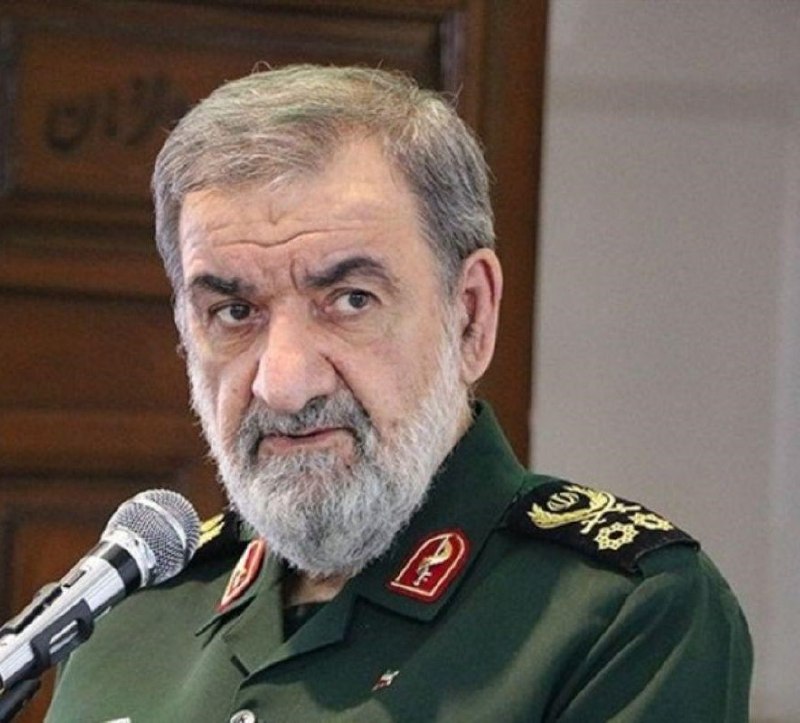
In the late afternoon of 9 July 2026, the vehicle carrying the coffin of Ayatollah Seyyed Ali Khamenei entered the courtyard of the shrine of Imam Reza, the eighth of the Twelve Imams, in the holy city of Mashhad. Telegram channels operated by his office and by Iranian state media had been broadcasting the cortege since early afternoon UTC. The aerial footage, distributed by Khamenei.ir at 14:48 UTC, showed a road lined with mourners carrying red banners stretching toward the gilded dome. By Press TV's account at 13:10 UTC, the procession through Mashhad had drawn what the channel described as millions. The Imam Reza shrine is, in the theology of Twelver Shi'ism, the burial place of a direct descendant of the Prophet Muhammad — and, not coincidentally, the hometown of the man whose death the procession was built to commemorate. The choice of Mashhad as the site of the final farewell was therefore at once devotional and political: a man born in 1939 in a modest clerical household in the same city was being returned to it under the largest possible canopy of legitimacy the Islamic Republic can produce.
Khamenei's death, in circumstances that Iranian authorities have described as martyrdom, marks the end of a six-decade career that began in clandestine opposition to the Shah and culminated in 37 years as Supreme Leader. It is also the first succession crisis the Islamic Republic has faced in its modern form: Ayatollah Khomeini's death in 1989 set the template Khamenei himself navigated, but the institutions, factions, and geopolitical pressures bearing on the next Supreme Leader are different. The choreography of the funeral — the cities chosen, the verses recited, the red flags waved, the bodies of family members carried alongside the Leader's coffin, as reported by IRNA English at 13:20 UTC — is the visible half of a quieter question: who governs Iran now, and on whose authority.
A procession designed to argue for permanence
The mashhad leg of the funeral was not the first stop. State-aligned accounts describe a multi-city procession that worked its way through Iranian population centres before arriving at the shrine. The persistence of the same visual signature across cities — a sea of red flags, the recitation of verses addressed to Imam Reza, the vehicle moving slowly enough for the crowd to read as a wall — was itself the message. Telegram posts from the Khamenei office at 13:19 UTC singled out the red flags as the defining feature of the procession across cities, an iconography that links the ruling establishment to the Karbala paradigm of mourning and, by extension, to the Shia tradition of redemptive suffering.
That iconography is doing real political work. Iranian institutions are, in ordinary times, frequently characterised in Western coverage as brittle — a clerical elite presiding over a restless, young, urbanised population. The funeral footage offers the counter-image: an order that can summon, at speed, an enormous public performance of grief across multiple cities, and that can choreograph the performance so that it reads as continuity rather than rupture. Press TV and the Khamenei office both emphasised the scale of crowd turnout; IRNA framed the Mashhad crowd as having waited hours for the cortege to pass. None of these claims can be independently verified from outside Iran, and the editorial choices of state-aligned channels are themselves a form of argument. But the structural point — that the regime treated this as a regime-defining media event — is unambiguous.
The counter-narrative, mostly absent from official channels
The Iranian opposition abroad has, over the course of Khamenei's tenure, framed the Supreme Leader as the principal obstacle to political liberalisation at home and to regional de-escalation abroad. That reading does not appear in the Telegram channels that drove coverage on 9 July 2026. What does appear is the martyrology vocabulary — the Leader as "martyr," the funeral as a procession of the "pure body," the mourning as obligation rather than option.
The asymmetry matters. On the day of the funeral, the verifiable public record inside Iran is overwhelmingly the state-aligned one: official Telegram channels, state broadcasters, the Supreme Leader's office. Independent reporting from inside Mashhad was not available in the source material reviewed for this piece, and the question of how many of those attending were compelled, paid, or sincerely grieving is one the open record cannot answer. The most that can be said with confidence is that the regime succeeded in setting the visual terms of the day — and that the diaspora opposition, by contrast, was speaking into a much smaller megaphone on 9 July.
What the succession machinery looks like, in plain language
The Iranian constitution provides for the Assembly of Experts to choose a new Supreme Leader from among senior Shia jurists. In practice, the politics of succession have been shaped for years by informal alignments among clerical factions, the Islamic Revolutionary Guard Corps, and the office of the presidency. Khamenei himself, while alive, had narrowed the field by elevating loyalists to key religious and security posts.
What changes with the Leader's death is not the existence of those alignments but the visibility of the contest. Until now, factions could negotiate in private; now, the question of who succeeds becomes a public question with a public answer, and that answer will be read as a verdict on the direction of the Islamic Republic. The funeral in Mashhad — performed under the dome of a direct descendant of the Prophet, in the city where the late Leader was born — is the regime's opening argument in that contest: the argument that what is being transmitted is not one man's preferences but an institution, and an institution whose legitimacy runs back through centuries of Shia clerical tradition rather than forward from one Supreme Leader's biography.
What the regional and great-power balance does next
Iran is not a hermetic political system. The funeral occurs at a moment when the Islamic Republic has been engaged, on and off, in nuclear negotiations with the United States; when its regional axis — through Hezbollah, the Houthis, and a constellation of Iraqi Shia militias — has been under sustained pressure since the Gaza war; and when its economy remains constrained by sanctions architecture that long predates the latest round of tension. A new Supreme Leader inherits all of this.
The plausible readings divide into two. In one, a successor emerges from the existing clerical-security consensus and pursues continuity: managed nuclear talks, calibrated regional posture, internal repression sufficient to deter but not provoke. In the other, the succession itself becomes a stress test — factions bargain hard, the IRGC's institutional weight is asserted more openly, and the negotiating posture with Washington becomes a function of who wins which argument inside Tehran. The funeral's choreography — smooth, unified, devotional — argues for the first reading. The institutional incentives, several observers have suggested over the past year, cut the other way.
What remains genuinely uncertain
Three things cannot be answered from the public record available on the day. First, the circumstances of Khamenei's death: Iranian authorities have used martyrological language, but no independent account of cause was located in the source material reviewed. Second, the identity and politics of the successor: the Assembly of Experts has not, on the record available, been convened publicly, and the names most often discussed in Western reporting are inferences rather than confirmed candidacies. Third, the durability of the public grief the funeral clearly performed: turnout at a state-organised mourning event is not the same measurement as durable political legitimacy, and the regime's reliance on the visual iconography of Karbala suggests it understands the difference.
The procession through Mashhad, then, is best read as both a closing ceremony and an opening bid. It closed the public life of the man who had held the office of Supreme Leader since 1989. It opened a contest — for the office, for the direction of the Islamic Republic, for the place of Shia Iran in a region whose alignments are themselves being renegotiated — that will be conducted in language the funeral carefully supplied.
Desk note: Monexus has framed this as a succession story wearing mourning clothes, rather than as a pure ceremonial dispatch. State-aligned Telegram channels set the visual record of the day; that record is treated here as a primary source for what the regime wanted to project, not as a neutral window onto what actually happened in Mashhad.
Wire provenance
This editorial synthesis draws on the following public wire/social posts:
- https://t.me/Khamenei_en/13081
- https://t.me/Khamenei_en/13079
- https://t.me/Khamenei_es/
- https://t.me/Irna_en/
- https://t.me/Khamenei_en/13078
- https://t.me/presstv/
- https://t.me/Khamenei_en/13077
- https://en.wikipedia.org/wiki/Ali_Khamenei
- https://en.wikipedia.org/wiki/Imam_Reza_Shrine