The Lance Twiggs Testimony and the Manufactured Story Around Tyler Robinson
The ex-roommate's on-the-record account complicates the political-narrative machine that formed within hours of the Charlie Kirk shooting — and exposes how thin the public evidence still is.
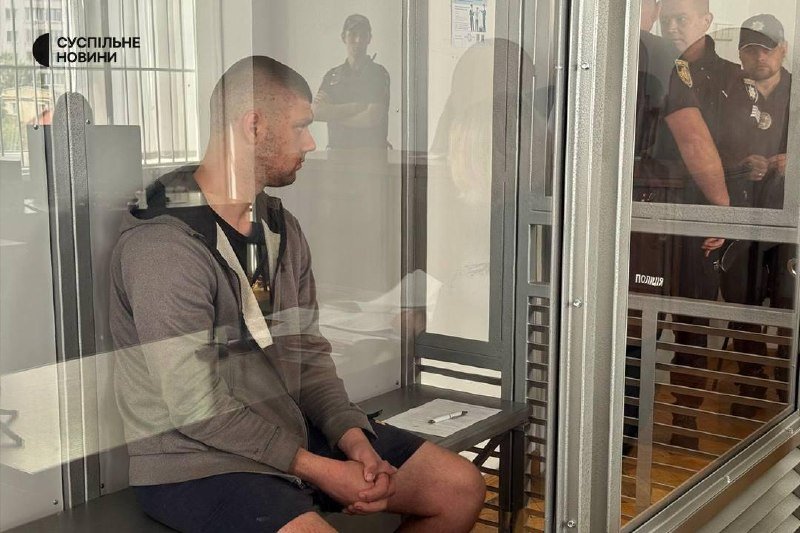
By 18:25 UTC on 9 July 2026, a single ex-roommate had done more than prosecutors or defense counsel to define what the public is allowed to know about Tyler Robinson, the 22-year-old accused of killing Charlie Kirk. Lance Twiggs — Robinson's former partner and the man who shared a residence with the suspect — sat for a recorded interview that was played in open court the same day. In that recording, Twiggs described Robinson's behaviour in the hours after the alleged shooting and, when pressed about LGBTQ rights, gave an answer that has already been clipped, captioned, and weaponised a hundred different ways across the political internet.
The temptation, as ever, is to read the testimony as confirmation of whichever thesis the reader arrived with. Twiggs's account is the first sustained on-the-record window into Robinson's life after the shooting, and it is also — by virtue of being the only narrative voice we have — a story that both sides of the partisan divide are free to overwrite with their own priors.
What Twiggs actually said
The recording, played at a Utah preliminary hearing on 9 July 2026, covers two discrete matters. First, the timeline of Twiggs and Robinson's relationship: when they began living together, the arc of the partnership, and its dissolution. Second, the period immediately after the alleged shooting, in which Twiggs describes Robinson returning to the residence and exhibiting behaviour Twiggs evidently found unremarkable at the time and alarming only in retrospect. The third strand — the one travelling furthest online — is Twiggs's response to a question about whether he and Robinson had discussed LGBTQ rights. The reported answer: "Uhh, no, n-not really. Umm, usually, if he did talk, it was about Tr…" — at which point the clip cuts off, but the shape of the reply is now public property.
The narrative vacuum, and what rushed to fill it
The structural problem is not new. A suspect is named within hours of a high-profile killing, and the demand for motive — for a theory of the man — outruns the evidentiary record by days or weeks. Cable panels fill the vacuum. Substack writers fill it faster. Within 24 hours of a name becoming public, a fully formed political biography is in circulation, much of it based on accounts from people who never met the suspect. The Twiggs testimony is unusual only in that it pulls a single strand of the story back toward the actual evidentiary record. It tells us what one person in the suspect's life actually saw, on tape, under oath. That is a low bar — and yet, relative to the rest of the circulating material, it is high.
The more interesting question is why this hearing is the moment the public is finally hearing from someone who was physically present in the suspect's life. Weeks of public commentary proceeded on the strength of social-media posts, neighborhood impressions, and a small number of family statements. Twiggs's appearance suggests either that prosecutors wanted to anchor the timeline before further speculation metastasised, or that the defense judged an early humanising record preferable to one assembled entirely by the state. The transcript does not let us pick between those readings.
The political sorting machine
The LGBTQ-rights exchange is the telling one. Twiggs's answer — tentative, unconsummated, cut short — has been cited as evidence that Robinson was apolitical, that he was preoccupied with a different fixation (the "Tr…" trailing into whatever followed), and that the categories in which national commentators have insisted on placing him are artefacts of the commentators' priors rather than of his own life. All three readings are currently live on social platforms. All three are overclaims, because a 15-second clip from a preliminary hearing is not a portrait of a suspect's interior life, no matter how authentically the witness delivers it.
This is the structural pattern: a fragment of evidence gets routed through a partisan filter, and what comes out the other side is a fully formed thesis with a confident author and a captive audience. The original ambiguity of the record is not resolved — it is overwritten. The Twiggs clip's actual content, which is the careful hedge of a young man asked a question he was not expecting, is a poor fit for any of the theses being hung on it.
What the public record still does not tell us
Twiggs's account gives us, at most, the following: Robinson was in a relationship with him; the relationship ended; Robinson came home in the period after the alleged shooting; and the two did not, in Twiggs's recollection, have structured political conversations about LGBTQ rights. It does not give us motive. It does not corroborate or contradict the existence of the online presence that has been attributed to Robinson across platforms. It does not speak to the question of accomplices, planning, or the suspect's state of mind in the minutes around the killing. A preliminary hearing is, by design, a low-evidentiary proceeding; the standard for binding a suspect over to trial is lower than the standard for conviction, and the defence's strategy at this stage is typically to preserve issues for later rather than to litigate them now.
The honest summary of 9 July 2026 is that we now have one sworn, on-the-record source describing post-shooting behaviour, and a great deal of inference and assertion surrounding it. That ratio is the story, and it is the same ratio that has held since the morning after the shooting.
The stakes, plainly stated
A murder case will be tried in a Utah courtroom on the evidentiary record, not on the discourse that surrounds it. But the discourse is doing real work in the meantime. It is shaping jury pools. It is shaping which witnesses come forward and which go quiet. It is shaping the political valence of the case in a midterm cycle. The Twiggs testimony is a small corrective — a reminder that a real person, on tape, gave a halting answer to a specific question, and that the distance between that answer and a national political thesis is enormous. The work of the next several months is to keep that distance visible. Anything less is a disservice to the victim, the accused, and the public that is being asked to render a verdict long before a jury does.
This publication is publishing the preliminary-hearing record at face value. The interpretive frame above is Monexus's, drawn only from on-the-record reporting; we will update as the evidentiary record expands.
Wire provenance
This editorial synthesis draws on the following public wire/social posts:
- https://twitter.com/Osint613/status/
- https://twitter.com/Osint613/status/
- https://twitter.com/Osint613/status/