The Mashhad funeral and the limits of reading Iranian crowds
PressTV broadcasts from Mashhad show vast crowds and an explicit death threat against Trump. Western readers should resist the temptation to dismiss both signals as theatre.
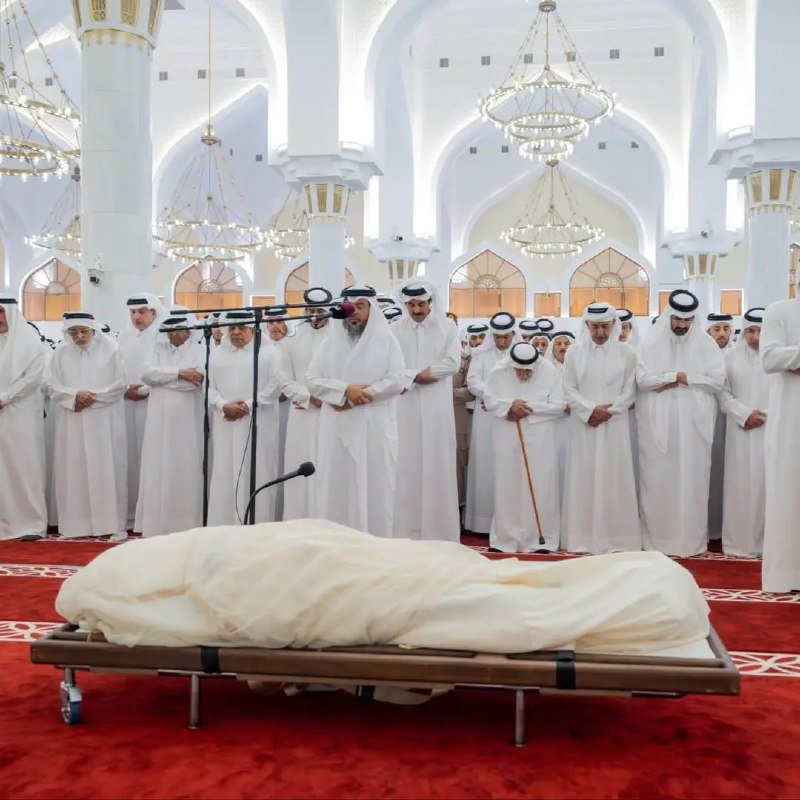
On the afternoon of 9 July 2026, PressTV aired drone footage of a sea of mourners stretching through Mashhad as the funeral convoy of the so-called "martyred Leader of the Islamic Revolution" made its way through the holy city. State cameras framed the procession as both grief and defiance. Among the banners visible in the broadcast, one reportedly read: "Hey Trump, we will kill you." The scene was extraordinary in scale and unusually direct in its message to Washington.
The instinct in Western commentary will be to read the footage as Iranian theatre — mass mobilisation choreographed for the cameras of a state broadcaster that has every reason to overstate the turnout. That instinct is not wrong. But it is also not enough. The Mashhad procession, taken on its own terms, tells us two things at once, and an honest reading has to hold both.
The crowd is real, even if the framing is not
PressTV is the English-language outlet of Iranian state broadcasting. Its job is to put the regime's preferred interpretation in front of foreign audiences, and its footage should be treated as that: a primary source for what the regime wants foreigners to see, not an unmediated count of bodies in the street. Independent verification of the turnout has not, on this evidence, been established.
And yet: Mashhad is Iran's second-largest city, a pilgrimage centre, and the hometown of the late leader. State-aligned media in comparable moments — the 2020 funeral of Quds Force commander Qassem Soleimani, for instance, which drew large crowds in multiple cities — have been broadly corroborated by wire reporting even when the official line inflated the political meaning. The structural fact that hundreds of thousands of Iranians turn out for a state funeral is not in serious dispute; the interpretation of what that turnout signals is.
The banner is the story
The more important signal is the explicit death threat against a sitting US president, carried in banner form past state cameras and amplified by state media. This is not sub-Twitter noise. It is a curated message, broadcast on the official English-language channel, with a hashtag — #MartyrKhamenei — designed to travel.
Two readings are available. The first is that this is venting, the kind of invective that hardline crowds produce at hardline funerals. The second is that it is a calibrated message: Iran wants the next US administration to know the temperature of the constituency it is dealing with, and to understand that any escalation has domestic political fuel on the Iranian side too. Both readings point in the same operational direction — a leadership under pressure from its own base is harder, not easier, to deter.
What the Western wire will do with this
Coverage of the Mashhad procession in major Western outlets will, in our expectation, follow a familiar pattern. Iranian state media will be cited sparingly and with the standard caveat. The crowd size will be hedged. The banner will either be omitted or treated as colour. The reader will be left with a softened picture, in which the event registers as a domestic ritual rather than a foreign-policy data point.
That is a defensible editorial choice, but it carries its own distortion. The Iranian state spent resources staging this moment for foreign cameras. To look away is to accept the regime's preferred framing of the funeral as a private affair; to amplify it uncritically is to take PressTV's word for the politics of the crowd. The honest path is in the middle: report what was shown, name the source, note the editorial layer, and let the reader weigh it.
The structural point
Iranian leadership transitions are rare, and the optics of succession are themselves a kind of policy statement. Mass mourning is being deployed here as a resource — internally, to consolidate legitimacy around the new order; externally, to signal cost. A Washington that treats the Mashhad footage as background noise is a Washington that has decided the cost of escalation is low. The footage on PressTV, including the explicit banner, is the Iranian state's argument that the opposite is true.
Whether that argument is sincere is a separate question. The point is that it was made, on state media, on 9 July 2026, and it deserves to be read in full.
The Monexus desk note: where wire coverage is likely to treat the Mashhad procession as colour, this publication treats the banner and the crowd size as a single signal — a state-curated message to a foreign audience, which should be reported on its own terms with the source named.
Wire provenance
This editorial synthesis draws on the following public wire/social posts:
- https://t.me/presstv/1
- https://t.me/presstv/2
- https://t.me/presstv/3