A Russian billionaire breaks ranks in The Economist — and lands somewhere uncomfortable
Andrey Melnichenko tells The Economist that Russia's ruling stratum decoupled itself from the country's future. The diagnosis matters more than the man delivering it.
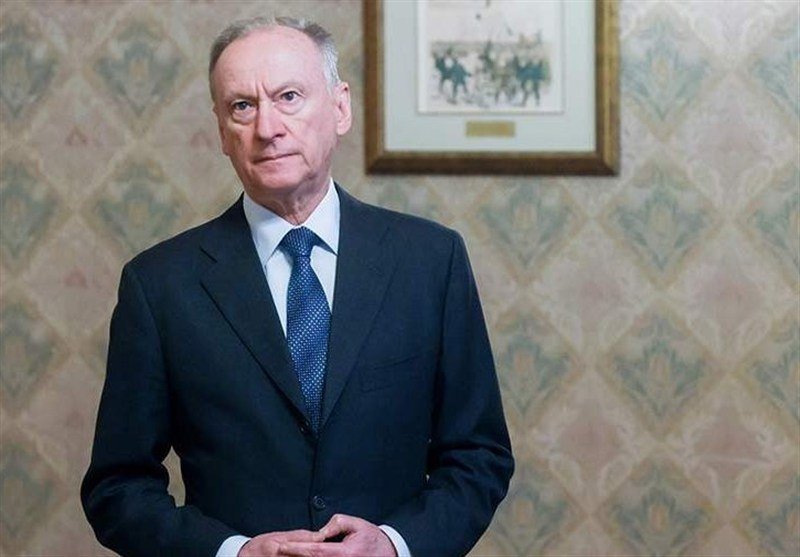
A Russian billionaire has done something his peers rarely do in public: he has named the disease. In a long interview with The Economist, Andrey Melnichenko — fertiliser and coal magnate, sanctioned by the United States, the European Union and the United Kingdom after February 2022 — argues that the Russian elite separated its own fate from the fate of the country long before the war in Ukraine made the divorce legible to outsiders. The framing is notable less for the contrition than for the absence of it. Melnichenko is not apologising; he is anatomising. That distinction matters.
What he actually said
The interview, summarised on 9 July 2026 by the X account of journalist Brian McDonald and timed to the Economist publication, contains a scene readers will be chewing on for some time. In May 2025, Melnichenko says, he met Vladimir Putin in the Kremlin after midnight. There, in front of the president, he laid out the core problem: Russia's elite chose the arithmetic of self-preservation over the arithmetic of national survival. The phrasing in McDonald's thread reads, almost verbatim, that the elite "separated its own fate from the fate of the country." It is a one-line autopsy of a political class. It is also, by oligarch standards, an act of aggression.
Why the messenger is unstable — and the message is not
Melnichenko is a peculiar witness. He built his fortune in the 1990s and 2000s through fertiliser producer EuroChem and coal group SUEK, then watched those fortunes become the subject of Western sanctions enforcement, divorce proceedings in London, and asset freezes spanning jurisdictions. He is not a dissident. He is not an exile opposition figure, in the Khodorkovsky sense. He is a man who got rich inside the system and is now describing that system from the inside out.
That makes him valuable in a way that a professional oppositionist could not be. McDonald flags this in his own commentary on the interview: Melnichenko's critique is structural rather than moral. He is not lecturing Russians about virtue. He is observing that the elite made a historic wager — that you could make money in Russia and secure your family and your capital without binding either to Russia — and that the wager is unwinding. Distinguishing that from a sermon is the right instinct. Past Russian liberals who framed their critique in moral terms, McDonald writes, "have generally made themselves unattractive figures by lecturing people." Melnichenko is doing something different. He is naming a balance-sheet problem.
The structural argument, in plain prose
Strip the personality away and the diagnosis is straightforward. A political economy that systematically channels rents to a narrow stratum, while hollowing out the legal and institutional channels that would let those rents be converted into productive domestic investment, eventually produces an elite that reads the host country as hostile terrain to be insured against, not as the asset that compounds the wealth in the first place. This is the old story of extractive oligarchy; what is newer is the willingness of one insider to describe it out loud on a Western platform.
There is a second layer. The interview lands while the war in Ukraine grinds through its fifth year, while European courts are still adjudicating Russian-asset freezes, and while the question of whether and how frozen Russian sovereign assets should fund Ukraine's reconstruction is once again in motion in Brussels. In that context a public admission from a sanctioned Russian billionaire that the elite was structurally decoupled before the war began reads less like confession and more like testimony — the kind a sanctions regime could theoretically put on the record.
What remains uncertain
Several things have not yet been independently corroborated. The Economist's own article text is paywalled and not visible in the source thread; the account above relies on McDonald's summary on X, posted 9 July 2026 at 12:18 UTC. The midnight Kremlin meeting is described by Melnichenko himself, not yet by anyone in the Russian government. The precise wording of what he told Putin is his rendering. And whether Melnichenko is signalling a position he wants Western governments to hear, or working through a settlement that benefits his own frozen assets, or genuinely trying to alter the way Russian elites understand their own predicament, is not something the interview, even at full length, can settle. Western financial press has, in past sanctions cycles, treated oligarch admissions with justified caution.
The unusual thing is that the question is being asked at all. A Russian billionaire is on the record, in a major Western outlet, describing a structural decoupling between elite and country as the central fact of post-Soviet political economy. The merits of Melnichenko's own role in producing that fact he largely leaves to one side. The reader is invited to put it back on the table. The invitation, whether deliberate or not, is the news.
Desk note: Monexus treats oligarch self-accounting as prima facie evidence of intent, not of fact, and has so far relied on Brian McDonald's X summary rather than a full text of the Economist piece. Where the full text emerges, we will update with verified quotes and dates.
Wire provenance
This editorial synthesis draws on the following public wire/social posts:
- https://x.com/brianmcdonaldie/status/HMyLCf0WoAAe-Ba
- https://x.com/brianmcdonaldie/status/HMyLqthXIAAZraA
- https://x.com/brianmcdonaldie/status/HMyOnfwXcAAaxDV