Meta's Alberta Bet: Inside the $10 Billion AI Hyperscale Push That Wants Your Public Photos
On the same July week Meta confirmed a roughly $10 billion AI campus in Alberta, the company also opened a tool that lets outside developers train on users' public Instagram images. Monexus reads the two announcements together.
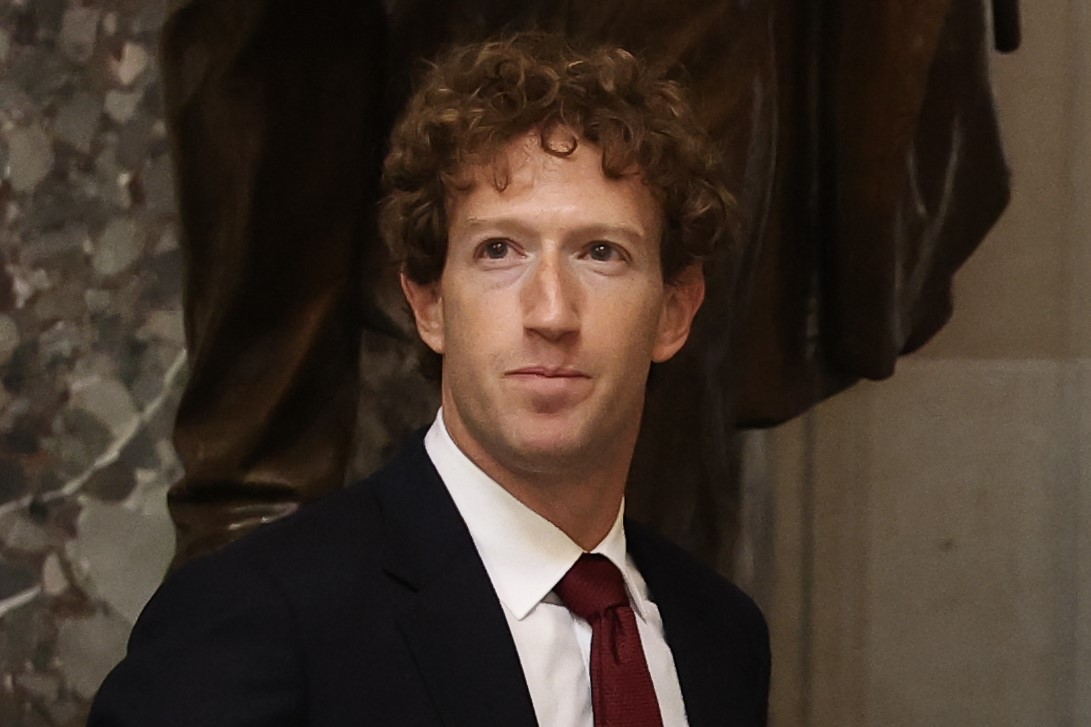
In a single July week, Meta Platforms committed to spend roughly $10 billion on its first Canadian data centre and began distributing a tool that lets external developers turn users' public Instagram photographs into generative-AI training material. The two announcements — a giant physical build, and a quiet expansion of the company's data-rights perimeter — landed within 24 hours of each other and were reported separately. Read together, they sketch the outlines of an investment strategy in which the constraint is no longer chips or power, but who owns the inputs that make AI useful.
The question this article pursues is not whether Meta can build in Alberta. It can, and clearly intends to. The question is what the inputs to those data centres will be — whose faces, which copyrighted images, which behavioural traces — and on what terms they enter the model. The Alberta project is the visible, concrete bet. The Instagram tool is the doctrine behind it: users are the feedstock, the cloud is the factory, and the licence that makes the feedstock cheap is already in the platform's terms of service.
The Alberta announcement
Meta confirmed on 9 July 2026 that it would invest roughly $10 billion to build its first Canadian data centre, according to a 17:28 UTC insider report circulating via the Telegram channel Insider Paper and a same-day post on X by the markets account Unusual Whales that flagged the announcement as significant for the META ticker. Unusual Whales added the company's own framing: the build is part of "its infrastructure to support its artificial intelligence ambitions." The site is Alberta, in western Canada, according to a separate posting on the prediction market Polymarket, which logged the figure as $9 billion just before the official round number. Polymarket's $9 billion and Meta's reported $10 billion gap is consistent with the way hyperscale projects are usually priced — land, substation, water cooling and fibre backhaul get added to a baseline chip-and-shell number after announcement — but neither figure has yet been confirmed against an SEC filing or a Government of Alberta release in the public materials reviewed for this piece.
What is on the public record is this: the company is committing capital of single-digit-tens-of-billions of dollars to a province whose two structural advantages for AI workloads are cold ambient temperatures (which compress cooling costs) and one of North America's most carbon-intensive electricity grids, where natural gas and coal still dominate the supply mix. Both advantages are double-edged. Cold weather reduces operating expense at the facility wall. A coal-heavy grid raises the carbon accounting for every gigaflop that runs inside it. How Meta plans to square that circle — direct Power Purchase Agreements with renewable developers, behind-the-meter gas, thermal recapture, or simply a long-term emissions back-payment — has not been detailed in the public materials reviewed.
In scale terms, the announcement places Meta alongside Google, Microsoft and Amazon as the four US-listed operators building AI-specific hyperscale in 2026. None of those projects is small. What distinguishes Meta's Canadian bet is its location: a province, not a state, and a federal jurisdiction with a single-payer, Crown-land tenure system for natural resources — all of which makes the regulatory path qualitatively different from Meta's Texas, Virginia or Oregon campuses.
The Instagram tool
Twelve hours earlier, on the same 9 July 2026 cycle, insider channels reported that Meta had begun shipping a developer tool that allowed third parties to harvest public Instagram photographs for the explicit purpose of training generative-AI image models. The mechanism, as described in the Telegram-based coverage, does not require the user to opt out by clicking a setting buried inside the app: it operates on a default-on basis for any photograph that the user has chosen to make public, with the implication that the terms-of-service in effect at the time of upload already license the company — and, by extension, partners working through Meta's tooling — to reuse the image.
The move is not Meta's first in this lane. The company has long argued in policy filings that publicly posted content is a legitimate input for model training, on the grounds that the user has already consented to public distribution. The shift in 2026 is that the company is no longer just training its own models on that material; it is selling — or at minimum enabling — third-party access to it. The economic implications are larger than the product description suggests. If a developer in Lagos, Lisbon or Lahore can spin up an image-generation service on top of Instagram's public photographs, the platform is effectively becoming an upstream commodity supplier to a downstream generative-AI economy in which Meta itself competes.
That is a strange posture for a company whose own text-to-image and text-to-video products sit in the same shop window. The strategic logic is probably that aggregate licensing fees from a developer ecosystem — or the platform-locking effect of being the default image source for an entire generation of small models — exceed the substitution risk of letting outsiders train on the same feedstock.
Counter-frame: what the critics are missing
The critical line in Western policy commentary on this kind of rollout is straightforward: users did not sign up for their faces to be turned into synthetic training material, and any default-on arrangement is therefore an extraction. That frame is right about the consent deficit, and Monexus finds it persuasive on the merits.
It is, however, incomplete. There are three things the dominant critique tends not to confront. First, almost every major frontier lab — including publicly funded ones — has built its training corpus on material that its original creators did not authorise for that purpose. The dispute is one of degree and visibility, not category. Second, opt-in architectures are technically tractable but commercially punitive: the user pool that will check a box for "yes, train on my face" is empirically tiny, and the resulting model would be unrepresentative of the population it serves. Third, Meta is doing the rollout in a competitive market: if the developer's path of least resistance includes Instagram's library today, a competitor's path will include it tomorrow. The lever to change the practice is regulatory, not consumer-choice-based. The lever to change it meaningfully is collective bargaining — through data trusts, image-licensing collectives or compulsory licences — not settings screens.
A more honest framing acknowledges that the photograph is a labour input the user did not anticipate selling, and that the platform is monetising an asymmetry the user cannot negotiate. The remedy is at the level of the licence, not the toggle.
The structural picture, in plain editorial language
What is happening in 2026 is the close integration of three industries that were sold to the public as separate businesses: cloud computing, consumer photography and frontier AI. Inside that integration, the binding constraint has shifted. Two years ago, the binding constraint for AI build-outs was chips — H100s, then H200s, now Blackwell. Today the chips are producible in volume. The new binding constraint is twofold: gigawatts of firm power, and clean-enough rights to the underlying training data to defend the model in court.
Meta's Alberta project is the company's answer to the first half of that constraint. A $10 billion spend buys several hundred megawatts of IT load, plus the grid interconnection to feed it, in a province where the air is cold and the power price can be negotiated. The Instagram tool is the company's answer to the second half. By pushing the data-rights perimeter outward — first to its own model teams, now to outside developers — Meta is trying to commoditise the input layer of the AI stack before any regulator gets round to defining who owns a public photograph in the age of diffusion models.
That second move is the more important of the two for the structure of the industry. Whoever controls the cheapest, most defensibly-licensed image stream controls the marginal cost of training a competitive text-to-image product. If Meta is successful in making itself that supplier — even only by default — the company's bargaining position with every startup in the generative-image space is materially improved.
Stakes and what to watch
The Alberta build-out, if completed on its announced scale, will be a meaningful addition to North American AI capacity and a noteworthy piece of provincial industrial policy: an Alberta powered increasingly by natural gas, hosting a US-listed hyperscaler, with the consent — or otherwise — of its federal regulator in Ottawa. The variable to watch on that project is not the ribbon-cutting. It is whether Meta signs the kind of long-duration Power Purchase Agreement on renewable or nuclear supply that would meaningfully de-carbonise the workload. Without one, the announcement is a stranded-asset risk masquerading as AI ambition.
The variable to watch on the Instagram tool is whether any jurisdiction — Canada's federal Privacy Commissioner, the Irish Data Protection Commission under the GDPR's legitimate-interest regime, or the California Privacy Protection Agency — opens a formal investigation in 90 days. Default-on treatment of biometric-adjacent photographs sits on a contested legal frontier. The bet Meta is making is that the regulator will not catch up to the rollout before the commercial position has hardened. That is a bet the company has made before, with mixed results.
The two bets are coupled. A $10 billion facility needs a steady supply of inputs that are unencumbered in the relevant jurisdictions. The easier those inputs become to license, the harder it is for any future regulator to unwind the build. Read the two stories together and the picture is clearer than either story tells on its own: the build is the asset; the doctrine is the moat.
— Monexus framed this as a single story because Meta's own announcement cadence treats it as a single story. The wire cycle reported Alberta and the Instagram tool as separate lines. The structural read connects them.
Wire provenance
This editorial synthesis draws on the following public wire/social posts:
- https://t.me/insiderpaper/
- https://en.wikipedia.org/wiki/Alberta
- https://en.wikipedia.org/wiki/Meta_Platforms
- https://en.wikipedia.org/wiki/Data_center
- https://en.wikipedia.org/wiki/Instagram
- https://en.wikipedia.org/wiki/Generative_artificial_intelligence