OpenAI tightens ChatGPT's voice mode, signalling a deeper bet on conversational AI
OpenAI's GPT-Live-1 update aims to make ChatGPT's voice mode feel more like a real conversation — interrupting less and waiting longer. The move lands in a crowded market where silence, not speech, is the scarce resource.
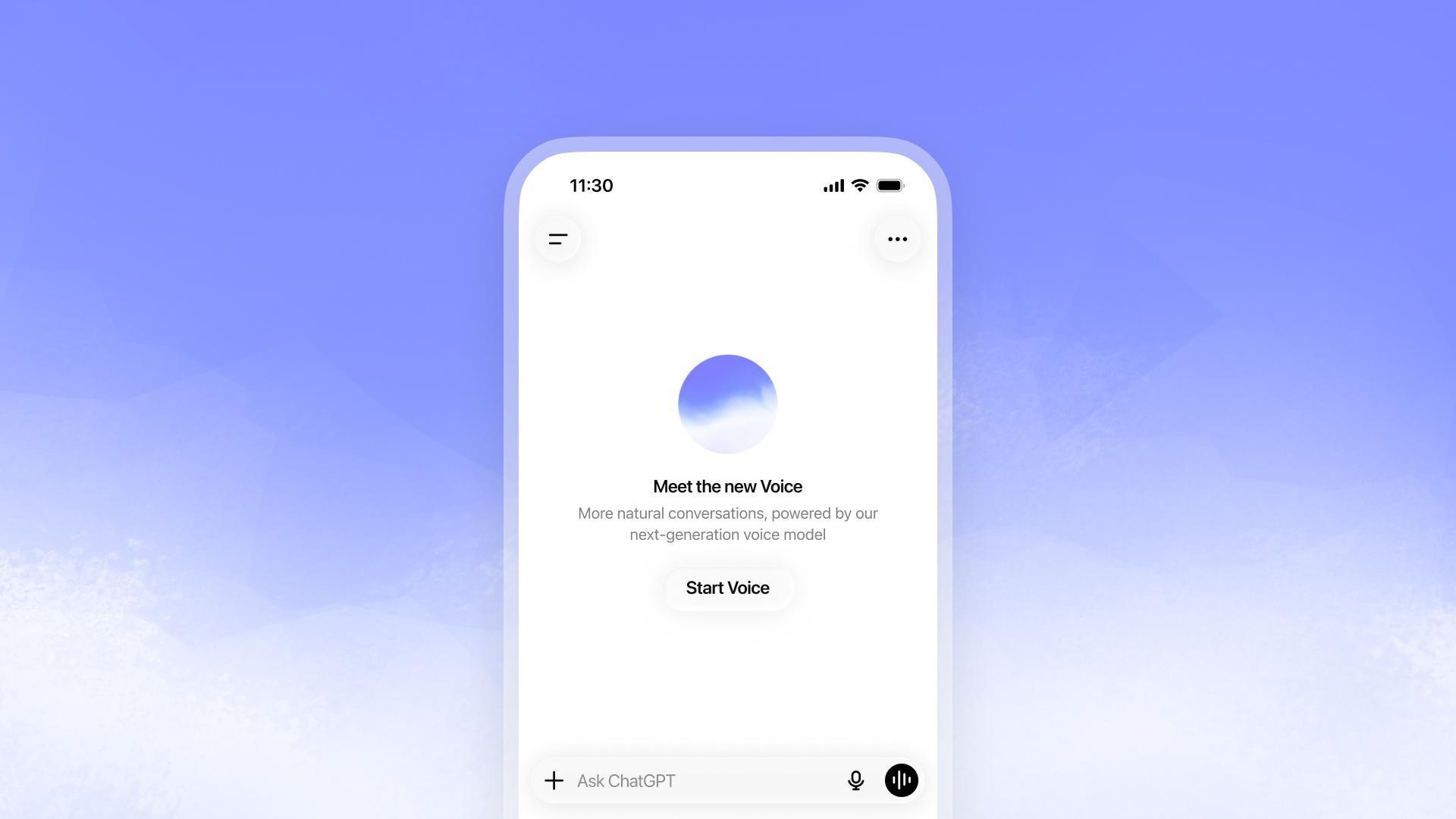
OpenAI is shipping a deliberate redesign of one of its most-used products. On 8 July 2026 the company began pushing an updated voice mode for ChatGPT, built on a new internal model dubbed GPT-Live-1, that is engineered to interrupt users less frequently and to wait longer before assuming a speaker is done.
According to The Verge, the upgrade reframes voice as a turn-taking problem rather than a transcription problem. OpenAI's framing is explicit: the new model is designed to feel more like "talking to another person," with longer pauses accepted as a feature, not a failure. It is a small behavioural change with large competitive implications.
The launch arrives with ChatGPT already entrenched as the most-distributed conversational product on the consumer market. Voice was the next logical battleground. The question is whether OpenAI can translate a modality advantage — fast transcription, broad language coverage — into something closer to actual fluency.
From latency to listening
Voice assistants, as a category, have historically been optimised for speed. The default metric is "time to first response," and the default behaviour is interruption: the assistant starts speaking the instant it detects a brief silence, because stopping feels like failure to a user measuring in milliseconds.
GPT-Live-1 reorders those priorities. The Verge reports that the new model is built to "interrupt you less" and to wait for the user to finish. That is a non-trivial engineering choice. Conversational speech is filled with pauses — fillers, mid-thought restarts, the drawn-out "so…" — and a system that treats every pause as a cue to jump in will behave like an impatient colleague. A system that waits, by contrast, can model more of what the other person is actually trying to say.
Crypto Briefing's coverage of the launch emphasised the same shift in plainer language: OpenAI wants ChatGPT Voice to "feel more human." That formulation sidesteps a technical question — more human by what measure? — and lands on a UX one. The product now aspires to be heard, not merely answered.
What competing voice AIs do differently
The market context is crowded. Google's Gemini Live, Anthropic's Claude voice extensions, and a tier of specialised voice-first startups — Sesame, Hume, ElevenLabs' conversational products, Pi from Inflection's alumni — have spent 2025 and the first half of 2026 training users to expect voice models that can sustain interruptions, hold a thought through a digression, and recover gracefully when the user changes direction mid-sentence.
OpenAI's previous voice mode handled raw comprehension competently but suffered a reputation for being interrupt-happy. The GPT-Live-1 update is, functionally, a swing back toward a more patient persona. It is also a tacit acknowledgement that the frontier of consumer AI is no longer at the model layer alone. Latency, prosody, turn-taking, and silence-handling are now product features.
Platform governance: who owns the mic
A consumer voice model that waits, listens, and then speaks well is also a consumer voice model that hears more. Each invocation transmits a voice stream to OpenAI's servers, where the audio is processed under the company's standard data-handling terms. The more conversational the interaction, the more ambient the capture.
OpenAI has not, in the materials reviewed for this piece, publicised changes to its data-retention or training-on-voice practices alongside the GPT-Live-1 update. The Verge's reporting focuses on behavioural change, not policy. That asymmetry is itself a story: product teams ship personality; policy teams ship footnotes. The two seldom arrive together, and the asymmetry tends to favour the company that ships first.
The structural pattern is familiar. A platform gains traction on a permissive default — voice defaults on, retention broad, opt-out narrow — and only revisits policy when regulators or a reputation crisis force the issue. The European Union's AI Act and the patchwork of US state-level privacy laws create some friction on that path, but the global default for consumer voice AI remains permissive.
Stakes
For OpenAI, the upgrade is competitive maintenance. ChatGPT's lead in raw model capability narrows every quarter; the product must keep a behavioural moat. A voice mode that feels notably more patient than Gemini Live or Claude is an inexpensive moat to maintain, provided the underlying model still answers accurately.
For users, the calculus is more textured. A more patient voice assistant will be more useful, but also more embedded. The longer the interaction feels natural, the more it disappears into the background — and the less the user is likely to track what is being sent, stored, or replayed.
For the field, the launch tightens the definition of "good" in voice AI. Speed of response is no longer the headline metric. Conversational restraint — knowing when not to talk — is now on the scorecard. Competitors will be measured against it within a quarter.
What remains uncertain
The sources reviewed for this piece describe the product change, not its reception at scale. Whether GPT-Live-1's quieter persona holds up under noisy mobile environments, accented English, and code-switched multilingual conversation is an open empirical question that neither The Verge's reporting nor Crypto Briefing's coverage attempts to settle.
It is also unclear how aggressive OpenAI plans to be on enterprise rollout. ChatGPT's consumer voice tier is the entry point the company is publicising; B2B deployments — where voice is increasingly attached to customer service workflows and sales automation — typically lag consumer product cycles by weeks to months. The competitive answer from Anthropic, Google, and the voice-first independents will likely arrive inside that window.
What is already clear is the direction of travel. Voice AI is being repositioned from a faster command line into something closer to a participant. Whoever disciplines the silence will own the conversation.
— Filed by Monexus under its staff-writer policy. This piece relies on product-launch reporting from The Verge and Crypto Briefing; Monexus did not have access to GPT-Live-1 internal benchmarks or retention-policy documentation and makes no claims in either area.
Wire provenance
This editorial synthesis draws on the following public wire/social posts:
- https://t.me/theverge_news
- https://t.me/CryptoBriefing