An airport named for a president still in office — and what that tells you
Palm Beach International is now 'President Donald J. Trump International Airport,' the first US airport named for a sitting president since Reagan. The decision is local. The symbolism is not.
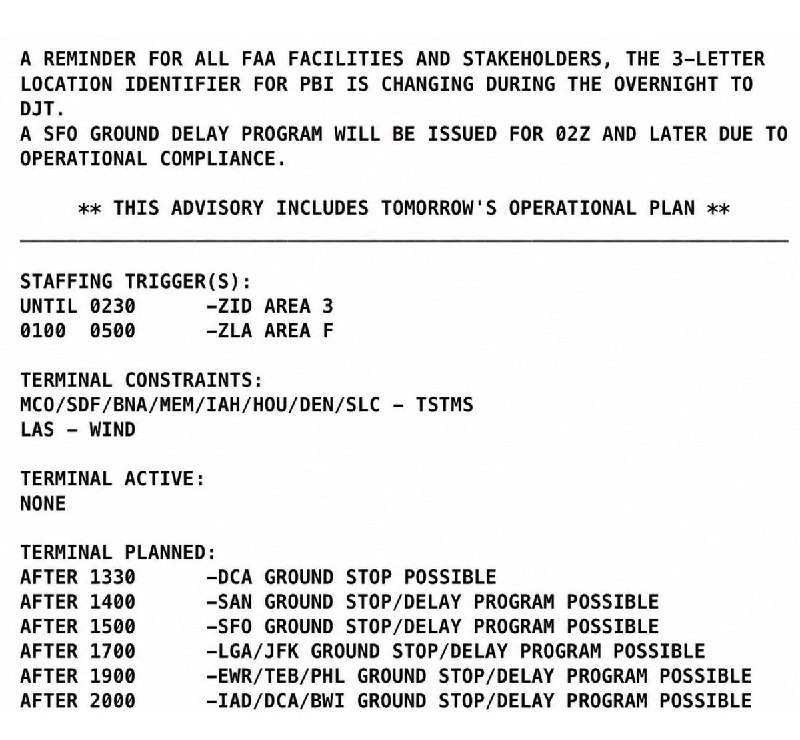
At 5:01 a.m. local time on 9 July 2026, Palm Beach International Airport in West Palm Beach ceased to exist as a matter of signage. In its place: President Donald J. Trump International Airport, the first commercial airport in the United States to carry the name of a sitting president since Ronald Reagan's name went on Washington National in 1998. The change took effect automatically at the stroke of a Florida law signed by Governor Ron DeSantis, and the first aircraft to land under the new name, according to OSINT trackers monitoring the rollout, carried Eric Trump.
The rebranding is a Palm Beach County story on its face. The symbolism is not. A sitting president has now had a working airport — a functioning piece of public infrastructure used by roughly seven million travellers a year, in a county he has made his primary residence — renamed in his honour, in a country whose tradition of monument naming has, for two and a half centuries, generally waited for the honouree to be dead. That exception is the story.
How it actually happened
The legal mechanism was almost offensively simple. A Florida state law, signed by Governor Ron DeSantis, renamed the facility effective 9 July 2026, with no further local referendum, no federal sign-off and no public ceremony at the moment of switchover. The county's branding apparatus did the rest. The 5:01 a.m. timestamp on the changeover — reported by OSINTdefender and Open Source Intel on the morning of 9 July — is the kind of detail that matters: somebody in county government or the airport authority chose the moment with a straight face, and chose to let the wires find it.
The first-flight detail, Eric Trump aboard the inaugural arrival, is a small piece of choreography that does a lot of work. It is a public-relations moment that only the family can deliver, and it converted what could have been a sober administrative action into a tableau. Coverage that treats this as a quirky Florida footnote is missing the point: in US political symbolism, the who-is-there at the ribbon-cutting is the ribbon-cutting.
The naming exception
The general rule in the United States is that federal infrastructure carries the names of dead people, ideally long-dead, ideally generals or framers. Airports are the persistent partial exception: Kennedy, LaGuardia, Reagan, Bush Intercontinental, Eisenhower. Every one of those namesakes was either out of office or dead before the lettering went up. Reagan waited eighteen years; George H.W. Bush waited nine. Trump did not wait at all.
The defence of the move, when it is offered, runs in two registers. The first is fiscal: the airport is in his backyard, the surrounding real-estate economy is bound up with his brand, and Florida taxpayers footed the bill for whatever physical signage changeover is being rolled out. The second is symbolic: that a second-term president, still in office, still actively campaigning, gets to put his name on a piece of the country's working infrastructure while he is using it. Neither argument is illegitimate on its face. The second argument is, however, the one that has historically been reserved, in this country, for authoritarian leaders of countries whose infrastructure is also their propaganda.
The structural frame, in plain prose
There is a pattern here that goes beyond Trump, and it is worth naming without rhetorical heat. Public infrastructure in late-stage democracies is increasingly treated by incumbent politicians as a branding surface. Highway interchanges, military bases renamed over the objections of local communities, federal buildings, post offices, and now airports are converted into permanent campaign assets for the people who control the levers of renaming. The effect is cumulative. Each individual act is defensible on its own terms. The aggregate is an infrastructure estate that belongs to whichever coalition is in power at the moment of naming, and which signals, to every traveller and every passing driver, whose interpretation of the country's story is the official one.
The airport case is the cleanest version of the pattern because airports are unusually visible. A name on a building sits in the background; a name on an airport sits on every ticket, every bag tag, every boarding pass, every Air Traffic Control strip for the next several decades. There is no neutral way to read it.
The counter-reading, and why it still doesn't let this one go
The honest counter-reading is that airports are routinely renamed, that the federal government has no monopoly on the practice, that Florida has its own naming prerogatives, and that the people of Palm Beach County are entitled to call their airport whatever their elected representatives sign into law. All of that is true. None of it is a complete answer. A county naming a runway after a local benefactor is one thing; a state legislature renaming a regional hub after a sitting president, who happens to live in the county and who has made the federal government an instrument of his personal grievances, is something structurally different. The first is civic memory. The second is incumbent self-monumentalisation, and it is a category, not a one-off.
What it costs, and what it does
The dollar cost of the rename is small — signage, branding, perhaps some web and wayfinding work — and the sources available on 9 July do not specify a figure, which is itself a data point. The reputational cost is the part that compounds. Every country that names things after its living leaders learns, over time, that the names have to be defended against the next administration. The base closings of the 2000s produced years of legal fight over the renaming of installations. The airport will produce the same, or it will be quietly lived with as the new normal. The people who lose in the second scenario are the ones who liked the previous normal, which is to say, the country's older instinct that monuments are a job for the next generation.
For now, the situation on the ground is administrative. Travellers will still see PBI on their boarding passes in the near term, per the local reporting on the rollout, while the marketing and signage catches up. By autumn the name on the building, the name on the website and the name on the ticket will converge. The story, in other words, is not really about an airport. It is about whether the United States, in 2026, treats the renaming of public things as an act of memory or as an instrument of the present tense. Palm Beach County just answered that question, and the answer was the second one.
Desk note: Monexus framed the airport rename as a sitting-president naming question, not a Florida-politics question. The wires treated it as a Tuesday-morning curiosity; the framing here treats it as a data point in a longer pattern.
Wire provenance
This editorial synthesis draws on the following public wire/social posts:
- https://t.me/osintlive
- https://t.me/ClashReport
- https://t.me/osintdefender