Premier League wealth, Premier League referees: what the 2026 World Cup tells English football
English clubs paid roughly £3bn for players now starring in the United States. The same clubs are about to vote on a corner-flag crackdown. The two stories are not unconnected.
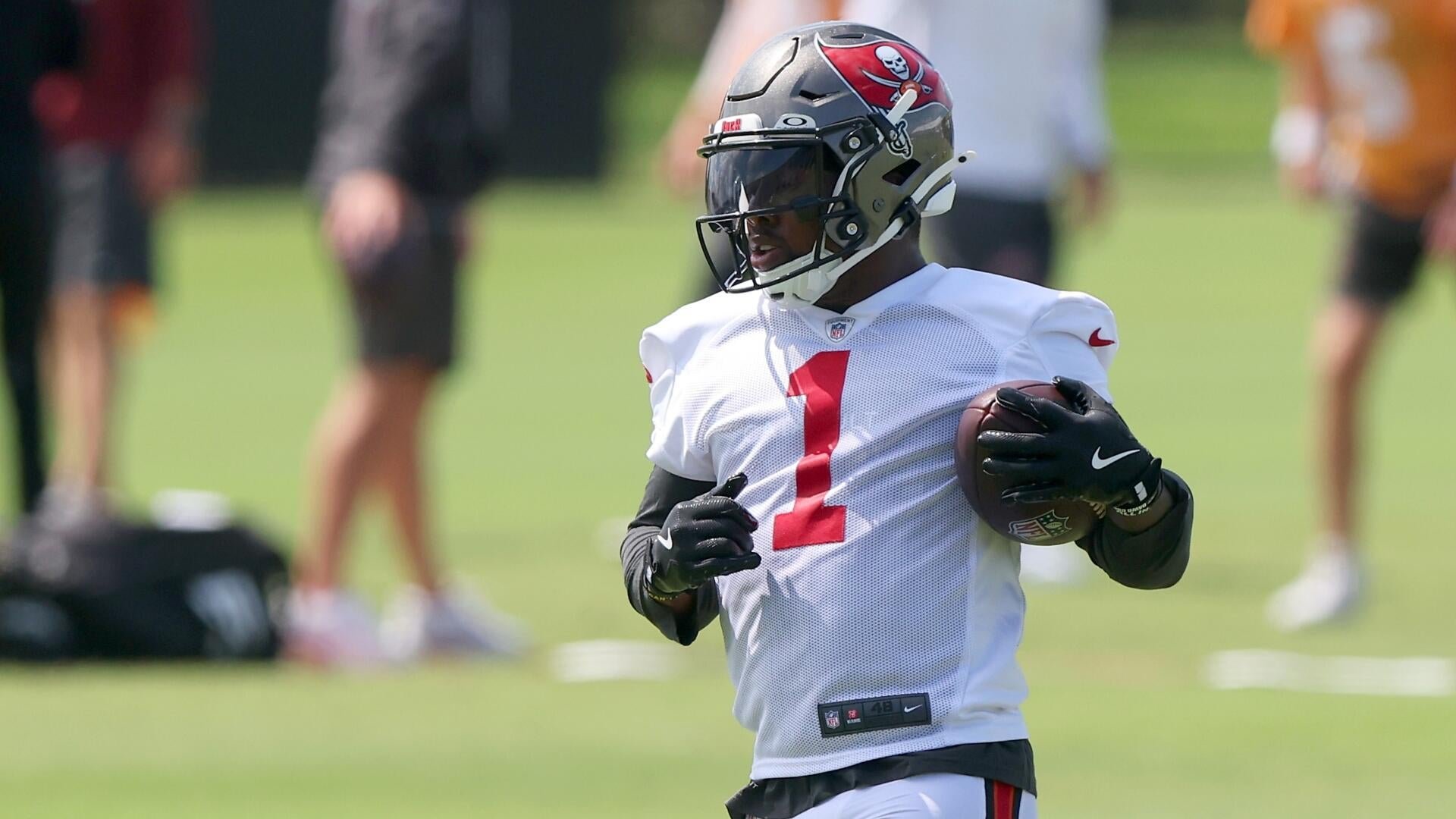
On 8 July 2026, with the World Cup group stage entering its decisive week across the United States, BBC Sport published two pieces of analysis that, taken together, sketch a quieter story than the obvious one about results. The first asked whether the tournament's tight officiating at corners offers a template the Premier League should adopt. The second asked the more uncomfortable question: just how structurally dominant the English top flight has become at the game's showcase.
The two threads point at the same structural fact. English football now exports not just players but refereeing culture, financial gravity and tactical default to every major competition. The question is whether the recipients of that export — national federations, smaller leagues, even FIFA itself — still get a vote.
Money, then minutes
The scale of Premier League spending ahead of the tournament is no longer a talking point so much as a baseline. English clubs committed roughly £3 billion to player acquisitions in the window preceding the competition, a figure that has become ordinary only because it has been repeated so often. The arithmetic is straightforward: when a single league accounts for that share of the global transfer market, its squads become de facto national-team feeder pools. Of the goals scored in the opening rounds of the tournament, a clear majority were created or finished by players on Premier League books. That pattern is not new. What is new is the distance between England and the chasing pack.
There is a counter-narrative worth taking seriously. La Liga's TV rights collapse and Bundesliga's 50+1 ownership rules have suppressed Spanish and German spending without necessarily suppressing their technical quality. A Spanish or German side drawing on a smaller talent pool but pulling from a deeper coaching tradition can still beat a Premier League all-star composite. The structural concern is not that English football produces bad players; it is that the financial asymmetry is now so large that other leagues cannot retain their own. The export is not just stars. It is competitive depth.
The corner-flag question
The refereeing piece is the more interesting of the two, because it surfaces a mechanism by which FIFA has begun to act on the Premier League rather than alongside it. At the World Cup, officials have been notably firmer on the grappling, blocking and shirt-pulling that has come to define set-piece preparation in England's top flight. The Premier League's response, historically, has been to publish guidance and hope for compliance. FIFA's response has been to penalise. Whether that approach travels back to England depends on a vote by Premier League clubs in the coming weeks.
Set-piece efficiency is not a stylistic quirk. It is, in a low-margin league, the difference between mid-table and seventh, between seventh and the bottom of the European places. Clubs that have built their identity on restocked coaching departments — set-piece coaches now a standard hire — have produced a generation of routines so rehearsed they resemble American football playbooks. The chaos at corners that older fans remember is no longer chaos. It is choreography. The question facing the Premier League is whether the rules as written were intended to permit that choreography. World Cup officials have been answering, in real time, no.
What the standardisation of refereeing actually means
The deeper frame is one of football governance becoming, slowly, more coherent. For two decades, the Premier League treated itself as the show — the product the world watched, the standard the world copied. That framing was always partly true. It also produced blind spots, particularly around the kind of physical gamesmanship that travels badly to international tournaments where different officials, different guidance and different levels of tolerance apply. National-team managers have spent years complaining privately that Premier League habits arrive at the World Cup as bad habits.
The counter-argument is that a league should not be in the business of copying FIFA's preferences. The Premier League has its own referees, its own standards committee, its own stakeholders. Asking clubs to adopt tournament officiating norms because the world is watching confuses the product with the marketing. There is also a simpler worry: that if set-piece defending is re-engineered mid-season, the clubs who built rosters around the existing interpretation will lose out, and the competitive balance will tilt toward those who already had the athletic profiles to defend without grabbing.
What stays contested
The honest answer is that neither piece of BBC analysis settles anything. The financial numbers are clear but the consequences are debated: a Premier League executive would argue the spending reflects global demand for the product, not a market distortion. A La Liga or Ligue 1 executive would argue it is exactly that. On the corner-flag question, Premier League clubs may well vote to retain the existing tolerance because the cost of change falls on those who did not ask for it.
What the World Cup does, plausibly, is shift the burden of proof. Officials have shown what a tighter corner looks like, and it has not produced a worse spectacle. If the Premier League chooses differently, it now does so in public, with the comparison already on screen.
Desk note: Monexus framed the financial dominance and the refereeing question as two faces of the same export — talent and standards — rather than as separate stories, in line with BBC Sport's two August 2026 analyses.