Stamp, fuel, and admissions: three small price signals point to a wider cost-of-living squeeze
A US postal rate hike, a Ukrainian fuel-price warning, and a Kenyan university admissions bottleneck land within hours of each other — three small signals of a global squeeze on household budgets.
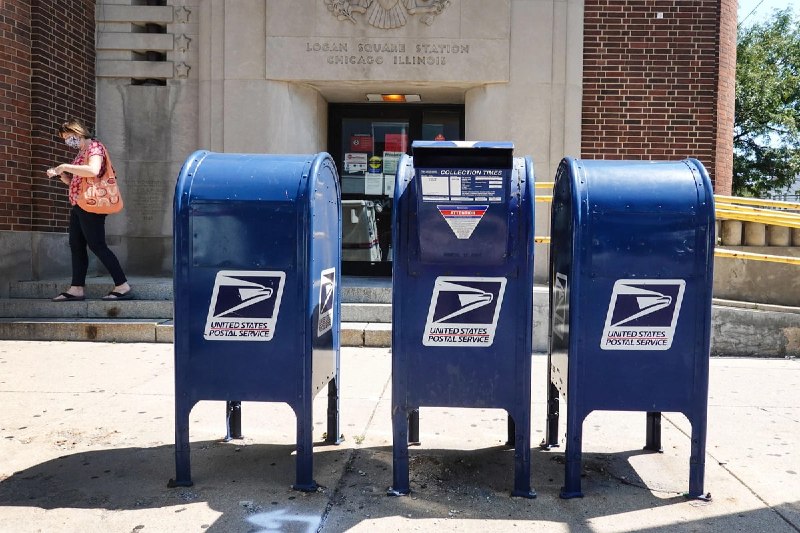
Within a span of roughly two hours on 9 July 2026, three small notices landed in news feeds on three different continents. The United States Postal Service said it would raise the price of a domestic postcard stamp by four cents, to 65 cents, on 12 July. A Ukrainian outlet reported that an energy expert had warned households to prepare for a fuel-price increase "soon." A Kenyan daily reminded readers of a procedural rule that quietly shapes whether tens of thousands of school-leavers secure a university place in the coming academic year. None of the items is, on its own, a story about inflation. Taken together, they sketch the texture of a global cost-of-living squeeze that has migrated from headline-grabbing categories — energy, food, housing — into the small, transactional corners of household budgets.
The three notices are the leading edge of a wider pattern: the costs that governments and consumers treat as fixed are being repriced, often by single-digit percentages, in ways that compound across a year. The stakes are not abstract. For a household in Nairobi, a missed admission cycle means a year of idleness or a year of private-college fees. For a household in Kyiv, a fuel-price increase lands on top of an invasion that has already reordered every other line item. For a household in the United States, four extra cents on a postcard is, by itself, nothing — but the same regulatory machinery is moving first-class and metered rates in parallel.
A four-cent repricing in the world's largest postal network
The US Postal Service confirmed on 9 July 2026 that domestic postcard prices will rise by four cents, to 65 cents, effective 12 July, according to Epoch Times reporting circulated via Telegram at 18:03 UTC. The agency files regular price-change notices with the Postal Regulatory Commission; postcard rates are the smallest line item in those filings, and therefore the easiest to overlook. They are also a useful proxy. The same adjustment cycle typically moves first-class Forever stamps, metered mail, and ancillary services in the same direction, even when those figures draw most of the attention.
The framing matters. The USPS does not set rates in a political vacuum: it is required by law to recover costs through postage and shipping fees, and its regulators have, over the last several years, allowed a more flexible pricing regime that lets the service respond faster to volume declines and labour-cost growth. A four-cent postcard increase is not a political signal — it is the service doing what its mandate tells it to do. The counter-narrative, often voiced by consumer-advocacy groups, is that every incremental rate change is a tax on the unbanked, on small direct-mail businesses, and on civic organisations that still use the post for member communications. Both readings are true. The structural point is that the postal system, in a country with declining letter volume, is increasingly reliant on a small set of price increases to keep the books roughly balanced.
Fuel warnings in a wartime economy
A separate Telegram post from a Ukrainian outlet at 16:14 UTC on 9 July flagged expert commentary that Ukrainians should prepare for fuel-price increases, with the expert "naming the exact date." The post itself is brief and does not specify the date in the headline. The framing is significant regardless: it lands roughly two months into a year in which Ukraine has been defending against a full-scale Russian invasion launched in February 2022, with continued strikes on energy infrastructure shaping domestic fuel supply. Fuel-price warnings in wartime Ukraine are not a market signal in the usual sense — they are a function of logistics, refining capacity, import costs, and the residual risk premium that markets attach to attacks on storage and pipeline assets.
The counter-narrative is that such warnings can also be self-fulfilling. When experts tell households to brace for a rise, some households pre-purchase, accelerating the move. The structural point is that in a country at war, the price of fuel is not only a market price; it is a fiscal and security line item. The Ukrainian state subsidises or taxes fuel at the margin for reasons that have as much to do with social stability and military mobility as with crude benchmarks. A four-cent stamp in the United States and an unspecified fuel increase in Ukraine are not the same event, but they share a logic: a small administrative change pushed through a system that, in the consumer's experience, is supposed to be stable.
The hidden cost of a missing university place
The third item comes from a different register entirely. A Telegram post by Daily Nation at 17:07 UTC on 9 July explained a procedural rule familiar to Kenyan applicants: those who fail to secure places in their preferred degree programmes are automatically considered for the next courses they selected, provided they meet the subject-cluster points and cut-off marks required. The Kenya Universities and Colleges Central Placement Service runs a single window each year in which tens of thousands of school-leavers are sorted into degree, diploma, and TVET (technical and vocational) courses. The "automatic consideration" rule is the safety net that catches most of the applicants who do not get their first choice.
The cost-of-living link is not the tuition fee — it is the year. A Kenyan student who misses a placement cycle typically has three options: repeat, take a gap year, or pay for a private institution. The first two are the cheapest and the slowest. The third is the fastest and the most expensive. In a country where the unemployment rate for tertiary graduates has been a perennial political issue, the placement window is itself a budget item for millions of families. The structural point is that educational access in a constrained public-university system is rationed by procedure as much as by money, and procedural changes — or procedural reminders — have real distributional consequences.
The structural frame: a squeeze in the small categories
Read together, the three items point to a structural pattern. Inflation in 2026 is no longer a story of food and energy at the headline level. It is a story of small administrative and corporate repricings — postal rates, fuel surcharges, university placement rules — that, by themselves, do not move a consumer-price index meaningfully but, in aggregate, redefine the floor under a household budget. The pattern is not new. The 1970s, for example, are remembered for oil shocks, but the most durable political damage came from compounding small increases across categories that households had treated as fixed. The current cycle is milder in magnitude but wider in category: the cost of sending a postcard, the cost of filling a tank in a country at war, and the procedural cost of falling short of a degree requirement.
The dominant Western framing tends to treat each of these as a separate, locally-solved problem. The counter-framing, often heard from global-development commentators, is that they are the same problem — a global household balance sheet that has been repriced faster than incomes. The evidence in the three source items is consistent with both readings: the USPS change is administrative, the Ukrainian fuel warning is war-adjacent, and the Kenyan placement rule is procedural. None of them is, on its own, a macro story. The pattern is.
What remains uncertain
The three items are short notices, and the reportable detail thins quickly. The Epoch Times report confirms the 65-cent figure and the 12 July effective date but does not break out the parallel first-class stamp change. The Ukrainian Telegram post asserts that an expert "named the exact date" for a fuel increase, but the date itself is not visible in the headline. The Daily Nation item restates a procedural rule that has been in place for several placement cycles; it is a reminder, not a change. Monexus treats each of these as a directional signal, not a confirmed policy outcome, and will update the picture as wire reporting fills in the missing detail.
The bigger analytical question is whether the second half of 2026 will see these small repricings compound into a politically visible squeeze, or whether rising nominal wages and easing headline inflation will absorb them. The available evidence is mixed: the United States is closer to the second scenario, Ukraine is closer to neither, and Kenya sits in a category of its own. What is not in dispute is that the repricings are happening, and at a pace faster than the political attention cycle that is supposed to monitor them.
This publication frames the three items as a single cost-of-living signal, not as three unrelated notices. The wire cycle tends to handle them in separate regional slots; the structural read is the joint one.
Wire provenance
This editorial synthesis draws on the following public wire/social posts:
- https://t.me/DailyNation
- https://t.me/TSN_ua
- https://en.wikipedia.org/wiki/United_States_Postal_Service
- https://en.wikipedia.org/wiki/Kenya_Universities_and_Colleges_Central_Placement_Service