Damascus Back in From the Cold: What Syria's Reinstatement Really Signals
Within 24 hours, Damascus regained its vote at the global chemical-weapons regulator and lost its US terrorism sponsor tag. The sequencing — and what it leaves out — says more than the announcements do.
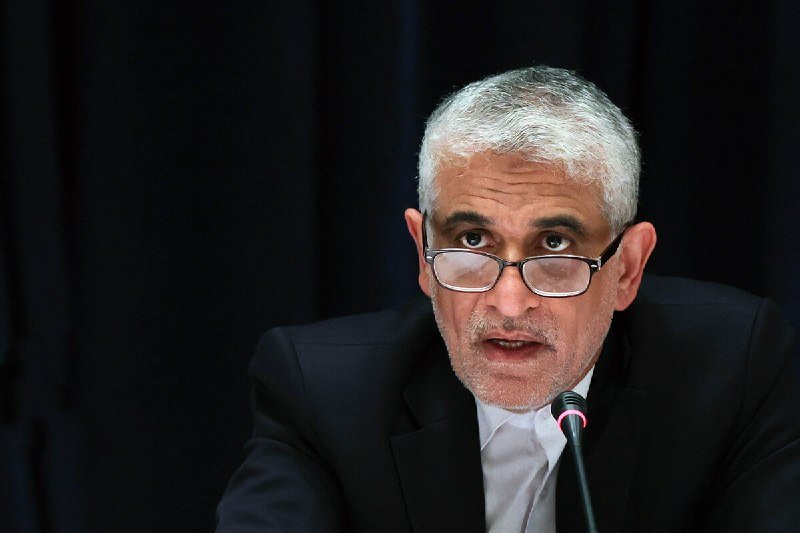
The chemical-weapons regulator in The Hague moved on 9 July 2026 to restore Syria's voting rights, citing what it called "concrete steps" taken by Damascus's new leadership. The decision, confirmed via prediction-market wires tracking the announcement, lands less than a day after Washington formally notified Congress that it intends to rescind Syria's designation as a state sponsor of terrorism. Read together, the two moves are the most concrete diplomatic rehabilitation of post-Assad Syria by Western-aligned institutions since the fall of the former government — and the timing is not coincidental.
The pattern is the story. For more than a decade, Damascus was treated by Western capitals as a pariah state: chemical-weapons violations documented by the Organisation for the Prohibition of Chemical Weapons, sweeping US sanctions, and an architecture of isolation designed to make the cost of confrontation with the international order unbearable. That architecture is being dismantled in pieces, and the pieces are being removed in a sequence that reveals which pressures mattered and which did not.
What the OPCW actually decided
The OPCW's executive body voted to restore Syria's voting and participation rights after an assessment that the country's transitional authorities had taken "concrete steps" on its outstanding chemical-file obligations. The wire reporting tied to the announcement does not specify which steps — destruction of remaining precursor stocks, submission of declaration updates, or access for inspectors — were the decisive factors. That omission matters: the regulator's public language has historically been precise about compliance milestones, and a vague formulation suggests either a political compromise among member states or a deal whose substance has not yet been made public. Either reading points to diplomatic horse-trading rather than a clean technical clearance.
For Syrian civilians, the practical effect of restored voting rights is modest on its own. The OPCW does not lift sanctions and does not control reconstruction financing. What it does signal is that the institution responsible for policing chemical weapons no longer treats Damascus as a uniquely untrustworthy actor — a categorisation that, once lifted, is hard to reinstate on the same evidence.
The US terrorism tag, and why rescinding it is harder than it sounds
On 8 July 2026, the administration notified Congress of its intent to remove Syria from the state sponsors of terrorism list. The notification is the procedural trigger; the actual rescission typically follows a 45-day congressional review window during which lawmakers can object. The legal mechanics are unglamorous, but the political weight is considerable.
The state-sponsor designation carries with it a stack of downstream penalties: arms embargoes, export-licence restrictions, opposition to multilateral lending, and a presumption in US courts that the designated regime is a hostile foreign actor. Removing it does not lift the broader Caesar sanctions regime, which targets the Assad-era economic architecture and remains separately administered. But it does reopen the door to diplomatic engagement, financial transactions with the Syrian state, and the kind of reconstruction partnerships that Western firms have been blocked from since 2019.
The case for rescission rests on a familiar argument: the leadership in Damascus has changed, and continued punishment of the successor government for the crimes of its predecessor risks handing the country back to the very Iranian and Russian patronage networks that the post-Assad transition was supposed to dilute. The case against rests on the fact that the transitional authorities still rely on armed factions with documented abuses, and that the chemical-file record has not been adjudicated.
The Iran overlay that the Western wire is under-playing
Read in isolation, the Syria moves look like a discrete Middle East file. They are not. On the same day the OPCW decision and the terrorism-rescission notification landed, the US president publicly stated that a renewed conflict with Iran would be over "very quickly," and separately suggested on a recorded interview that Iran "may kill" him, identifying himself as "their number one target."
The Syria rehabilitation is most plausibly read as a component of a wider negotiation track in which Damascus is being offered reintegration in exchange for distance from Tehran and from Iranian-aligned militia infrastructure that runs through Syrian territory. Iran's land bridge to Hezbollah — the corridor that runs through Iraqi and Syrian territory — is a strategic asset that Western policymakers have spent two decades trying to dilute. A Syria that is financially reintegrated into the Western economic system and diplomatically rehabilitated at institutions like the OPCW is, structurally, a Syria that is harder for Iran to use.
That is also the read that Syrian and Iranian commentators have offered, and it deserves equal weight. From Damascus's perspective, the transactional logic cuts both ways: the new authorities are not being rewarded for ideological alignment but are being paid — in sanctions relief, in institutional access, in reconstruction prospects — to extract themselves from a regional order that the United States wants to dismantle.
What remains contested
The wire coverage tied to these announcements does not specify whether the OPCW's "concrete steps" language was negotiated with Damascus in advance, or whether the US terrorism-rescission process has bipartisan support on Capitol Hill. Both questions are consequential. A pre-negotiated OPCW clearance suggests a coordinated Western push; a notification that surprises Congress suggests a more unilateral posture. The available reporting does not let us distinguish between the two.
Equally, the sources do not specify how the Iran track intersects operationally with the Syria decisions. The public statements are about timing and tone, not about specific deal architecture. The structural read — that Syria is being used as leverage against Tehran — is consistent with the surface reporting, but it remains an inference rather than a confirmed exchange.
What is confirmed is the direction of travel. A government that was treated as a chemical-weapons outlaw and a terrorism sponsor one week ago is now a voting member of the global chemical-weapons regulator with a US terrorism tag under active rescission. That is not a normalisation — it is the precondition for one. The next 45 days, and the congressional response to the terrorism-tag notification, will determine whether the rehabilitation holds or stalls.
This publication framed the Syria announcements alongside the Iran rhetoric on the same wire day, on the view that the sequencing of diplomatic moves is most legible when read against the regional pattern they sit inside. The mainstream Western wire has tended to file these as separate stories; treating them together surfaces the leverage logic.
Wire provenance
This editorial synthesis draws on the following public wire/social posts:
- https://x.com/polymarket/status/1944685226
- https://x.com/polymarket/status/1944684001
- https://x.com/polymarket/status/1944683912
- https://x.com/unusual_whales/status/1944683854