Tehran's funeral theatre and the limits of martyr-frame diplomacy
A million-strong procession in Mashhad and a flag demanding revenge on Trump expose the choreography and the limits of Tehran's martyr-frame diplomacy at a moment of acute US-Iran tension.
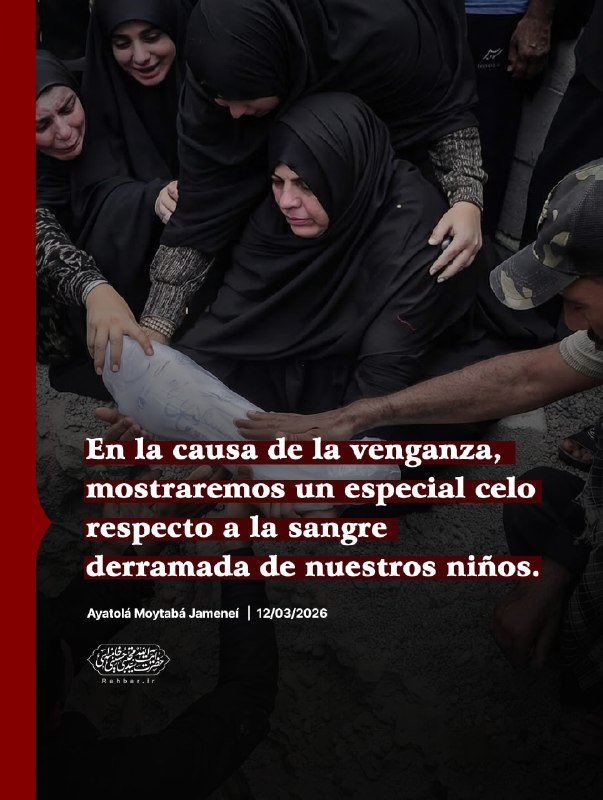
Tehran on 9 July 2026 put its grief on display. Aerial footage released by Khamenei.ir at 15:13 UTC showed an immense crowd packed into 15 Khordad Square in Mashhad, the staging point before the body of Ayatollah Seyed Ali Khamenei was carried toward the Imam Reza shrine. By 15:35 UTC, Tasnim's English wire was distributing images of an enormous banner stretched along Imam Reza street demanding "revenge against the killer Trump," followed at 15:43 UTC by Khamenei.ir's own exclusive overhead shots of the procession. By 16:58 UTC, the official Khamenei channel was circulating the banner photograph as a "lasting image," a curated piece of visual rhetoric as much as reportage.
The choreography is not incidental. It is the message. Tehran's leadership has fused martyrdom with foreign-policy posture for four decades, and the visual grammar is unmistakable: massive crowds, a leader's purified body, banners naming an external enemy. The Trump banner marks an escalation. Previous martyr-frame iconography named Israel, or "the Zionists," or "American arrogance" in the abstract. Putting a sitting US president's name on a revenge banner, broadcast in English by state-aligned outlets, is a deliberate signal that the frame has shifted.
The frame the procession is built to project
Iranian state media has spent two days preparing the visual field. The Mashhad procession route was chosen for its symbolic weight — Imam Reza's shrine is the largest pilgrimage site in the Islamic world, and the city's Khordad Square commemorates the 1963 clerical uprising against the Shah. The aerial cinematography, released first by Khamenei.ir itself rather than by independent photographers, ensures that the controlling image of the day is the state's: a sea of mourners, tightly packed, with the revenge banner legible from above.
The English-language Tasnim distribution matters too. Tasnim is one of Iran's principal external-facing outlets, and the choice to push the Trump banner in English, on 9 July 2026, into the global information environment is a calculated message that Tehran wants Western publics to see the frame in their own language. The martyr template works only if the threat against the martyr is legible to the audience the message is aimed at.
What the procession cannot do
Funerals are an asymmetric instrument. They consolidate a domestic audience around grief and resolve, and they project defiance outward. What they do not do is substitute for leverage. The 2019 Soleimani funeral produced similar visuals — mass turnout, banners, vows of revenge — but did not change the underlying balance of forces that produced the killing. Iran retaliated in kind at Al Asad and Erbil, then de-escalated. The martyr frame is at its strongest in moments of acute tension; it is weakest when the question turns from morale to capacity.
The structural problem for Tehran is that a Trump banner commits the regime to a posture it cannot easily relax. Revoking a million-person display of public anger is harder than organising one. If a diplomatic channel opens in the weeks ahead, the visual record of 9 July 2026 will be working against the diplomats — every back-channel concession will be filtered through footage of crowds chanting for revenge against a named US president.
The audience problem
There is also an audience problem the state outlets do not address. The procession footage is consumed domestically by a population that already shares the frame; it is consumed regionally by audiences in Iraq, Lebanon, and Syria who have institutional reasons to receive the signal; and it is consumed in the West almost exclusively by analysts and Iran-watching journalists who treat the imagery as evidence of regime posture, not as a literal forecast of action. The frame's effectiveness among ordinary American, European, and Gulf publics — the audiences whose governments Tehran would need to move in a negotiation — is closer to zero. Mass mourning in Mashhad registers in Western press as fact-pattern, not as persuasion.
This is the structural asymmetry of martyr-frame diplomacy in 2026. The image is domestically cheap, regionally legible, and globally expensive. It costs nothing to print a banner and run the aerial footage; it locks in a posture that constrains future maneuverability.
What remains uncertain
The sources available do not specify the cause of Ayatollah Khamenei's death, nor do they confirm whether the Mashhad procession is the final ritual or an early stage of a longer mourning cycle. They do not specify casualty figures, foreign-government responses, or whether the Assembly of Experts has formally convened to name a successor. They establish, with high confidence, that the visual choreography of 9 July 2026 is controlled by the Iranian state, that the chosen iconography names Donald Trump as the target of public anger, and that the message is being broadcast in English as well as Persian. Beyond that, the picture thins, and any responsible reading of the day has to mark that gap plainly rather than paper over it.
The stakes
If the trajectory continues, Tehran inherits a posture problem it did not choose to defer. The next leadership, whoever emerges from the succession process, will inherit a martyr-frame image bank that commits them, in the eyes of their own base, to a revenge posture against a named US president. The diplomatic bandwidth for de-escalation narrows with every aerial shot. The US side, for its part, gets a visual confirmation of the framing it will use in any domestic debate over engagement: Tehran cannot be talked to, because Tehran is publicly committed to revenge against an American president by name.
The funeral in Mashhad was not a foreign-policy event in the conventional sense. It was a foreign-policy commitment, made in public, with English-language distribution, on a day when the world's cameras were watching. The cost of that commitment will be paid later, by negotiators who were not in the room.
Desk note: Monexus has relied exclusively on Iranian state and state-aligned sources for the visual record of 9 July 2026, because independent photography of the Mashhad procession has not yet reached the open wire. We have flagged every claim drawn from those sources and have not extrapolated beyond what the state outlets themselves distributed. Western wire confirmation of crowd size, route details, and leadership succession is not yet available and the article reflects that gap.
Wire provenance
This editorial synthesis draws on the following public wire/social posts:
- https://t.me/Khamenei_es/
- https://t.me/tasnimnews_en/