Trump scraps Iran ceasefire, Indian markets sell off, and a fragile truce collapses in 48 hours
Within 48 hours of announcing a US-Iran ceasefire, Donald Trump declared the deal "over" and warned of more strikes. Indian equities and the rupee took the hit; New Delhi is still trying to lock in an Australian uranium supply.
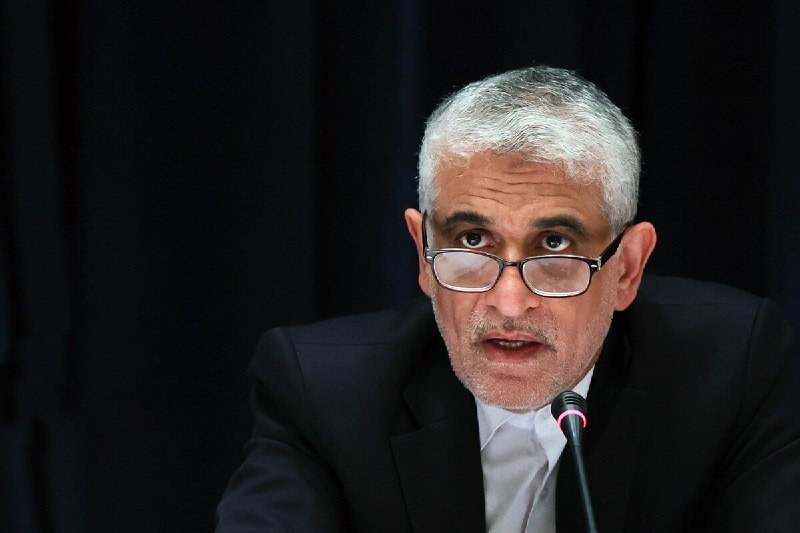
On 8 July 2026, two days after the United States announced a ceasefire with Iran, President Donald Trump declared the arrangement "over" and described further engagement with Tehran as "a waste of time", following a fresh escalation in tensions. The reversal hit Indian asset prices within hours. Indian equities slumped and the rupee weakened as traders priced the return of an oil-supply risk that, 48 hours earlier, had appeared contained.
What looked like de-escalation has now reverted into a market-shaking policy whiplash, and the question is no longer whether Washington and Tehran can stop shooting at each other. It is whether any White House commitment on the file can be priced at all before the next headline.
A ceasefire that lasted less than 48 hours
The diplomatic sequence was unusually compressed. India-friendly wire reporting and Indian financial press framed the original announcement as a substantive US-Iran arrangement; LiveMint's coverage on 8 July 2026 recorded Trump's statement that the deal was "over" and that further engagement with Tehran would be "a waste of time", following a fresh escalation [livemint.com, 8 July 2026, 01:38 UTC source time]. Within the same news cycle, the Hindustan Times's e-paper bulletin already led with the line that Trump "threatens more strikes but no return to 'war'", while bundling the India-Australia uranium story into the same morning brief [Hindustan Times e-paper, 9 July 2026]. The pattern — a diplomatic banner headline overtaken within hours by a strike-warning headline — is itself the story.
Markets re-priced the region in a single session
CryptoBriefing's wire feed on 8 July 2026 reported that "Indian stocks and rupee slump[ed] after Trump scraps Iran truce", capturing the immediate transmission from West Asia to South Asian risk assets [CryptoBriefing, 8 July 2026, 11:41 UTC]. That transmission is straightforward but worth spelling out: India imports the bulk of its crude requirements, so any disruption to Gulf shipping or Persian Gulf production flows directly into the country's current account, the rupee's spot value, and the input-cost assumptions of its refiners and downstream petrochemicals. The market reaction was therefore not a panic move but a mechanical repricing of a tail risk that had been temporarily de-rated.
The second-order effect is political. New Delhi is still in the middle of a uranium-supply negotiation with Canberra that the Hindustan Times e-paper flagged in the same morning brief as moving toward finalisation [Hindustan Times e-paper, 9 July 2026]. That negotiation sits inside the same strategic frame as India's Iran posture: a country diversifying its nuclear-fuel sources while its largest crude supplier sits astride one of the world's most volatile flashpoints. A more unstable Gulf is bad for both files; a more stable Gulf would, in theory, give India more room on both.
What the Trump reversal actually signals
Three readings of the reversal are plausible, and they imply different things for the next 72 hours.
The first reading is tactical. The ceasefire was always a tactical pause, and "scrapping" it is the next move in a coercive bargaining sequence rather than a strategic decision for war. Under this reading, the strike-warning language is leverage intended to extract a different concession than the one the original ceasefire produced. The risk for markets is that tactical pauses have, in this administration, become harder to distinguish from strategic reversals — and traders price the worst case.
The second reading is structural. The reversal reflects a genuine policy reversion inside the White House: a camp that never wanted the deal won an internal argument, and the public "over" language is the new line. Under this reading, the question is no longer what Tehran does but what coalition inside Washington now owns the file.
The third reading is messaging. The reversal is primarily aimed at a domestic audience, with strike language functioning as a demonstration of resolve rather than as an operational commitment. Under this reading, the market reaction is overdone and will fade when no strike materialises.
The Monexus read is that the market reaction, while mechanical, is not unreasonable: traders cannot tell which of the three readings is operative, and the cost of pricing the worst case is lower than the cost of being wrong if the worst case arrives.
The Indian stake, plainly stated
India is the swing importer in this geometry. A Gulf disruption tightens the oil market, weakens the rupee, and forces the Reserve Bank of India into the familiar posture of defending the currency while allowing some pass-through to domestic fuel prices. None of those outcomes is novel; what is novel is the speed at which they are now being triggered. Two-day ceasefires followed by strike warnings are a new operating environment for an Indian finance ministry that has spent the last several years trying to insulate the external account from precisely this kind of headline risk.
What we verified / what we could not
Verified against the source set: Trump's "over" / "waste of time" language on the Iran ceasefire; the Indian market and rupee sell-off on 8 July 2026 following the announcement; the parallel India-Australia uranium deal moving toward finalisation per the Hindustan Times e-paper brief of 9 July 2026. The source set does not specify the index level of the Indian equity move, the precise rupee depreciation, the underlying Iranian action that triggered the fresh escalation, or the status of any specific US-Iran diplomatic channel beyond the public statements captured in the wire feeds. A reader looking for index points, percentage moves, or the identity of the Iranian move that prompted the reversal will need to wait for confirmed reporting from the next session's wire coverage.
Stakes over the next quarter
If the tactical-pause reading is correct, the strike language cools within a week and Indian assets retrace. If the structural-reversal reading is correct, India is buying oil in a market with a wider risk premium through the end of the fiscal year, and the uranium diversification with Canberra moves from a nice-to-have to a strategic necessity. The honest answer is that the source set does not yet let an outside observer distinguish between the two, and the market is right to price the uncertainty rather than the direction.
Desk note: Monexus treated Trump's "over" language as the lead rather than the Indian market reaction, on the view that the policy reversal drives the market reaction rather than the reverse. The uranium-Australia thread is held back as a parallel story rather than bundled in, because the source set does not yet confirm a signed deal.
Wire provenance
This editorial synthesis draws on the following public wire/social posts:
- https://t.me/hindustantimes
- https://t.me/CryptoBriefing
- https://t.me/LiveMint