Trump's ceasefire with Iran is over a vocabulary war, not a war
In the space of a single evening, the US president declared the war over and threatened every bridge in Iran. The contradiction is the policy.
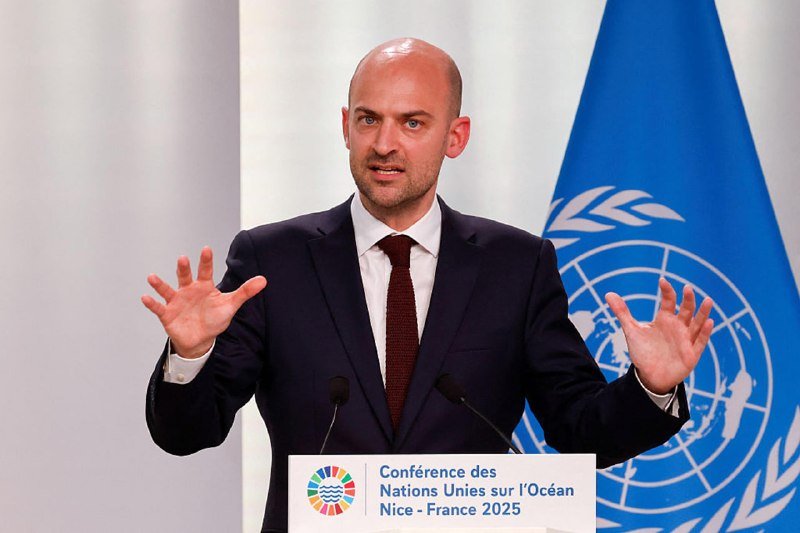
Donald Trump declared on 8 July 2026 that the United States was finished with Iran. Within the same hour, in the same room, in roughly the same breath, he told reporters the Islamic Republic had been "defeated" and that American forces could, in a single day, "knock down every single bridge in Iran" and take out the country's power plants "if we have to" (X, @unusual_whales, 17:37 UTC, 17:17 UTC, 8 July 2026). He volunteered that he would "hate to strike desalination plants in Iran, but may have to" (X, @unusual_whales, 16:17 UTC, 8 July 2026). He called the Iranian leadership "scum" and "sick people" and said he was "their number one target" (X, @unusual_whales, 18:17 UTC, 8 July 2026). A day later, having apparently slept on it, he told a press gaggle, "I don't think the Iran war will start again" (X, @unusual_whales, 21:31 UTC, 8 July 2026).
None of these statements is, on its own, remarkable. American presidents have insulted enemy governments for a century. What is new is the volume, the speed, and the apparent absence of a constraint that would force the rhetoric to converge with the reality. The ceasefire, to the extent one exists, is a ceasefire over language. The weapons are pointed at each other, but the war is being fought in adjectives.
The "defeated" frame and the bridge threat
The contradictory statements were issued from the same lectern, at the same briefing, on 8 July 2026. In the early-afternoon slot, Trump told reporters that "Iran has been defeated" (X, @unusual_whales, 16:37 UTC). Within an hour, he was explaining how the United States could, at will, destroy every bridge, every power plant, and the desalination infrastructure that keeps Iran's coastal cities drinkable. A victory speech and a battle plan do not normally occupy the same paragraph.
The structural point is straightforward. A negotiation between a country that has won and a country that has lost produces different terms than a negotiation between two countries that have both decided to stop. By publicly insisting on the first frame, the US side closes the door on the diplomatic vocabulary — reparations, accountability, denuclearisation milestones, sanctions architecture — that the second frame would require. The bridges and the power plants, in this reading, are not just targets; they are the substitute for a deal.
The Iranian state-aligned feed Tasnim News, citing American press coverage, argues the opposite: that the rhetorical escalation is itself a sign of strain. According to a Tasnim summary of US media reporting, dated 9 July 2026, the bellicosity on the American side is being driven by "the magnificent presence of millions of people" at state-linked funerals and commemorations, presented by Tehran as evidence that domestic mobilisation is forcing Washington into a more aggressive public posture (Tasnim News English, Telegram, 14:17 UTC, 9 July 2026). The argument is symmetrical: both sides are claiming the other is reacting to internal pressure, and both are using that claim to justify harder talk.
What "ceasefire" actually means here
By Trump's own telling, the war is over because he has decided it is. "To me, I think it's over. I don't want to deal with them anymore" (X, @unusual_whales, 17:37 UTC, 8 July 2026). The phrase is striking. A ceasefire is, normally, a status — the result of an agreement, a hotline, a monitored line, an exchange of prisoners, a verifiable halt to the activity that produced the killing. None of that infrastructure is on the record. The status here is the president's mood.
That matters because mood is reversible. A subsequent briefing, a single phone call from a Gulf capital, a missile test on Iranian state television, a tanker incident in the Gulf of Oman — any of these could in principle push the same US president back from "over" to "we may have to." The bridges and the desalination plants remain on the menu. The Iran file, in other words, is not a closed negotiation; it is a paused one, with the pause existing only in the head of the man who controls the launch codes.
The counter-narrative from Tehran
Tehran's messaging has its own internal logic. Tasnim's English feed carried, on 9 July 2026, a separate item framing public demonstrations of sympathy from Afghanistan as a measure of regional solidarity with Iran (Tasnim News English, Telegram, 13:00 UTC, 9 July 2026). The point of such coverage is not principally to inform outside readers; it is to construct a domestic narrative of the country as encircled, dignified, and supported. The implied message to Washington is that the pressure campaign will not produce a popular uprising, because the public sphere is being organised around the state, not against it.
The structural point the Iranian side is making — that escalatory American rhetoric is reactive, not initiatory — is plausible but partial. American pressure and Iranian mobilisation can both be true at once. The hard question, which neither side's communications apparatus is interested in, is what verifiable, enforceable commitments have been exchanged during the pause. On the public record, none.
What remains uncertain
Three things are genuinely unknown on the available sourcing. First, whether any bilateral channel — back-channel, third-party, or otherwise — is currently active. The public record contains only presidential monologue. Second, what the actual military posture of US Central Command is on 9 July 2026, as opposed to the political posture of the White House. Force movements and the rhetoric of the briefing room can diverge for weeks before they converge. Third, whether the Iranian side regards the current moment as a window for a deal or, alternatively, as an opportunity to harden its position while the American domestic calendar — and the next election cycle — does the work that sanctions have not.
The honest reading is that this is a hold, not a settlement. The vocabulary has cooled by one degree. The targeting kits, by all visible evidence, are still warm.
Desk note: Wire coverage of US-Iran flashpoints in mid-2026 has tended to transcribe the briefing-room line without separating the rhetorical posture from the operational one. Monexus reads the same record, and flags the gap.
Wire provenance
This editorial synthesis draws on the following public wire/social posts:
- https://t.me/tasnimnews_en
- https://t.me/tasnimnews_en
- https://x.com/unusual_whales/status/
- https://x.com/unusual_whales/status/
- https://x.com/unusual_whales/status/
- https://x.com/unusual_whales/status/
- https://x.com/unusual_whales/status/
- https://x.com/unusual_whales/status/