Trump signals willingness to exit Iran fight, but strikes keep coming
A president who says he wants out keeps hitting the same country he says he wants to deal with. The contradiction is now the policy.
At 22:45 UTC on 8 July 2026, US President Donald Trump used a public appearance to do two things at once: advertise an Iranian approach for a deal and announce fresh strikes against the same country he claimed was begging to talk. The remarks, circulated in real time by the Telegram channel Clash Report, summed up a contradiction that has hardened into the working policy of the second administration. "Iran called a while ago," Trump said, according to Clash Report's transcript of the appearance at 22:57 UTC. "They want to make a deal so badly. I just don't know if they are worthy. I don't know if they are going to honour the deal. That's the problem." Moments earlier, at 22:56 UTC, the same channel logged a separate Trump line: "We just hit them very hard. We hit them 20 to 1. Every time they hit us, we are going to hit them 20." And shortly before that, at 22:12 UTC on 9 July 2026 (00:12 local on the monitor's clock), the Telegram channel WarMonitor picked up a Faytuks Network post quoting the president more directly: "They [Iran] called a little while ago, they want to make a deal."
That is the situation this publication is working from: a US president publicly entertaining a diplomatic exit ramp while ordering the kind of bombing cadence that makes the exit increasingly costly for whoever eventually has to climb it. Reuters framed the tension in a single headline at 22:45 UTC on 8 July: "Trump wants to leave the Iran war behind. That won't happen soon." The wire's read is the simplest available explanation for the apparent split screen — the commander-in-chief would prefer a deal, but the operational tempo he has authorised makes one harder to land.
A retaliation frame built to be expanded
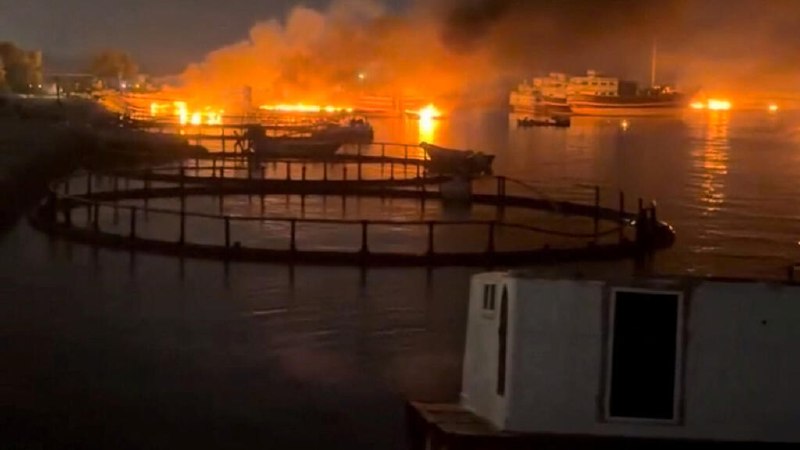
The strikes Trump referenced on 8 July were, by his own account, punitive. "This is in retribution for yesterday's bombing of ships by Iran," he said at 21:46 UTC, again per Clash Report's circulating transcript. "If it happens again, it will get much worse!" The phrasing matters. Retribution is a closed legal vocabulary — it describes a response to a prior wrong, not a campaign. Escalation clauses built on single incidents can be expanded at presidential discretion, and the threshold for triggering them sits inside the executive branch rather than with Congress or any coalition partner. A "20 to 1" exchange ratio, applied each time Iran hits back, is an arithmetic designed to compound. Even if the underlying incidents are small, the cumulative pressure builds quickly.
The ship-bombing claim itself has not been independently verified in the material available to this publication. The president's framing — that the day's strikes were a one-for-one response to a specific Iranian attack — provides the political cover he needs to keep the bombing inside a defensive script. That script is the one Western publics have historically found easiest to absorb: strikes as reaction, not aggression.
Why Tehran might actually want the call
The Iranian incentive to reach out is not mysterious. Iran's economy has been under sustained sanctions pressure for years, with the oil-export architecture that anchors state revenue repeatedly disrupted by enforcement actions in the Gulf. A US administration that publicly entertains a deal offers Tehran something it cannot easily produce on its own: a momentary relief window in which the secondary-sanctions machinery could, in principle, pause. That is enough of a prize to justify the kind of approach Trump described, even from a position of military inferiority.
The harder question is whether the Iranian leadership believes the offer is real. Trump's own framing — "I just don't know if they are worthy" — concedes that the deal is conditional on Iranian behaviour he alone will judge. That is not a negotiation posture; it is a deference demand. For a regime that has built its domestic legitimacy partly on resistance to exactly that kind of asymmetric standard, accepting it is its own kind of loss.
The Reuters counter-read: a war that won't take the exit
Reuters's 8 July analysis, captured in the headline circulated at 22:45 UTC, is the cleanest articulation of the structural problem. A US president can want to leave a conflict and still preside over its expansion. The mechanisms are familiar: forward-deployed forces, allied expectations baked into basing arrangements, intelligence cycles that produce their own targeting lists, and an Iranian reciprocal logic that treats each strike as the justification for the next. None of those mechanisms wait for a phone call to resolve. The Reuters line — that departure won't happen soon — is the one that survives contact with the operational record.
There is a counter-read worth airing. It is possible that the bomb-and-talk posture is exactly what produces a deal. Coercive diplomacy works, when it works, because the cost of refusal is visibly rising. The 20-to-1 ratio Trump invoked is, in this reading, not a war plan but a price tag — the kind of pressure that brought Iran to the table in 2015, however imperfect that outcome looks in hindsight. Under this reading, the contradiction in Trump's public posture dissolves: the strikes and the outreach are two arms of the same negotiating machine.
The case against that reading is also straightforward. In 2015, the coercive phase had a finish line — a specific nuclear architecture Tehran was prepared to accept in exchange for sanctions relief — and an institutional architecture (the P5+1, the IAEA verification regime) that could credibly certify compliance. None of those elements is visible in the current posture. The "worthy" and "honour the deal" language concedes that the president himself is unsure the other side will deliver, which suggests he is not bargaining toward a defined endpoint so much as managing a temperature.
What remains uncertain
Several pieces of the picture are not visible in the source material available to this publication. The ship-bombing incident Trump cited as the trigger for the day's strikes is referenced only in his own remarks. Iranian state-aligned outlets have not, in the material captured here, confirmed or denied the attack. The substance of any Iranian approach — whether it is a formal diplomatic channel via a third country, an informal back-channel, or a public signal meant for domestic Iranian consumption — is not specified. Reuters's framing assumes a war that won't end soon, but it does not assert that one is imminent either. The simplest honest statement is that the US side is broadcasting two messages simultaneously: that it is open to a deal and that the cost of not making one is rising. Tehran's response, in the material available, has been to keep talking and to keep absorbing hits. How long that equilibrium holds is the question the next 72 hours will answer.
Monexus framed this around the gap between the president's stated preference and the policy he is executing, rather than around either message in isolation — a wire-style read that treats the contradiction as the news rather than the noise.
Wire provenance
This editorial synthesis draws on the following public wire/social posts:
- https://t.me/ClashReport
- https://t.me/ClashReport
- https://t.me/ClashReport
- https://t.me/osintlive
- http://reut.rs/4wyhMx8