Trump's oil-rhetoric week meets a hostile global audience
A week of triumphalist oil-market rhetoric from Washington has landed on audiences that read it very differently — from the Ukrainian street to Iranian state media feeds.
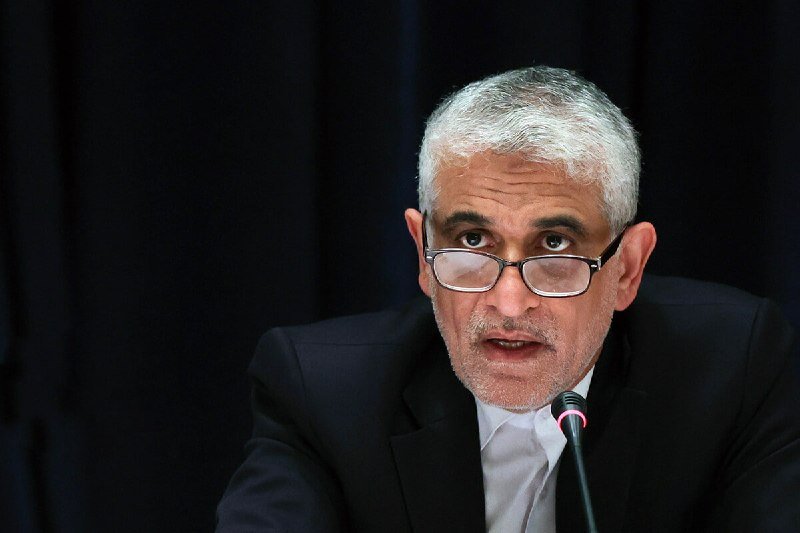
On 8 July 2026, in remarks carried across multiple wire accounts, Donald Trump told an audience that oil would be made "very free, very easy, very fast" under his administration — and then, in a separate comment the same day, conceded that maybe "we'll do some things that could increase the oil price." A third post on the same 24-hour window had him explaining the discrepancy in his own terms: "I predicted everything. I've been right about everything… That's how I got to be president three times."
Read narrowly, this is a market-rhetoric story. Read widely, it is the political backdrop against which two rather different audiences have been processing the United States this week. One of them is Ukrainian, and the other is Iranian. Their readings of Washington are not the readings one finds in American cable news — and the gap between those readings and the official Washington line is itself the story.
A president, in his own words, three times
The arithmetic is unusual. A sitting president's claim to a third term, and a third election win, is not a line the US Constitution accommodates. The 22nd Amendment is explicit. Treating the remark as off-the-cuff bombast would be charitable; treating it as a slip of the tongue would be naive. Either way, it lands at a moment when American allies and adversaries alike are looking for signals about how Washington intends to manage the next eighteen months — including, per the same cluster of remarks, the price of crude.
The market-rhetoric content is its own kind of signal. "Free, very easy, very fast" on Tuesday afternoon, "maybe we'll do some things that could increase the oil price" by the evening. Producers read this. Refiners read this. Sovereign wealth funds in the Gulf read this. So did Moscow. The two statements are not reconcilable on any clean reading — but they share an audience, and that audience is now being trained to expect policy by tweet, with the contradictions included.
Ukraine: the street reads it differently
On 9 July, Ukrainian outlet TSN carried a piece headlined as reporting "unexpected numbers" on how Ukrainians actually feel about Trump. The framing matters: this was not an editorial line imposed from above, but a measurement of sentiment on the ground. Ukraine is the invaded party in a war that has now run past four years, sustained by Western matériel and Western aid commitments whose durability Kyiv tracks daily. When American political theatre consumes the bandwidth of an administration that supplies much of that matériel, the Ukrainian street registers the signal.
The plain-language point: aid debates in Washington are not abstractions in Kyiv. They are artillery resupply timelines. They are air-defence interceptor counts. They are the operational tempo of a country under bombardment. So when an American president constructs a week around self-praise, oil-market code, and casual constitutional-sounding asides, the audience in Kyiv does not experience it as colour. It experiences it as a demand to read every word for reassurance — and a refusal to provide any.
Iran: a hostile feed, reading the same words
On the same 24-hour window, Iran's state-aligned Fars news feed ran a visual item it captioned as "the different flag of people's desire for blood: We will kill Trump," alongside a separate video it framed as "a visual narrative of the nation's glory and greatness at the funeral of the martyred leader." Iranian state media is not, by any stretch, a neutral source. But the persistent, public reiteration of those themes in Fars's English-language channel is itself a piece of evidence about how Tehran reads the current American posture — as a regime under acute pressure that benefits, internally, from an externalised enemy.
Western coverage of such channels tends to treat the content as theatre aimed at a domestic audience. That reading is plausible. What is less often noticed is the diplomatic utility for Tehran: a Washington that delivers on oil-rhetoric volatility and on third-term language gives Tehran a coherent story to tell its own public about American incoherence. The structural point is that an adversary's propaganda is cheapest to run when the target's behaviour already provides the script.
The structural read, in plain words
Strip away the personalities and the week's pattern is consistent. The United States is signalling, on at least three vectors simultaneously — oil-market posture, third-term language, and a casual contempt for the constitutional niceties that traditionally contain the executive — that the predictable part of American policy is shrinking. For a country whose reserve currency status, alliance architecture, and energy-market centrality all depend on a baseline of policy predictability, that is a quietly serious development.
The counter-reading is obvious and worth stating: markets still function, alliances still hold, the institutions still operate. Volatility is not collapse. A campaign-trail register inside a sitting presidency can be reined in by advisors, by cabinet, by the courts, by the bond market. That counter-reading has the comfort of historical precedent. Its weakness is that it requires the institutions to do work they have not been doing visibly this week.
Stakes
If the trajectory continues, three groups pay the price. Ukraine pays it in the operational tempo of its war, measured in interceptors and shells. Iran pays it in tightened sanctions enforcement and in a propaganda environment that locks in hardliners. Gulf producers and major importers pay it in oil-price volatility that no producer cartel can fully offset. The winners, in the near term, are narrow: domestic political audiences that thrive on theatre.
The open question is whether the week's contradictions are positioning — the prelude to a posture that resolves into something more coherent — or whether the contradictions are the posture. The available signals do not yet let us tell. What they do let us say is that the audience for American foreign-policy signalling is no longer primarily American. It is Ukrainian, and Iranian, and Gulf, and European — and none of those audiences are reading these remarks as background noise.
Desk note: Monexus framed this against the contested global readings of a single Washington week, rather than reproducing any single wire's domestic framing of it.
Wire provenance
This editorial synthesis draws on the following public wire/social posts:
- https://t.me/TSN_ua
- https://t.me/farsna
- https://t.me/farsna