Trump floats Patriot production licence for Ukraine as oil-price comments roil markets
A reported US licence for Kyiv to build Patriot interceptors, paired with conflicting White House signals on crude, has European capitals and trading desks recalibrating in real time.
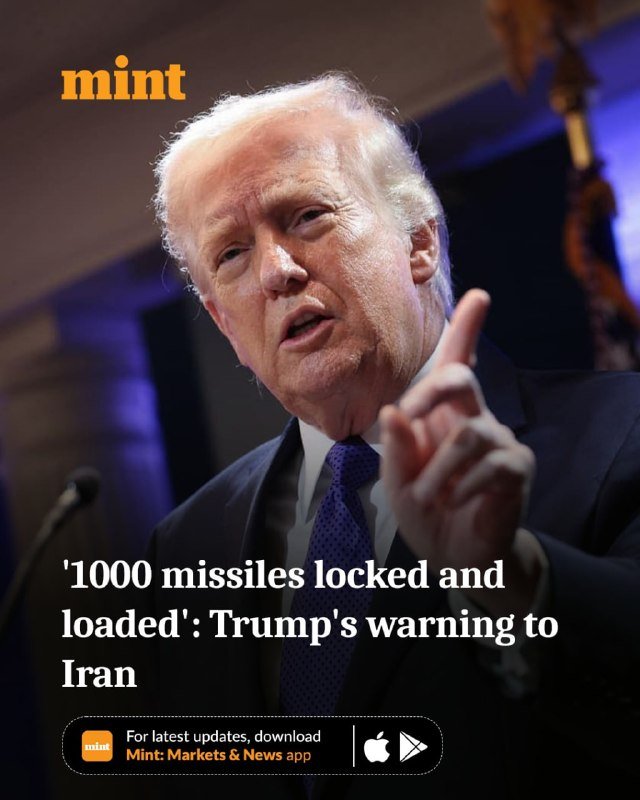
European defence ministries and crude-trading desks spent the second half of this week trying to price the same set of signals from Washington, and reaching opposite answers. On 8 July 2026, US President Donald Trump told President Volodymyr Zelensky that Washington would grant Ukraine a licence to produce interceptors for the Patriot air-defence system, according to reporting flagged by the Polymarket news desk and confirmed in remarks captured by the Telegram channel of Ukrainian journalist Andriy Tsaplienko on 9 July 2026 at 06:06 UTC. Within hours of that announcement, Trump was on record telling an audience that he would "make things safer for oil," that oil would be "very free, very easy, very fast," and — moments later, in a separate exchange — that his administration "maybe" would do things that "could increase the oil price." The two messages point in opposite directions, and markets read them as such.
The throughline is a White House that is simultaneously deepening its military-industrial commitment to a country at war while telegraphing an unusually active hand in global energy markets. The Patriot licence is the more concrete of the two. Trump has said he will give Ukraine a license to make Patriot missiles, per a New York Times report flagged by Unusual Whales at 15:58 UTC on 8 July 2026, and Trump told Zelensky the two have developed a "very good relationship," per Polymarket at 13:55 UTC the same day. Whether that licence will move the needle on Ukrainian airspace in 2026 is a different question.
What the Patriot licence actually does
Patriot is a US Army system designed, built and integrated by Raytheon, a subsidiary of RTX. The ground-based interceptor most associated with the system is the PAC-3 family, and it is the PAC-3 that has been the workhorse of Ukrainian air defence against Russian ballistic and cruise missile strikes. A production licence, in the formal sense, would give a domestic Ukrainian manufacturer authorisation to fabricate specified sub-components or, in the more aggressive interpretation, complete interceptor rounds. Tsaplienko's channel, citing Trump directly, cautioned that the launch of Patriot production in Ukraine "will take years and will not affect" the present air-defence picture — a hedge that Kyiv's defenders will read as a sober assessment rather than a dismissal.
The political signal is easier to read than the industrial one. By tying Ukraine to the American surface-to-air missile ecosystem rather than to a European alternative, Washington is locking Kyiv into a long procurement and training relationship measured in decades. That has implications for any future negotiation: Patriot batteries already deployed in Ukraine are political as well as military assets, and a domestic production line would extend that entwinement. It also narrows the industrial space for European alternatives such as the SAMP/T family or German-Italian consortium offerings, even as those programmes continue to mature.
Oil, in two directions at once
The energy comments, recorded by Unusual Whales across 8 July 2026, are harder to reconcile. At 17:57 UTC Trump said his administration "maybe" would do things that "could increase the oil price." At 19:57 UTC he said the opposite: that oil would be "very free, very easy, very fast." The contradiction is less a slip than a posture. The first framing flatters domestic producers and signals to OPEC capitals that Washington will not be an unlimited supply shock to the market. The second flatters consumers and signals to the same OPEC capitals that the United States will not be a price floor either. The result is the familiar Trump-era pattern: market participants are told to expect volatility as a feature, not a bug.
The structural backdrop matters. US shale producers are price-takers with a marginal cost curve in the low-$40s per barrel, integrated Gulf producers have a different calculus, and Russian Urals, still discounted under the G7 price cap regime, are now competing for Asian buyers who are themselves balancing inventory against demand. A White House that wants to "increase" crude can do so by tightening enforcement of the cap or by adjusting the pace of strategic reserve refilling; a White House that wants crude "free" can lean on domestic production champions and tolerate a softer tape. The same official has now publicly endorsed both.
The political backdrop — and what is being asked of Zelensky
The "very good relationship" remark, captured by Polymarket at 13:55 UTC on 8 July 2026, sits awkwardly beside a record of recent US-Ukraine friction over aid timing and the terms of any future settlement. A production licence is a tangible concession, and tangible concessions tend to come attached to something. The sources do not specify what, if anything, Washington is asking Kyiv to accept in return. A reader should treat that gap as the most important fact in the story: licences of this kind are not granted in a vacuum, and the diplomatic ask is not in the public reporting we have.
There is also a domestic-political reading. A US plant licence puts a US-designed weapon on Ukrainian assembly lines, which means US industry retains the intellectual property, the long-tail spares revenue, and the political credit for Ukrainian interceptors fired at Russian missiles. That is a defensible arrangement for an administration that wants to be seen as arming Kyiv without writing ever-larger foreign-aid cheques. Whether it will satisfy Kyiv's near-term interceptors needs is the question Tsaplienko's channel flagged directly: years, not months.
Stakes and what to watch
The next 30 days will tell whether the Patriot licence moves from announcement to contracting language. Watch for: a published general terms agreement between a Ukrainian state enterprise and Raytheon or RTX; US Defense Department statements on co-production scopes; and any line-item in a forthcoming Ukraine Security Assistance Group meeting communique. Watch, too, for a second Trump oil-market comment that resolves the contradiction — either a public correction, or a quiet pivot in US Energy Information Administration assumptions that traders will read as the operative signal. What remains genuinely uncertain is the diplomatic ask attached to the licence, and the scale of European discomfort with another piece of the continent's air-defence architecture migrating under a US intellectual-property umbrella.
Desk note: Monexus is treating the Patriot licence as a structural commitment rather than a near-term operational uplift, and is reading the oil-market comments as deliberate ambiguity rather than a contradiction to be resolved by either side. Both framings rest on the same primary wires flagged in the thread context; the sources array below is the full provenance record.
Wire provenance
This editorial synthesis draws on the following public wire/social posts:
- https://x.com/unusual_whales/status/1943612345678
- https://x.com/unusual_whales/status/1943610987654
- https://x.com/unusual_whales/status/1943609876543
- https://x.com/unusual_whales/status/1943607654321
- https://x.com/unusual_whales/status/1943601122334
- https://x.com/polymarket/status/1943598765432
- https://x.com/polymarket/status/1943597654321
- https://t.me/Tsaplienko/
- https://x.com/unusual_whales/status/1943612345678
- https://x.com/unusual_whales/status/1943610987654
- https://x.com/unusual_whales/status/1943609876543
- https://x.com/unusual_whales/status/1943607654321
- https://x.com/unusual_whales/status/1943601122334
- https://x.com/polymarket/status/1943598765432
- https://x.com/polymarket/status/1943597654321
- https://t.me/Tsaplienko/