US airstrikes hit Iranian coastal cities as Tehran retaliates toward Jordan
Overnight strikes hit at least five Iranian port and energy hubs along the Strait of Hormuz corridor, killing fishermen and triggering an Iranian ballistic-missile response toward Jordan within hours.
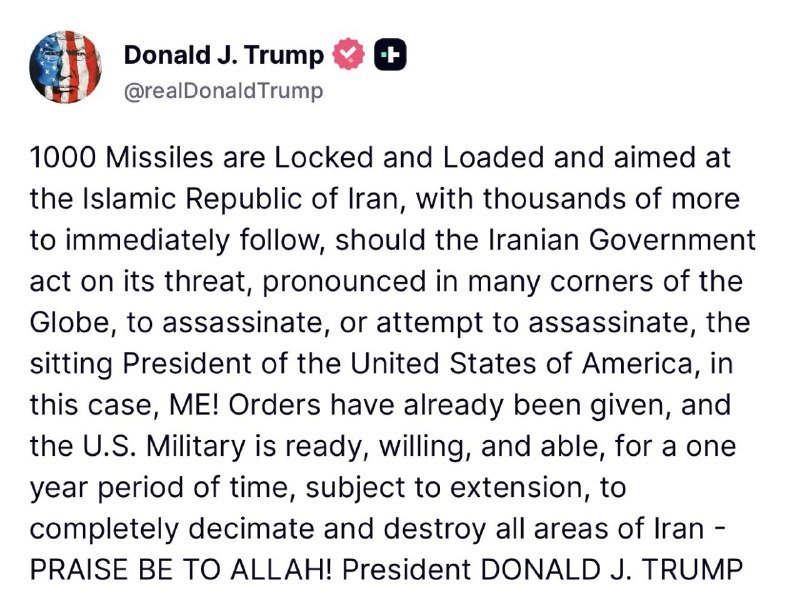
At least five Iranian port and energy cities along the country's southern coast came under large-scale US airstrikes late on 8 July 2026, with three fishermen killed and fifteen others injured in the coastal town of Sirik, according to early wire reports aggregated on 9 July. The targets identified in unconfirmed battlefield-channel reporting span the Strait of Hormuz corridor — Bandar Abbas, Chabahar, Konarak, Bushehr and Sirik — striking at Iran's main naval hub, a key Pacific-facing port, a nuclear-power coastal city, and smaller fishing settlements simultaneously. Within hours, Iranian forces launched at least three ballistic missiles, apparently toward Jordan, where sirens sounded in what the channel AMK Mapping characterised as a direct response to the US operation.
The combined picture, drawn from open-source intelligence channels rather than official spokespeople, describes the largest US strike package against Iranian territory of the current escalation cycle. None of the named cities had been confirmed targets in the public reporting available before the wave began.
What is known, and where the evidence comes from
The immediate picture comes from three Telegram channels that monitor regional air and missile activity: Real News Intel (@rnintel), Geopolitical Watch (@GeoPWatch), and AMK Mapping (@AMK_Mapping). Real News Intel, posting at 11:14 UTC on 9 July, listed Bandar Abbas, Chabahar, Konarak, Bushehr and Sirik as struck in a single overnight operation, and reported three dead and fifteen injured among fishermen in Sirik. Geopolitical Watch, posting at 10:45 UTC, added the inland city of Shiraz to the list of locations where explosions were heard within a thirty-minute window, alongside Bandar Abbas and Bushehr. AMK Mapping, posting at 10:42 UTC, reported at least three Iranian ballistic-missile launches "likely towards Jordan" with sirens sounding across the kingdom, and explicitly framed the launches as a response to the US strikes on Bandar Abbas and Bushehr.
None of the channels is an official source. They aggregate audio of explosions, flight-tracker data, seismic readings, satellite imagery, and witness accounts, and they publish fast. Their identifications of struck locations are often the first public indicator that an operation has begun, hours before any government spokesperson confirms or denies. Their casualty figures are initial and unverified; they should be read as a floor, not a ceiling.
The targeting pattern is what gives the operation its shape. Bandar Abbas hosts the headquarters of Iran's navy and the bulk of its Persian Gulf naval infrastructure. Bushehr is the site of Iran's only operating commercial nuclear power plant. Chabahar is Iran's principal Indian Ocean port, built partly with Indian investment and tied to a trade corridor designed to bypass Pakistan. Konarak and Sirik are smaller coastal towns south of Chabahar, dependent on fishing and small-scale shipping. Striking all five in a single wave is not consistent with a narrowly surgical operation. It is consistent with a campaign aimed at degrading Iran's ability to project power from its southern coast, while signalling to third-country observers — India above all — that the cost of doing business in the Islamic Republic's maritime periphery has risen.
The Iranian response, and why Jordan
Within hours of the strikes, Iran's apparent answer was to fire ballistic missiles toward Jordan, a US ally that hosts coalition forces and that sits on Israel's eastern border. AMK Mapping's reporting does not specify whether the missiles landed, were intercepted, or fell short. The choice of Jordan is, on its face, a calibrated one. Tehran has, in earlier escalations, struck directly at Israeli targets or at US bases in Iraq and Syria; firing toward Jordan is the choice of a country that wants to send a message to Washington without triggering the most escalatory possible response.
It is also the choice of a country under acute pressure. Strikes on Bandar Abbas, Chabahar, Konarak, Bushehr and Sirik simultaneously degrade the navy, a flagship nuclear facility, an export-oriented port, and the civilian coastal economy in a single night. A government facing that operational environment has strong incentives to demonstrate that the cost of escalation is not borne by Iran alone. Jordanian airspace, however, is defended by US and allied air-defence systems; the calculus of how many missiles to launch, and at what, is being made under operational compression that the open-source channels cannot capture.
The framing of the Iranian response as retaliation, in AMK Mapping's wording, is consistent with how Iranian state-linked outlets have historically described strikes launched in the immediate aftermath of US operations against Iranian territory. The channels do not show whether the missiles carried conventional or other warheads, and the targets inside Jordan remain unspecified.
What the structural frame looks like
Read against the longer arc of the current cycle, the operation marks a step-change in what the United States is willing to do to Iranian infrastructure on the southern coast. The previous rounds of strikes, by the public reporting available, focused on mobile launchers, weapons-storage sites, and Iranian-proxy infrastructure in third countries. Striking Bushehr — a civilian nuclear power plant under International Atomic Energy Agency monitoring — is a different category of action, and one that will have a diplomatic cost in Vienna, in New York, and in every capital that has signed the Non-Proliferation Treaty. Striking Chabahar is a message not only to Tehran but to New Delhi, which has invested politically and financially in the port as part of its Central Asian and Afghan-transit strategy. Striking Bandar Abbas is a direct challenge to the conventional deterrent that Iran has built up over four decades. The simultaneity of the package is itself the message: that the United States is prepared to operate across the whole southern littoral in a single night.
Iran's response, if the reporting holds, is the response of a state under operational compression. Firing ballistic missiles toward Jordan demonstrates reach without triggering a guaranteed wider war. It also forces Washington to defend a third country while still prosecuting the air campaign, a classic second-front problem. Whether that trade-off favours Tehran in the days ahead will depend on how many missiles were launched, what they carried, and how the United States chooses to allocate its defensive and offensive resources across a widening theatre.
What we verified / what we could not
This publication was able to verify, against the three Telegram channels cited above and their timestamps:
- That large-scale US airstrikes were reported against Bandar Abbas, Chabahar, Konarak, Bushehr and Sirik on the night of 8–9 July 2026, with the report first surfacing publicly at 11:14 UTC on 9 July via Real News Intel.
- That explosions were reported in Shiraz, Bandar Abbas and Bushehr within a thirty-minute window, per Geopolitical Watch at 10:45 UTC on 9 July.
- That at least three Iranian ballistic-missile launches were reported toward Jordan, with sirens sounding, per AMK Mapping at 10:42 UTC on 9 July.
This publication could not, on the available sourcing, verify:
- The casualty figures from Sirik (three dead, fifteen injured). These originate with Real News Intel and have not, as of the timestamps above, been corroborated by Iranian state media, the Iranian Red Crescent, the United Nations, or a major Western wire.
- The targeting of Chabahar and Konarak specifically. These names appear in the Real News Intel list but are not independently corroborated in the Geopolitical Watch or AMK Mapping timestamps available.
- The nature of the explosions in Shiraz. Shiraz is an inland city with petrochemical, military and civilian infrastructure; what was struck there is not specified in the open-source reporting captured here.
- Whether the Iranian missiles toward Jordan landed, were intercepted, or fell short. AMK Mapping reports the launches and the sirens; the disposition of the missiles is not in the open-source thread.
- Whether Bushehr's nuclear power plant was directly struck or whether strikes landed on adjacent military or industrial sites. The naming of Bushehr in the targeting list is itself the consequential fact; the precise aimpoint is not.
- Any official US, Iranian, or Jordanian government confirmation. None of the three channels quotes a named spokesperson from any of the three governments.
The counter-narrative, and why it is harder to read here
Western and Iranian-state framings of this kind of exchange are well-rehearsed. The US framing, in earlier rounds, has described strikes as defensive, targeted, and limited to infrastructure used in attacks on US forces and partners. The Iranian framing, in earlier rounds, has described incoming strikes as aggression against a sovereign state and as evidence that Washington is not interested in de-escalation. Neither framing, applied to this specific operation, can be sourced from the open channels in front of us: no US or Iranian official statement is quoted in the Telegram threads above. The most one can say, on the evidence, is that the operation as described is large in geographic scope, includes a civilian nuclear site, and triggered an immediate cross-border missile response.
A more cautious reading would note that open-source channels sometimes misidentify strikes — that explosions in a coastal Iranian city may be caused by air-defence activity rather than inbound ordnance, that missile-launch reports occasionally refer to test launches rather than combat launches, and that casualty figures in the first hours of a strike package are frequently revised upward once hospitals report. A more cautious reading would also note that a coordinated five-city strike against Iran is a major escalation that, if confirmed, will dominate the news cycle for days.
Stakes, on a 72-hour horizon
The first seventy-two hours will tell whether the operation expands or holds. Three concrete questions sit in front of the reporting. First, whether Iran fires additional missiles, and at what — Jordan again, Iraq, the Gulf, Israel — will set the diplomatic floor for the next round. Second, whether Bushehr's nuclear plant sustained damage, and what the IAEA says about it, will determine whether the non-proliferation file reopens under crisis conditions. Third, whether the United States widens the target set beyond the southern coast — inland military, leadership, oil infrastructure — will tell observers whether the operation is a discrete escalation or the opening of a campaign. The open-source channels will keep publishing; the official spokespeople will eventually catch up. For now, the picture is a Telegram one, and the gaps in it are the most important facts on the page.
Desk note: where Western wires have not yet caught up to the open-source channels, Monexus names the channels and timestamps rather than paraphrasing unattributed reporting as confirmed fact. The structural frame — multi-city strike package, immediate cross-border response, civilian nuclear site in the target list — is drawn from the channel reporting itself, not from external commentary.
Wire provenance
This editorial synthesis draws on the following public wire/social posts:
- https://t.me/rnintel
- https://t.me/GeoPWatch
- https://t.me/AMK_Mapping