Strait of Hormuz on the edge: how a 90-target US strike on Iran redrew the Gulf's risk map in 72 hours
Washington says it struck 90 targets across Iran, then tore up a memorandum of understanding and floated a fresh Hormuz blockade — a sequence that left prediction markets pricing a 56-percentage-point collapse in the chance of normal traffic by December.
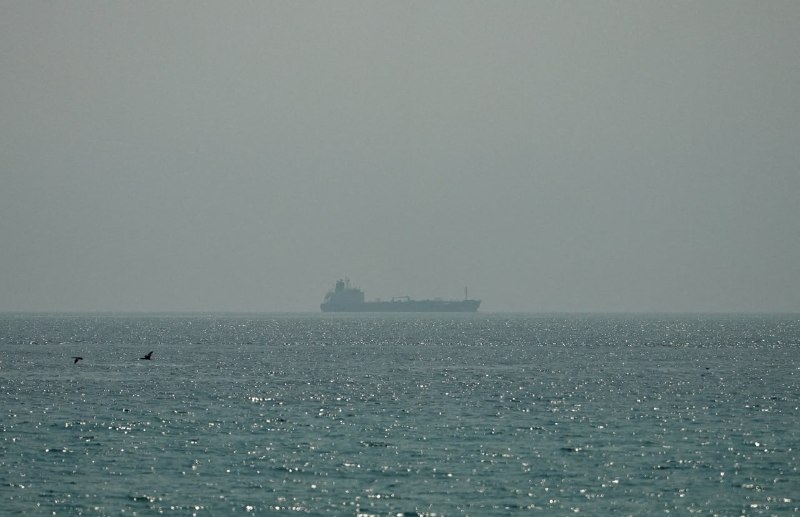
At 06:18 UTC on 9 July 2026, the United States declared its strikes against Iran complete, releasing video it said showed more than 90 targets hit across the country. The announcement, carried by Indian wire LiveMint citing US military footage, capped a 72-hour sequence in which President Donald Trump publicly tore up a freshly signed US-Iran memorandum of understanding, threatened fresh strikes "tonight," warned that the existing ceasefire was "over," and floated the reimposition of a naval blockade on the Strait of Hormuz — the narrow waterway through which a substantial share of global seaborne crude transits daily.
The pattern matters more than any single headline. Within three days, Washington moved from a declared diplomatic track to active bombardment, then to a doctrinal posture that treats the Gulf chokepoint as a lever rather than a corridor. By the close of 8 July, traders on the Kalshi prediction market had already priced in the damage: the implied probability that traffic through the Strait of Hormuz would return to normal levels by 1 December had fallen to roughly 44%, according to a finance-side summary of order-book data circulated the same day.
What happened, and in what order
The public record of the escalation is dense. On 8 July at 12:58 UTC, a finance-feed summary noted that speculative traders no longer expected Hormuz traffic to normalise this year, citing the latest round of attacks as the trigger. Minutes later, at 13:03 UTC, Trump publicly declared the Iran ceasefire "over," per an account relayed through the Polymarket channel on X. By 13:50 UTC, the same channel reported that the President was signalling the United States "may" reinstate its blockade of the Strait. At 13:57 UTC, the President announced, per Yahoo Finance as cited by an unusual-whales wire, that the US-Iran memorandum of understanding was itself "over." Less than thirty minutes later, at 14:17 UTC, Trump posted that the United States "will hit Iran again tonight." The next morning, 9 July at 06:18 UTC, the strikes were declared complete and the target count — 90 — was put on the public record with accompanying video.
That sequence — diplomatic accord voided, ceasefire terminated, blockade threatened, strikes executed, target tally released — is the architecture any reading of the next 72 hours has to accommodate. It is not a fog-of-war chronology in which facts are still settling; it is a scripted one, with each step telegraphed in advance by the principal actor.
The maritime lever
The Strait of Hormuz is the only sea passage between the Persian Gulf and the open ocean, bounded by Iran to the north and Oman and the United Arab Emirates to the south. Even when traffic is flowing normally, the chokepoint concentrates geopolitical risk: a substantial share of internationally traded crude, plus the bulk of liquefied natural gas exports from Qatar, transits its roughly 33-kilometre-wide shipping lanes daily. A sustained disruption does not only raise the price of a barrel; it disrupts the insurance, refinancing and routing decisions of every shipper whose business plan assumes the corridor stays open.
That is why the reimposition of a US blockade — even as a stated possibility rather than a confirmed operation — moves prediction markets before any vessel is intercepted. Insurance underwriters reprice war-risk premia the moment a blockade becomes plausible, because the obligation to pay out on hull and cargo losses is triggered by declared exclusion zones, not by the first sinking. The Kalshi-implied 44% probability of traffic normalising by December is therefore not a forecast of ceasefire; it is a forecast of underwriting behaviour. The market is reading the maritime architecture, not the diplomatic calendar.
The diplomatic wreckage
The memorandum of understanding that Trump declared "over" at 13:57 UTC on 8 July was, until that afternoon, the central piece of evidence that the administration's Iran policy was operating on a dual track: pressure and negotiation in parallel. Voiding it publicly does more than end a document. It signals to every Gulf capital, every European foreign ministry and every oil trader that the negotiation channel is no longer the operative one — at least until a new one is constructed under different terms.
This is where the official framing and the structural reality diverge. The official framing, as carried in the President's posts and the Pentagon's release of strike footage, is one of decisive military action followed by renewed readiness to strike. The structural reality is that the United States has just narrowed its own diplomatic optionality while widening Iran's incentive to weaponise the chokepoint in retaliation. A blockade is a two-sided instrument: it can deny Iran revenue from its own exports, but it also denies Gulf producers — including Washington's partners — reliable access to their customers. The longer a blockade stays in force, the more it looks like an embargo on the Gulf's own economy wearing an American flag.
What the wire is not yet saying
Three points remain genuinely contested or under-corroborated in the public record. First, the target list: 90 strikes is the official tally, but neither the LiveMint summary nor the unusual-whales and Polymarket wires specify the composition of those targets — whether they were military, nuclear-related, oil infrastructure, or a deliberate mix. The framing in the released video, per the LiveMint summary, treats the operation as a completed campaign rather than a salvo, but the underlying targeting rationale is not on the public record. Second, the blockade: Trump said the US "may" reinstate it, which is a posture statement, not a declared operation. No flag officer, no CENTCOM spokesperson and no allied naval command is on the record confirming task-force assignments. Third, the casualty picture on the Iranian side — civilian or military — is not present in any of the source items, and this publication will not speculate.
A fourth, quieter uncertainty: what other Gulf states have been told. A blockade announced by Washington against Iranian exports does not require the consent of Saudi Arabia, the UAE or Oman, but it does affect their tankers, their ports and their customers. If those capitals were consulted before the President's post, no readout is in the source material. If they were not, the next 72 hours of diplomacy will be about repair, not escalation.
The structural frame
Strip away the personalities and the day's events fit a familiar pattern in Gulf security: the chokepoint is not a transit corridor but a switch, and the principal external power has just reminded every regional actor that it controls the switch. The economic consequence — the 44% probability of normalised traffic by December — is not a market overreaction; it is the market correctly pricing a structural fact. Insurance markets, freight markets and Brent futures all reprice the moment a chokepoint becomes a contested instrument rather than a guaranteed conduit.
The Iran question now is whether Tehran treats the voided memorandum as a one-off rhetorical rupture or as the closing of the diplomatic door. If the former, the memorandum gets renegotiated under heavier US terms and traffic normalises in months. If the latter, the Islamic Republic has every incentive to demonstrate that the Strait cannot be policed by one navy alone — through harassment, through proxy action in Iraq or Yemen, or through the slow-motion chess of tanker inspections. The 90 strikes settled the air account. The maritime account is just being opened, and the prediction market is right to be cautious.
Desk note: Monexus frames this as a sequenced escalation — diplomatic accord voided, ceasefire terminated, blockade threatened, strikes executed — rather than as a single dramatic event. Wire coverage of the strikes emphasised the target tally and the released video; the structural story sits in the maritime pricing and the voided memorandum, both of which are underweighted in the headline cycle.
Wire provenance
This editorial synthesis draws on the following public wire/social posts:
- https://t.me/unusual_whales
- https://t.me/unusual_whales
- https://t.me/polymarket
- https://t.me/polymarket
- https://t.me/kalshi
- https://en.wikipedia.org/wiki/Strait_of_Hormuz
- https://en.wikipedia.org/wiki/2026_United_States_strikes_on_Iran