Strikes, Signals, and a 36% Bet: Reading the US-Iran Brink
Fresh US strikes on Iranian infrastructure have landed hours before a Geneva accord signing, with prediction markets pricing a deal at just 36% by year-end.
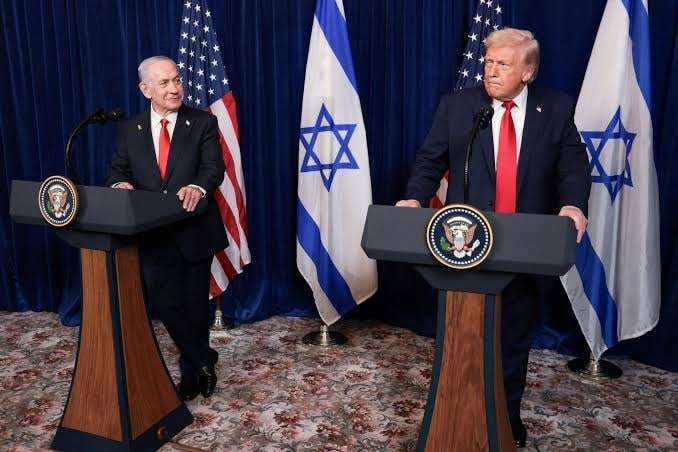
US warplanes struck targets inside Iran in the early hours of 9 July 2026, killing three people according to Iranian state media cited by Middle East Eye, and damaging a railway bridge in the country's northwest. Reuters reported oil prices rose on the news. The strikes land less than a day before a scheduled peace-accord signing in Geneva, and they land on a market that, just hours earlier, was pricing the broader diplomatic arc with notable scepticism.
The pattern is the story. Kinetic action and a negotiated settlement are no longer opposing poles of US-Iran policy; they are running in parallel, and the gap between them is where today's risk lives.
What is actually known
Middle East Eye's live blog, updated at 06:06 UTC on 9 July, reports that Iranian state media have confirmed three deaths from US strikes inside Iran. The same account records a railway bridge in northwestern Iran being struck, with reporting timestamped at 04:08 UTC. The targets, the munitions used, and the chain of authorisation have not yet been disclosed by any source in the public thread.
Reuters, in a parallel dispatch timed to 06:05 UTC, confirmed the market reaction: crude prices rose after the strikes were announced. That market move is the cleanest corroboration that traders treated the strikes as a genuine supply-side event — not a routine posture. Without it, the death toll would still rest solely on Iranian state media, an account that has both informational value and obvious incentive to amplify.
The prediction-market lens
Three Polymarket contracts, all dated 8 July, frame the diplomatic backdrop with unusual precision. The market gives a 36% probability that a US-Iran nuclear deal is reached by year-end. It gives 23% that Iran walks away from the broader negotiations this month, and 23% that Tehran withdraws from the memorandum-of-understanding track by month-end. A separate contract prices a US blockade of Iran this month at 29%.
Read together, the contracts describe a diplomatic environment that is simultaneously alive and brittle. The 36% deal probability is not a dismissal — it is a genuine, priced probability — but it sits alongside a one-in-four chance of Iranian withdrawal and a one-in-three chance of escalation to a naval blockade. A market that priced these three scenarios independently and transparently is, in effect, telling readers that "deal" and "blow-up" are not opposed outcomes but competing branches of the same tree.
The structural frame
What this episode illustrates, beyond the immediate news cycle, is the way coercion has been reabsorbed into the diplomatic toolkit. Strikes on the eve of a signing ceremony are not a substitute for the Geneva process; they are a parameter inside it. The signal is calibrated for Tehran's internal audience as much as for the negotiating table in Geneva.
This is the operating logic of a hegemonic order in transition: when the dominant power believes its leverage is eroding — through sanctions fatigue, through external buyers of Iranian crude, through the slow normalisation of Iran's ties with regional states — it raises the price of non-compliance rather than walking away. The strikes are a pricing exercise as much as a military one. So is the threat of a blockade, which Polymarket puts at 29% for July.
Stakes and what to watch
The immediate stake is the Geneva signing itself. If it proceeds on 10 July, the strikes become a coercive prologue — uncomfortable but absorbable for the diplomatic track. If the signing collapses, the same strikes become the opening move of a different, more dangerous sequence, with the blockade contract moving from one-in-three to a live probability.
For oil markets, the calculus is already in price. For Iran's negotiating position, the calculus is harder: any deal signed under the shadow of today's strikes will be read inside the country as a concession extracted by force, which narrows the political space for compromise. For the United States, the test is whether the kinetic pressure produces a durable constraint on Iran's nuclear and missile programmes, or merely resets the cycle of strikes-and-talks that has now run, on and off, for nearly two decades.
The honest reading, given the thread, is that the next 72 hours carry more policy weight than the preceding six months. The sources do not specify which Iranian faction holds the upper hand in Tehran's response, nor whether the Geneva venue has been formally reconfirmed after the strikes. Those are the two questions this publication will be watching first.
Monexus framed the strikes against the prediction-market tape rather than against any one wire — the 36% / 23% / 29% spread is itself the news.
Wire provenance
This editorial synthesis draws on the following public wire/social posts:
- http://reut.rs/3TqSe6w